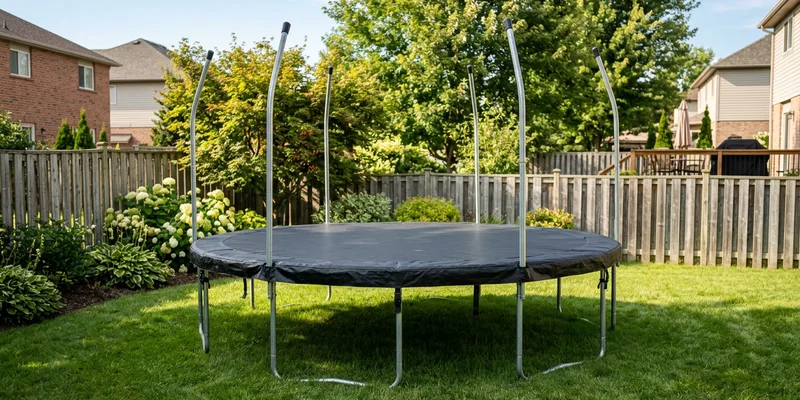
Last updated: August 18, 2026
A trampoline cover is sold as winter protection, and that is only partly what it is. A weather cover keeps sun, leaves and standing water off the mat and the frame pad, which are the two components that age fastest. What it does not do is carry the weight of settled snow, and treating it as if it does is how people end up replacing a mat instead of protecting one.
This guide covers what a cover genuinely protects, how to size one to your frame, the difference between a weather cover and a mat cover, and a straightforward routine for putting a trampoline away for the winter.
This article contains affiliate links. If you buy through them, we may earn a commission at no extra cost to you. Learn more.
Quick Answer
Do you need a trampoline cover, and which one?
- A cover is worth having if your trampoline sits unused for long stretches, because ultraviolet light and standing water are what finish off mats and frame pads.
- Size it to the frame diameter measured across the outside of the steel, and match the shape. Round, oval and rectangular covers are not interchangeable.
- Look for drainage holes or a vented center. A sealed cover holds a pool of water, and that weight sits directly on the mat.
- Covers are not snow load protection. Manufacturers generally advise clearing snow rather than letting it build up, and several recommend removing the mat and net entirely in hard winters. Check your own manual.
- Anchoring matters more than the cover. A trampoline that moves in wind is a hazard to fences, cars and neighbors.
What a Cover Actually Protects
A cover protects three things: the jumping mat, the frame pad and, to a lesser extent, the springs. All three degrade in ultraviolet light, and the mat and pad also suffer from sitting wet. Keeping sun and standing water off them through the months nobody jumps is the whole value proposition, and it is a real one.
What a cover does not do is stop rust inside the frame tubes, keep a trampoline from moving in wind, or make a winter trampoline safe to use. It is a maintenance item, not a safety item, and it is worth being clear about that before spending on one.
Sizing a Cover to Your Frame
Covers are sold by frame diameter and shape, the same way pads are. Measure the trampoline rather than trusting the size on the original box, and take the reading across the outside of the steel frame rather than across the mat, since the mat is always the smaller of the two.
| What to check | Why it matters | How to check it |
|---|---|---|
| Frame diameter | The size every cover is listed by | Measure across the outside of the steel frame through the center, then take a second reading at right angles |
| Frame shape | Round, oval, square and rectangular covers are cut differently | Rectangular and square frames are sold by two dimensions, not a diameter |
| Drainage | A sealed cover collects a pool of water on the mat | Look for stated drain holes, a vented center or a mesh panel |
| Fixing method | Wind lifts anything unsecured, and a loose cover flogs itself apart | Check for a drawcord, edge straps or hook and loop ties in the listing |
| Material | Thin sheeting shreds in one windy season | Look for a stated UV treatment and a coated woven fabric rather than plain film |
If the pad underneath is already split, a cover will not rescue it. Our guide to trampoline safety pad replacement covers measuring and fitting a new one.
Weather Cover, Mat Cover or Nothing at All
The three options are a full weather cover over the whole jumping surface, a narrower pad cover that protects only the frame pad, or taking the mat and net off and storing them indoors. Which one suits you depends less on your trampoline than on your winter and on how long the trampoline goes unused.
A full weather cover is the usual choice in mild, wet winters where the trampoline stays up all year. Storing the mat and net indoors is the option that protects them best in regions with heavy snow, and several manufacturers recommend it in exactly those conditions. A pad only cover is a partial measure, sensible if the mat is already near the end of its life.
The Snow Question
Snow is where the advice diverges, so read your own manual before deciding. Some manufacturers ask owners to clear accumulated snow from the mat, others advise removing the mat entirely for the winter, and a few state that a cover should not be left on under snow at all. The common thread is that a cover is not designed to carry weight, and a loaded cover puts that weight straight onto the mat and springs.
Our Top Picks at a Glance
How we chose: we compared widely sold covers on whether the listing states frame diameter and shape, on drainage, on the fixing method supplied, and on the tearing and pooling complaints that repeat across owner reviews. Selections lean on manufacturer specifications and review patterns rather than any hands-on trial of our own.
🏆 Best Overall
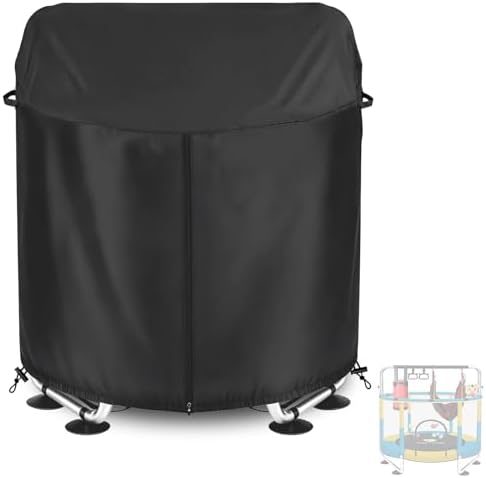
A 14 foot round weather cover with stated UV treatment and drainage, sized for the most common family frame and secured with edge straps rather than a drawcord alone.
📏 Best for Smaller Frames
A 12 foot round cover, the size where an oversized cover starts to sag in the middle and hold water on the mat.

▭ Best for Rectangular Frames
A rectangular cover sold by two dimensions, since a round cover pulled over a rectangular frame leaves the corners exposed and the middle slack.

Picks by Situation: Wind and Winter Storage
Two things do more for a trampoline over winter than the cover itself. Anchoring stops the whole frame becoming a sail, and dry storage is what actually saves a mat and net in a hard winter.
⚓ Best Wind Protection
A ground anchor kit with auger stakes and straps over the frame, the single most useful winter purchase for a trampoline that stays outdoors.

📦 Best Storage Option
A heavy duty storage bag for the mat, net and pad, so the parts that hate sun and damp spend the winter in the garage instead of on the frame.

Putting a Trampoline Away for Winter
Work in one session and in this order: clean, inspect, decide, secure. Sweep the mat and pad clear of leaves and grit, wash off anything sticky, and let everything dry fully, since rolling a wet mat into a bag is how mildew starts. Inspect the springs, the pad and the net while you have everything in your hands.
Then decide between covering in place and storing the soft parts indoors, following what your manual says about snow. Either way, anchor the frame, because winter storms are the reason trampolines end up in a neighbor’s yard. If yours needs to move rather than stay, our guide on how to move a trampoline covers doing it without bending the frame.
Common Mistakes to Avoid
- Treating a cover as snow protection. Covers are not built to carry weight, and a loaded cover transfers that load onto the mat and springs.
- Buying a sealed cover with no drainage. Rain collects in the middle and sits there, which is worse for the mat than leaving it uncovered.
- Sizing by the box rather than the frame. Frames often measure over or under their nominal size, and a slack cover flogs itself apart in wind.
- Covering a wet trampoline. Trapped moisture under a cover does more damage over a winter than open weather does.
- Leaving the trampoline unanchored. A covered trampoline catches more wind, not less, and an unanchored frame moves.
- Skipping the inspection. The moment the trampoline comes out of use is the easiest time to spot a split pad, a stretched spring or a fraying net.
Frequently Asked Questions
Do trampoline covers actually work? They work for what they are designed to do, which is keeping ultraviolet light, leaves and standing water off the mat and frame pad while the trampoline is not in use. They do not protect against wind, do not stop frame corrosion, and are not built to carry the weight of snow.
What size trampoline cover do I need? One matching the frame diameter measured across the outside of the steel, and the shape of the frame. Measure the trampoline rather than relying on the size printed on the original box, since frames frequently read a little over or under the round number they were sold as.
Should you leave a trampoline out in winter? That depends on your winter and on the manufacturer’s instructions for your model. Some makers ask owners to clear snow from the mat, others advise removing the mat and net entirely for the season. Check the manual for your trampoline rather than following a general rule.
Can you leave a cover on a trampoline under snow? Manufacturer advice varies and several specifically advise against it, because the cover is not designed to support weight and snow sitting on it loads the mat and springs. Clearing snow or removing the soft parts is the more commonly recommended route.
Is a trampoline cover the same as a safety pad? No. A safety pad is a permanent shock absorbing component that covers the springs, hooks and frame while the trampoline is in use, and the CPSC trampoline safety alert says not to use a trampoline without one. A cover is a maintenance item used when nobody is jumping.
Should you take the net down in winter? If the trampoline is being closed up for months, taking the net off and storing it dry adds years to it, since nets are the component that degrades fastest in ultraviolet light. Keep the poles in place only if the frame is anchored.
How do you stop water pooling on a trampoline cover? Choose a cover with drain holes or a vented center, keep it tensioned rather than slack, and clear standing water and leaves after heavy rain. A cover sagging in the middle will collect water no matter what it is made of.
The Bottom Line
Buy a cover to protect the mat and pad from sun and standing water, not to fight the weather. Size it to the frame measured across the outside of the steel, match the shape, and insist on drainage and a proper fixing method. In a snowy region, check your manual before covering at all, because storing the mat and net indoors is often what the manufacturer actually asks for. Whatever you decide, anchor the frame first.