Last updated: August 18, 2026
Using wood chips for playground surfacing is the most common answer in American backyards, and for good reason: the material is cheap, cool underfoot, easy to source and rated well in federal guidance when it goes down deep enough. What most buyers do not realize is that the phrase covers three quite different products, and only one of them is engineered for the job.
This guide explains the difference between arborist chips, landscape wood mulch and engineered wood fiber, what the CPSC and the ASTM standards it references actually require, and what to buy so the layer performs and keeps performing.
This article contains affiliate links. If you buy through them, we may earn a commission at no extra cost to you. Learn more.
Quick Answer
Are wood chips a good playground surface, and which kind should you buy?
- Yes, when they are the right grade and deep enough. The CPSC Public Playground Safety Handbook rates 9 inches of compressed wood chips for a 10 foot fall height.
- Engineered wood fiber is the grade made for this job. It is milled and screened to a specification, tested for impact attenuation, and it is what public playgrounds use.
- Ordinary bagged landscape mulch is a step down. CPSC rates non-CCA wood mulch for a 7 foot fall height at the same 9 inches of compressed depth.
- Free arborist chips can work, but only if you know the source, there is no treated or painted wood in the load, and you screen out the oversized pieces.
The Three Products People Call Wood Chips
Grade is the single most important decision here, and the names on bags are not consistent. Engineered wood fiber is a manufactured surfacing product. Playground wood chips are screened natural chips. Landscape mulch is a garden bed product that happens to be made of wood. They are priced differently because they are not the same thing.
| Grade | What it is | Where it fits |
|---|---|---|
| Engineered wood fiber | Milled virgin wood fiber, screened to a controlled particle size and produced to a published specification, with impact testing behind the stated critical height | The default for play areas and the grade public playgrounds install; the only wood option that can be made firm enough for wheelchair access |
| Playground wood chips | Screened natural chips without bark, dirt or leaf matter, sold specifically for play surfacing | A reasonable middle option; carries the CPSC wood chip rating when installed and maintained at depth |
| Landscape wood mulch | Bagged garden bed mulch, often dyed, frequently including bark and fines | Rated lower by CPSC than wood chips at the same depth; usable but the weakest of the three |
| Free arborist chips | Whatever the tree crew was cutting that day, including leaves, bark and oversized pieces | Only with a known source, no treated or painted wood, and a pass through a screen first |
| Any CCA treated wood | Older pressure treated lumber waste | Not appropriate under a play area under any circumstances |
If you are still weighing wood against recycled rubber, our rubber mulch versus wood mulch comparison puts the two side by side on cost, heat and upkeep.
What CPSC and the ASTM Standards Require
The CPSC Public Playground Safety Handbook publishes minimum compressed loose-fill depths against fall height, and rates 9 inches of compressed wood chips for a 10 foot fall height and 9 inches of compressed non-CCA wood mulch for 7 feet. Alongside those figures the handbook points to the ASTM standards that define how surfacing is specified and tested.
Three standard numbers come up on engineered wood fiber listings. ASTM F1292 covers impact attenuation testing, which is where a stated critical height comes from. ASTM F2075 is the specification for engineered wood fiber itself, covering particle size, consistency and freedom from contaminants including tramp metal. ASTM F1951 covers accessibility of a surface system for wheeled mobility.
What that means when you are reading a listing
A product that names ASTM F2075 is telling you it is made to a controlled specification rather than simply chipped. A product that names ASTM F1292 with a stated critical height is telling you it has been impact tested at a given depth. Both claims are checkable on the listing or the manufacturer’s spec sheet, and the absence of either is itself informative.
One honest caveat: the handbook is written for public playgrounds. No federal rule requires a home yard to match it. It is simply the clearest published benchmark that exists, and aiming at it is a reasonable thing to do. Our guide to how deep playground surfacing should be works through the numbers.
Our Picks by Situation
How we chose: we compared widely available wood surfacing products on stated grade and referenced standards, particle screening, coverage per unit, and the complaints owners raise after a full season outdoors. Selections lean on manufacturer specifications and recurring themes in customer reviews rather than any hands-on trial of our own.
🏆 Best Overall
Engineered wood fiber sold as playground surfacing, produced to the ASTM specification and listed with a critical height from impact testing. It knits into a firm, walkable layer instead of shifting like loose chip.

🌲 Best Simple Option
Screened natural playground wood chips, free of bark and fines. Cheaper than engineered fiber, cooler than rubber, and adequate when you keep it topped up to depth.
🧱 The Layer Underneath
A heavy duty permeable weed barrier under the chips. It keeps wood from sinking into soil and slows weeds without trapping the water that turns an organic layer into a compacted mat.

Containment and the High Wear Spots
Wood chips migrate. Every arrival and departure from the play area carries a little of the layer into the lawn, and the two places it thins fastest are under each swing seat and at the bottom of the slide. A border and a pair of wear mats keep the layer at the depth you paid for.
🚧 Best for Containment
Deep profile playground border edging, sized to hold a full surfacing bed rather than the shallow trim sold for flower beds.
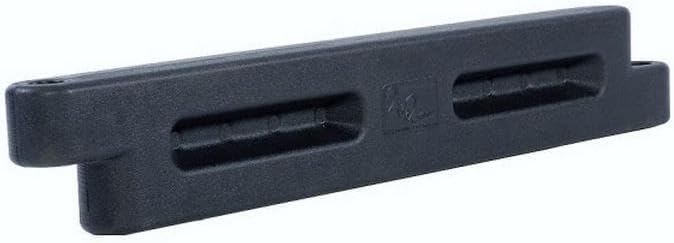
🎯 Best for Wear Spots
Rubber wear mats under the swings and at the slide exit, where scuffing digs a hollow in loose fill within weeks.

Installing and Maintaining a Wood Layer
Level the area, set the border first so the fill volume is defined, lay permeable fabric, then spread the chips and rake them even. Go in deeper than your target compressed depth because the layer settles, and check it again after a few weeks of real use rather than assuming the first measurement holds.
Maintenance is seasonal and light. Rake the wear zones level every few weeks, top up wherever the fabric or soil starts showing, clear leaves out before they compost into the layer, and plan on adding material every year or two as the wood breaks down. That decomposition is the trade-off for a surface that stays cool and costs less than rubber.
Common Mistakes to Avoid
- Buying dyed landscape mulch and calling it playground surfacing. CPSC rates non-CCA wood mulch lower than wood chips at the same compressed depth.
- Accepting a free chip load without asking what was cut. Treated, painted or reclaimed lumber has no place under a play structure.
- Spreading to the listed depth exactly. The handbook figures are compressed, so loose material has to go in deeper to settle into the rating.
- Using solid plastic sheeting underneath. Water gets trapped, the wood stays wet, and the layer mats down and holds mold.
- Letting the swing zone hollow out. It is the first spot to fall below depth and the spot where falls are most likely.
- Assuming coarse chips are fine for bare feet. Unscreened chip is the main source of splinter complaints, and a screened grade solves it.
Frequently Asked Questions
Are wood chips safe for a playground? Yes, at the right grade and depth. The CPSC Public Playground Safety Handbook rates 9 inches of compressed wood chips for a 10 foot fall height, and engineered wood fiber is the grade produced specifically for play surfacing.
What is engineered wood fiber? It is milled virgin wood fiber screened to a controlled particle size and made to the ASTM F2075 specification, with impact testing under ASTM F1292 behind its stated critical height. It compacts into a firmer surface than loose chip.
Can I use free wood chips from a tree service? Only if you know what was cut, there is no treated or painted wood in the load, and you screen out oversized pieces and leaf debris. The uncertainty is the reason most families buy a graded product instead.
How deep do playground wood chips need to be? CPSC guidance rates 9 inches of compressed wood chips for a 10 foot fall height. Because that figure is a compressed depth, the loose material goes down deeper and settles into it.
How often do wood chips need replacing? Most families top up rather than replace, generally every year or two, since the layer settles and decomposes below the depth it started at.
Do wood chips attract termites? Any organic material can host insects when it stays damp and compacted, which is why drainage and regular raking matter. Keeping the layer away from direct contact with wooden structure posts helps too.
Are wood chips accessible for a wheelchair? Only engineered wood fiber can be made firm enough to qualify, and accessibility of a surface system is assessed under ASTM F1951. Loose natural chip does not meet that bar.
The Bottom Line
Wood chips are a solid playground surface when you buy the right grade and install it deep enough. Engineered wood fiber made to the ASTM specification is the strongest choice and the one public playgrounds use, screened playground chips are the practical middle option, and dyed landscape mulch is rated lower by CPSC at the same depth. Set a border, lay permeable fabric, go in deeper than the compressed figure, and keep the swing and slide zones raked level.