Last updated: August 18, 2026
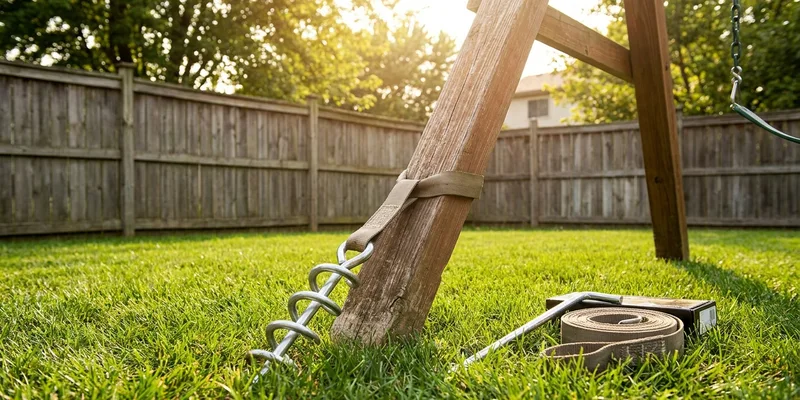
A swing set anchor kit is the part of the purchase most people leave in the box, and it is the part that decides whether the frame stays where you put it. Swinging is a rhythmic load, and a frame that is not held down does not tip over dramatically; it walks, a fraction of an inch per session, until one leg is out of line and the whole structure is racked.
This guide covers the anchor types available, which one suits grass, clay, sand, a slope or a concrete pad, and what the installation actually involves. Anchoring for other backyard play equipment is covered separately in our guide to ground anchors for play equipment.
This article contains affiliate links. If you buy through them, we may earn a commission at no extra cost to you. Learn more.
Quick Answer
Which swing set anchor kit do you need?
- For ordinary lawn over soil, an auger style screw in anchor gives the most holding power for the effort, because it resists being pulled straight up rather than relying on friction.
- For light metal A-frames, a stake and strap kit is usually enough, provided the stakes go in at an angle and not straight down.
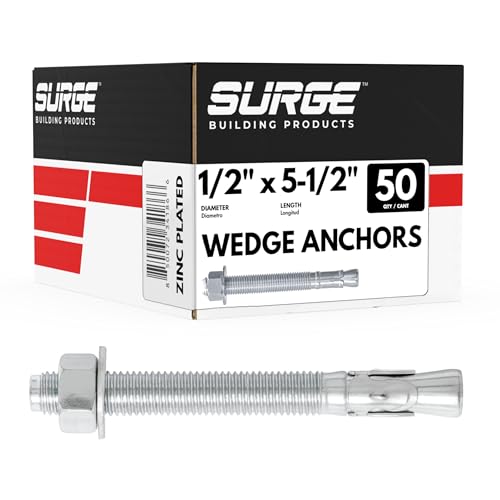
- On a concrete pad or a paver base, you are into wedge anchors or expansion bolts through the foot plate, not ground stakes.
- Whatever you use, the CPSC Outdoor Home Playground Safety Handbook advises anchoring equipment securely with anchoring devices installed below ground level, so nothing should sit proud of the surface where children land.
Anchor Types and the Ground They Suit
Anchors work in different ways, and the ground decides which way works. This table lines up the common options against the conditions in a typical backyard.
| Anchor type | Ground it suits | How it installs | Watch out for |
|---|---|---|---|
| Auger or screw in anchor | Lawn over loam or clay | Screwed in with a bar through the eye, then strapped or bolted to the leg | Hard to drive through stony fill; hits roots near mature trees |
| Stake and strap kit | Firm soil, light metal frames | Angled stakes over a foot plate or strap | Pulls out of soft or sandy ground; needs the angle, not straight down |
| Wide flange ground plate | Loose or sandy soil | Buried plate with a post bolted to it | Requires digging, so plan it before assembly |
| Concrete footing | Any soil, permanent installations | Posts or brackets set into poured footings | Permanent, and hard surfaces near a fall zone need thought |
| Wedge or expansion bolt | Concrete pad or paver base | Drilled into the slab through the foot plate | Not a soft surface underneath, so surfacing has to solve that |
If the frame itself is a bracket build rather than a boxed set, the anchor choice interacts with the bracket geometry, and our swing set bracket kit guide covers which brackets take a bolted anchor plate.
Why Anchoring Matters More Than It Looks
A swing generates a horizontal pull at the top of the arc and a lift at the leg on the opposite side. Repeated a few hundred times a week, that alternating load is what makes an unanchored frame creep across the lawn. The frame does not need to leave the ground to become a problem; it only needs to move enough that one leg no longer sits square.
The CPSC Outdoor Home Playground Safety Handbook is direct about the principle: anchor equipment securely, and install anchoring devices below ground level. That second half matters as much as the first, since a bracket or stake head standing above the surface sits exactly where a child lands after a dismount.
Wood and Metal Behave Differently
Heavier wooden sets resist walking better simply through mass, but they concentrate load into four posts that can work loose in wet soil over a season. Light metal A-frames move sooner but are easier to hold, since a stake through the foot plate at an angle counters most of the lift the swing produces.
Matching the Anchor to Your Ground
Test the ground before you order. Push a screwdriver into the lawn where each leg will sit: if it goes in easily and comes out clean, an auger anchor will hold. If it stops at a few inches on stone or hardpan, augers will fight you and a buried plate or a footing is the realistic answer.
Sandy and very loose soils are the case where stakes fail quietest. Friction is doing all the work, and sand gives it up as soon as the soil dries out or a season of rain settles it, so a wider buried element beats a longer stake in that ground.
Slopes and Existing Hard Surfaces
On a slope, anchoring is not the fix for uneven ground; leveling is. Anchoring a frame that sits twisted just locks the twist in place, so level the base first, which our guide on leveling ground for a playset covers, and anchor afterward.
Placement near property lines, patios and utilities is a local matter. Call your utility locating service before driving anything into the ground, and check setback and structure rules with your county and your HOA, since those vary and we cannot give a distance that applies to your lot.
Our Top Picks for Anchoring a Swing Set
How we chose: we compared widely available anchor kits on stated holding capacity, corrosion protection, the hardware included for attaching to a leg or foot plate, and how consistently owners report the anchor staying put through a season. Selections lean on manufacturer specifications and recurring themes in customer reviews rather than any hands-on trial of our own.
🏆 Best Overall
A heavy duty swing set anchor kit with auger style screw in anchors and the straps or brackets to attach them, the configuration that suits most lawns over ordinary soil.

🪜 Best for Metal A-Frames
A stake and strap anchor set sized for tubular metal legs, driven at an angle over the foot plate rather than straight down.

🪵 Best for Wooden Sets
A ground anchor kit rated for wooden play structures, with bolt through plates that bear on the post rather than pinching a strap against it.

Picks by Situation: Hard Ground and Concrete
Two ground conditions defeat a standard kit: soil too stony for an auger to bite, and an existing concrete or paver base where there is no soil to anchor into at all.
🪨 Best for Stony Ground
A driven spike anchor set that goes in with a hammer where an auger cannot turn, paired with a plate that spreads the load at the leg.

🧱 Best for Concrete Pads
A concrete wedge anchor set for bolting a foot plate to a slab, for sets that have to stand on an existing hard base.
Installing and Checking Anchors
Install anchors with the frame assembled and positioned, not before, since a hole in the wrong place is a hole you cannot move. Set each anchor so the head finishes below ground level as CPSC guidance advises, attach the leg with the hardware supplied rather than a substitute, and take up any slack in a strap before the first use.
Then recheck. Anchors bed in over the first few weeks, and straps that were tight on assembly day are usually loose after a fortnight of use. Add an anchor check to the same yearly routine as retightening bolts and inspecting swing hangers.
Signs an Anchor Is Failing
Watch for a rim of disturbed soil around an anchor head, a strap that has gone slack while the others stayed tight, or a leg that lifts slightly at the top of the swing arc. All three mean the anchor has started to move, and all three get worse rather than better.
Common Mistakes to Avoid
- Driving stakes straight down. A vertical stake resists lift with friction alone; an angled stake resists it with the soil above it.
- Leaving anchor heads above the surface. CPSC guidance calls for anchoring devices installed below ground level, and a proud bracket sits in the landing area.
- Anchoring a frame that is not level. That locks in the twist rather than correcting it.
Frequently Asked Questions
Do swing sets really need to be anchored? Yes. The CPSC Outdoor Home Playground Safety Handbook advises anchoring equipment securely, with anchoring devices installed below ground level. Swinging applies an alternating horizontal load that walks an unanchored frame out of line over time.
What kind of anchor is best for a swing set on grass? An auger or screw in anchor for ordinary soil under lawn, since it resists being pulled straight up. Stakes work on firm ground for lighter metal frames when driven at an angle.
Can you anchor a swing set without concrete? Yes, and most home installations do. Auger anchors, buried plates and angled stakes all hold without a footing, provided the anchor type matches the soil.
How do you anchor a swing set on a concrete patio? Through the foot plate with wedge or expansion anchors rated for concrete. Bear in mind a hard base is not a soft landing, so surfacing has to be solved separately.
How deep should swing set anchors go? Follow the depth stated by the anchor manufacturer for your soil type, and make sure the head finishes below ground level as CPSC guidance advises. We are not in a position to give a depth that suits every soil.
Can you anchor a swing set on a slope? Level the base first. Anchoring a frame that sits twisted holds the twist in place rather than fixing it.
The Bottom Line
Match the anchor to the ground rather than to the set. Auger anchors for lawn over soil, angled stakes for light metal frames on firm ground, buried plates for loose soil, and wedge anchors where the base is concrete. Install with the frame in place, finish every anchor below ground level, and recheck once the anchors have bedded in.