Last updated: August 18, 2026
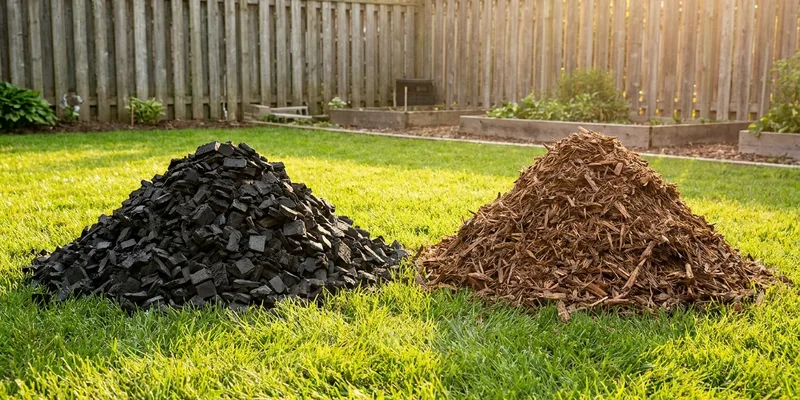
Choosing between rubber mulch vs wood mulch is the first real decision most families face once the swing set is standing, and it matters more than almost anything you bolt onto the equipment itself. The surface under a play structure is what absorbs a fall, and the Consumer Product Safety Commission treats both recycled rubber and wood as acceptable loose-fill playground surfacing. They just behave very differently once they are on the ground.
This comparison covers how each one cushions a fall according to CPSC guidance, how long each lasts, what they cost you in maintenance rather than money, and which one actually fits the yard and the kids you have.
This article contains affiliate links. If you buy through them, we may earn a commission at no extra cost to you. Learn more.
Quick Answer
Rubber mulch or wood mulch: which is better under a play set?
- Rubber mulch lasts for years without breaking down, does not rot or attract insects, and gets you the most cushioning from the shallowest layer. It costs the most up front and holds heat in direct sun.
- Wood chips and engineered wood fiber cushion just as well when installed deep enough, stay cooler, and look like a yard rather than a product. They decompose, so you top them up.
- Both are listed in the CPSC Public Playground Safety Handbook as loose-fill surfacing, but the required depths differ, and plain wood mulch is rated lower than wood chips.
- Depth and upkeep decide safety far more than the material choice does. A thin layer of the better material protects less than a properly maintained layer of the cheaper one.
Rubber Mulch vs Wood Mulch Side by Side
The two materials trade places depending on which column you care about. Rubber wins on lifespan, insects and shallow installation depth. Wood wins on surface temperature, cost of a refill and how it looks and feels underfoot. Everything in the table below can be checked before you order anything.
| Factor | Rubber mulch | Wood mulch and wood chips |
|---|---|---|
| Impact cushioning | CPSC Table 2 rates 6 inches of compressed shredded or recycled rubber for a fall height of 10 feet | CPSC Table 2 rates 9 inches of compressed wood chips for 10 feet, and 9 inches of non-CCA wood mulch for 7 feet |
| Depth needed | Less material for the same rating, which partly offsets the higher cost per bag | More material, and it needs to stay at depth as it settles and decomposes |
| Lifespan | Does not rot; the layer thins through scatter, not decay | Breaks down over seasons and needs topping up |
| Insects and mold | Nothing organic for termites, ants or fungus | Can host insects and mold if it stays wet and compacted |
| Heat in direct sun | Holds heat noticeably, so shade matters | Stays cooler underfoot in full sun |
| Look and feel | Uniform color; a rubbery smell when new and hot | Natural look, softer for bare feet and knees |
| Splinters and debris | None, though wire fragments are a quality issue on cheap product | Splinters are the complaint with coarse, non-graded chips |
If your shortlist has expanded beyond these two, our comparison of rubber mulch against pea gravel, rock and sand covers the mineral options in the same format.
What CPSC Guidance Actually Says About Depth
The CPSC Public Playground Safety Handbook publishes a table of minimum compressed loose-fill depths and the fall height each one protects against. Six inches of compressed shredded or recycled rubber is rated for a 10 foot fall height. Nine inches of compressed wood chips is also rated for 10 feet, while nine inches of non-CCA wood mulch is rated for 7 feet.
That last distinction trips up a lot of buyers. Wood chips and plain landscape wood mulch are not the same product in the handbook’s terms, and they do not carry the same rating. Engineered wood fiber is a third category again, a milled and graded product whose critical height comes from the manufacturer’s own impact testing rather than from the general table.
Compressed depth is not the depth you install
The handbook’s figures describe compressed depth, meaning the layer after it has settled and been walked on. Loose material poured to exactly the listed number will drop below it within a season, which is why installers add extra on top and why the swing and slide zones need checking most often.
Worth saying plainly: the handbook is written for public playgrounds, not backyards, and no federal rule forces you to match it at home. It is simply the clearest published benchmark available. For the full depth discussion see our guide to how deep playground surfacing should be.
Where Rubber Mulch Earns Its Cost
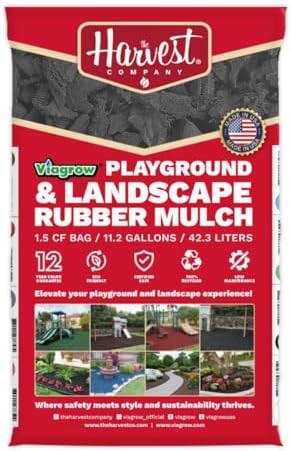
Rubber mulch pays off over time rather than on the day you buy it. It does not decompose, so the layer you install is the layer you keep, minus whatever gets kicked out of the border. Families who do not want to re-mulch every spring, or who have had termite or ant problems near a wooden structure, are the ones glad they paid up front.
It also reaches its rated cushioning from a shallower layer, which matters when you are digging out lawn and would rather not excavate nine inches. On a slope or in a small yard, that is a practical advantage rather than a marketing one.
The trade-offs owners actually mention
Heat is the consistent complaint. Recycled rubber sits hotter than wood fiber in full afternoon sun, and in warm states that decides where the play area goes or whether a shade sail goes over it. The second recurring issue is wire: shredded tire product should be processed to remove steel belt fragments, and listings that advertise a wire free grade are making a claim you can check in the reviews. Whether rubber is a good idea at all is a fair question, and we take it seriously in our piece on whether rubber mulch is safe.
Where Wood Comes Out Ahead
Wood is cooler, softer and cheaper to install, and it is what most families end up with because a bulk delivery of chips is easy to source locally. It also disappears into a yard visually in a way that dyed rubber does not.
The catch is maintenance. Organic material decomposes, compacts and migrates, so the layer that met the depth guidance in April may not meet it in October. Wood also holds moisture, which is what makes mold and insect activity possible in a shady, poorly drained corner. Drainage under the layer solves most of that, and it is worth getting right before the first load goes down.

Which One Fits Your Yard
Pick rubber if you want a surface you install once, if insects or rot have been a problem, or if excavating a deep bed is impractical. Pick wood if the area sits in full sun, if bare feet and toddlers are the main users, or if you would rather spend less now and top up each spring.
Wood is the clearer answer for an unshaded yard, for barefoot play, and for a structure that will be moved or outgrown within a few years, since rubber’s durability never gets a chance to pay for itself. Rubber is the clearer answer for shaded areas, for households already fighting termites or carpenter ants near a wooden play set, for sloped ground where digging deep is a chore, and for anyone who honestly will not re-mulch every spring.
Common Mistakes With Both Materials
- Installing to the listed depth and stopping there. The CPSC figures describe compressed depth, so loose material needs extra on top to settle into the rating.
- Treating landscape wood mulch as playground wood chips. The handbook rates them differently, and the garden center bag is the lower rated product.
- Skipping containment. Without a border, loose fill migrates into the lawn and the layer under the swings goes thin first.
- Laying loose fill onto hard packed clay with no drainage. Standing water compacts the layer and, with wood, invites mold.
- Buying unbranded shredded rubber with no wire removal claim. Steel belt fragments are the one defect that turns a safety surface into a hazard.
Frequently Asked Questions
Is rubber mulch better than wood mulch for a play area? It is more durable, insect free and needs less depth for the same rated fall protection, but it costs more up front and holds more heat in direct sun. Wood is cooler and cheaper but has to be topped up as it decomposes.
How deep does each material need to be? The CPSC Public Playground Safety Handbook rates 6 inches of compressed shredded or recycled rubber for a 10 foot fall height, 9 inches of compressed wood chips for 10 feet, and 9 inches of non-CCA wood mulch for 7 feet.
Does rubber mulch get too hot for kids? It runs hotter than wood fiber in full afternoon sun, which is the most common owner complaint in warm climates. Shade over the play area, or choosing wood for an unshaded yard, is the practical answer.
Does wood mulch attract termites near a play set? Any organic material can host insects if it stays damp and compacted, which is why drainage under the layer matters. Rubber removes the question since there is nothing organic in it.
How often does wood mulch need replacing? Most families top up rather than replace, usually every year or two, because the layer settles and decomposes below the depth it started at.
Can you put rubber mulch over existing wood mulch? Remove the old wood first. Leaving decomposing material underneath means the base keeps settling, and you lose the compressed depth you thought you had installed.
The Bottom Line
Rubber mulch is the low maintenance choice: it never rots, needs less depth for the same CPSC rated fall height, costs the most up front and runs hotter in the sun. Wood chips match rubber’s rating at 9 inches of compressed depth, stay cooler and cost less, but need topping up. Whichever you pick, depth and containment matter more than the material, and the spots under the swings and at the slide exit are where the layer fails first.