Last updated: August 18, 2026
Parents asking is rubber mulch safe usually want a yes or a no, and the honest answer is neither. Recycled tire mulch is an accepted playground surfacing material in federal guidance, it performs well in a fall, and the largest federal research effort into tire crumb has not found evidence of harm at the exposure levels it measured. It has also not declared the material risk free, and the researchers said so themselves.
This article lays out what rubber mulch is made of, what the federal research did and did not conclude, which concerns are worth taking seriously, and what the picture looks like for dogs.
This article contains affiliate links. If you buy through them, we may earn a commission at no extra cost to you. Learn more.
Quick Answer
Is rubber mulch safe for kids and pets?
- The CPSC Public Playground Safety Handbook lists shredded and recycled rubber as an acceptable loose-fill playground surfacing material.
- A joint EPA, CDC/ATSDR and CPSC research effort found a range of chemicals present in recycled tire crumb, and the follow-up exposure work reported the exposures it measured were generally low. The agencies called this characterization, not a full risk assessment.
- The practical concerns are heat in direct sun, dust and small fragments, and stray steel wire in poorly processed product. All three are manageable.
- For dogs there is no federal guidance specific to rubber mulch. The realistic risk is a chewer swallowing pieces, so ask your vet if your dog eats things it should not.
What Rubber Mulch Actually Is
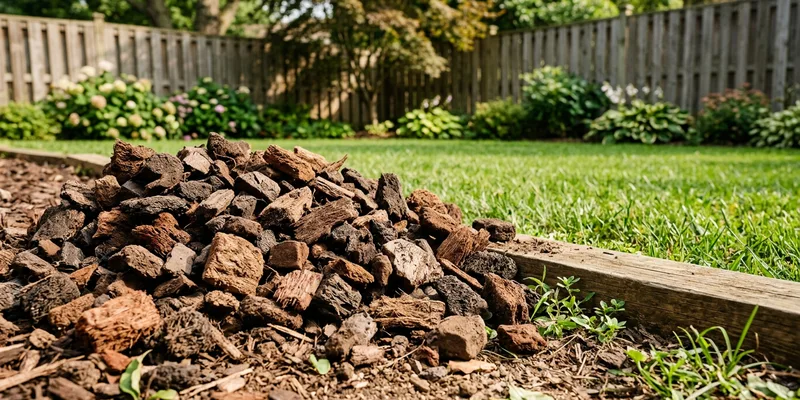
Rubber mulch is shredded recycled tire rubber, processed into nuggets or strands, usually colored, and sold in bags or bulk. Better grades run through magnetic separation to pull out the steel belt fragments from the original tire casing, and the good listings say so plainly.
That origin is the whole reason the safety question exists. Tires are engineered compounds containing metals, carbon black, oils and vulcanizing chemicals, and nobody disputes those substances are in the material. The argument is about whether a child playing on it is meaningfully exposed.
What the Federal Research Found
The largest body of work on this is the Federal Research Action Plan on Recycled Tire Crumb, run jointly by the EPA, the CDC’s Agency for Toxic Substances and Disease Registry, and the CPSC. Its characterization report confirmed that a range of metals and organic chemicals are present in tire crumb, and its later exposure work reported that the exposures measured in the scenarios studied were generally low.
What the agencies did not do is issue a clean bill of health. They have consistently described the work as characterization and exposure measurement rather than a risk assessment, which is a meaningful distinction: knowing what is in a material and how much reaches a person is a step toward a risk conclusion, not the conclusion itself.
The research was mostly about fields, not backyards
Nearly all of that work studied crumb rubber infill on synthetic turf sports fields, where players slide, sweat and breathe close to the surface for hours. Loose rubber mulch in a backyard is a coarser product with a different exposure pattern, so the findings are informative rather than directly transferable. Anyone telling you the research settles the backyard question in either direction is overreading it.
What Is Settled and What Is Not
It helps to separate the parts of this question that have clear answers from the parts that genuinely do not. Impact performance is settled and documented. Chemistry is documented but the risk interpretation is not closed. Everyday nuisances like heat and wire are well established and within your control.
| Question | What the evidence supports | What remains open |
|---|---|---|
| Does it protect in a fall? | Yes. CPSC guidance lists shredded and recycled rubber as acceptable loose-fill surfacing | Nothing substantial, provided the layer stays at depth |
| Does it contain chemicals of concern? | Yes. Federal characterization work confirmed metals and organic chemicals in tire crumb | How that translates into long term risk for a child in a home yard |
| Are measured exposures high? | Federal exposure work reported generally low exposures in the field scenarios studied | The agencies stopped short of a risk assessment, and backyards were not the setting |
| Does heat or stray wire matter? | Yes to both. Higher surface temperature is the top owner complaint, and poorly processed product can hold steel belt fragments | Nothing. Shade fixes one, buying a magnetically separated grade fixes the other |
| Is it safe for dogs? | No federal guidance addresses this; the documented risk is ingestion by chewers | Effects of chronic ingestion, which is a question for your veterinarian |
The Concerns Worth Taking Seriously
Three issues come up repeatedly, and all three are practical rather than theoretical: surface heat in full sun, fine dust and small fragments that end up on hands and in pockets, and stray steel wire in cheap product. None is a reason to rule the material out, but each changes what you should buy and where you should put it.
Heat and shade
Dark recycled rubber absorbs solar radiation and runs hotter underfoot than wood fiber. In a shaded corner this never comes up. In an unshaded yard in a hot state it is why families switch materials after one summer, so plan shade from the start.
Dust, fragments and wire
Loose rubber sheds fine particles as it wears, and small pieces get into shoes and pockets. Basic hygiene handles most of it: wash hands after play, keep the layer raked and contained, and do not let toddlers who still mouth objects play unsupervised on any small loose fill. Wire is a purchasing decision instead, so buy a grade processed for wire removal and read the reviews for complaints about metal.
Is Rubber Mulch Safe for Dogs?
There is no federal guidance on rubber mulch and dogs, so anyone quoting an official position is inventing one. The realistic risk is mechanical rather than chemical: a dog that chews and swallows rubber nuggets can end up with a gastrointestinal obstruction, which is a veterinary emergency and the reason vets discourage rubber mulch for persistent chewers.
For a dog that ignores landscaping, rubber mulch is one of the less problematic ground covers, since it does not mold and there is nothing organic to ferment. Worth knowing for contrast: cocoa bean mulch is the mulch with a documented toxicity problem for dogs, because it contains theobromine, and the ASPCA warns about it specifically.
Using It Sensibly, or Choosing Something Else
Most of what makes rubber mulch a reasonable choice comes down to sourcing and siting. Buy a grade that states wire removal, site the play area where it gets afternoon shade, contain the layer with a proper border, keep it at the depth the CPSC handbook rates for your equipment’s fall height, and wash hands after play.
It is the wrong pick for an unshaded yard in a hot climate, for a play area built mainly for children under two, and for a household with a dog that eats things. Wood fiber covers the same fall protection ground and sidesteps the chemistry conversation; our guide to wood chips for playground surfacing covers the engineered grade made for the job, and the rest sits in our safety and ground prep section.
Frequently Asked Questions
Is rubber mulch toxic to children? Federal research by the EPA, CDC/ATSDR and CPSC confirmed that metals and organic chemicals are present in recycled tire crumb, while the follow-up exposure work reported generally low measured exposures in the scenarios it studied. The agencies called that work characterization rather than a completed risk assessment, so the question is fairly described as open.
Does the CPSC allow rubber mulch on playgrounds? Yes. The CPSC Public Playground Safety Handbook lists shredded and recycled rubber among the acceptable loose-fill surfacing materials and publishes the depth needed for a given fall height.
Is rubber mulch safe for dogs? No agency has issued guidance specific to dogs. The practical risk is a dog swallowing pieces and developing a gastrointestinal blockage, so it is a poor choice for a determined chewer and a question worth raising with your veterinarian.
Can there be metal wire in rubber mulch? In poorly processed product, yes, because steel belts are part of a tire’s construction. Reputable grades are magnetically separated and say so on the listing, which is the most important thing to check before buying.
Does rubber mulch get too hot to walk on? It runs hotter than wood fiber in direct sun and is the most common complaint among owners in warm states. Shade is the fix, and an unshaded yard is a good reason to choose wood instead.
The Bottom Line
Rubber mulch is an accepted playground surfacing material in CPSC guidance and performs well in a fall. Federal research confirms chemicals are present in recycled tire crumb and reports generally low measured exposures, without closing the question with a formal risk assessment. The concerns you can act on are heat, dust and stray wire. Buy a wire free grade, site the play area in shade, and choose wood fiber instead if the yard is unshaded, the children are very young, or the dog chews everything.