Last updated: August 18, 2026
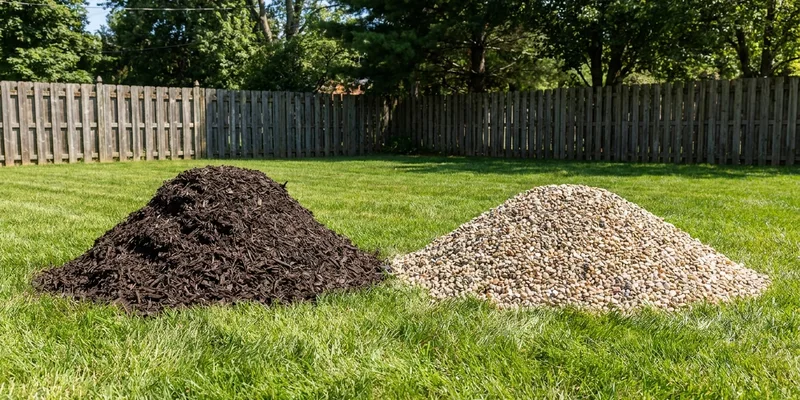
Choosing between rubber mulch vs pea gravel is really a choice between four backyard options, since most parents comparing those two also look at sand and at loose rock or stone. The difference between them is measurable: the CPSC publishes how deep each one has to be and how far a child can fall onto it before the surfacing stops doing its job.
This comparison puts all four side by side using the CPSC surfacing table, then covers which one suits which kind of yard and why one of them is not recommended as playground surfacing at all.
This article contains affiliate links. If you buy through them, we may earn a commission at no extra cost to you. Learn more.
Quick Answer
Rubber mulch or pea gravel: which is better under a play set?
- Rubber mulch protects against the highest falls for the least depth. According to the CPSC Public Playground Safety Handbook, 6 inches of shredded or recycled rubber protects to a fall height of 10 feet.
- Pea gravel needs 9 inches to protect a fall height of only 5 feet, per the same CPSC table, so it suits low equipment rather than a tall tower.
- Sand is the weakest of the group at 9 inches protecting a 4 foot fall height, and the CPSC advises avoiding loose fill entirely for playgrounds intended for toddlers.
- Landscape rock, river stone, and crushed gravel are not on the CPSC list of appropriate surfacing. Only pea gravel qualifies among the stone options.
How the Common Backyard Materials Compare
The single most useful comparison is depth against fall height, because that is what decides whether your surfacing matches your equipment. The figures below come from the CPSC Public Playground Safety Handbook, which lists minimum compressed loose fill depths and the fall height each one is expected to protect.
| Material | CPSC compressed depth | Protects to fall height | Main trade-off |
|---|---|---|---|
| Shredded or recycled rubber | 6 inches | 10 feet | Most protection per inch of depth, but it scatters onto lawn and dark colors get hot in direct sun |
| Wood chips | 9 inches | 10 feet | Matches rubber on fall height but needs half again the depth, and it breaks down over seasons |
| Wood mulch, not CCA treated | 9 inches | 7 feet | Easy to source locally; CCA treated mulch must be avoided entirely |
| Pea gravel | 9 inches | 5 feet | Drains well and does not decompose, but it is hard on knees and a swallowing risk for small children |
| Sand | 9 inches | 4 feet | Lowest fall protection of the group, packs hard when wet, and attracts neighborhood cats |
Read the middle two columns together rather than separately. Nine inches of pea gravel and nine inches of wood chips look identical in a wheelbarrow, but the CPSC credits one with a 5 foot fall height and the other with 10 feet.
What the CPSC Surfacing Table Actually Says
The CPSC Public Playground Safety Handbook lists appropriate surfacing as pea gravel, sand, shredded or recycled rubber mulch, wood mulch that is not CCA treated, wood chips, and any material tested to ASTM F1292. It lists asphalt, concrete, dirt, grass, CCA treated wood mulch, and untested carpet as inappropriate. That list alone rules out several of the surfaces people put under a swing set by default.
The handbook is equally direct about depth. It advises never using less than 9 inches of loose fill material, with shredded or recycled rubber the single exception at a recommended 6 inches, because shallower depths are too easily displaced and compacted.
Why the numbers assume compression
Those depths are compressed depths. The CPSC notes that loose fill materials compress at least 25 percent over time from use and weathering, and gives the example that a playground requiring 9 inches of wood chips should be filled to 12 inches initially. Rubber is the exception again: the handbook notes it does not compress the same way, though it still needs a constant depth maintained because displacement still happens.
Rubber Mulch: The Most Protection Per Inch
Rubber mulch is the strongest performer in the CPSC table, protecting a 10 foot fall height at only 6 inches deep. For a tall backyard tower or a play set with a high deck, that combination is hard to beat, and it does not rot, mat down, or need topping up every spring the way wood does.
The trade-offs are practical rather than about protection. Loose rubber travels: it works its way into the lawn, into shoes, and into the flowerbeds, so a solid edge around the play area matters more with rubber than with anything else. Dark colored surfacing exposed to intense sun has caused blistering on bare feet, a point the CPSC raises for surfacing generally, so lighter colors or a shaded area are worth considering.
Buy the playground product, not the landscape product
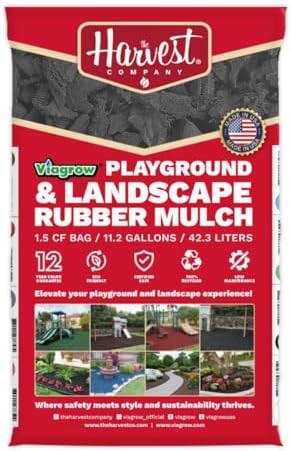
The CPSC advice for rubber mulch is to make sure it has been tested to and complies with ASTM F1292, and that the manufacturer can supply a critical height rating, minimum fill depth data, and toxicity information. Decorative landscape rubber may carry none of that, so check the listing before you order by the pallet.
Pea Gravel: Drains Well, Protects Less
Pea gravel earns its place on the CPSC appropriate surfacing list, but with a modest rating: 9 inches protects a fall height of 5 feet. That is enough for a toddler climber, a low deck, or a spring rocker, and not enough for a tall tower or a swing beam set high. It also does not decompose, does not host insects, and drains faster than any of the organic options, which is why it survives in wet climates where wood mulch turns to mush.
Against that, it is unforgiving to land on compared with wood or rubber, it makes a hard raking job, and the individual stones are a swallowing and choking size for the youngest children. The CPSC advises that loose fill be avoided for playgrounds intended for toddlers, and pea gravel is the option that concern applies to most obviously.
Sand: Familiar, and the Weakest of the Four
Sand is the material most parents assume is the safe default, and in the CPSC table it is the lowest performer: 9 inches protects a fall height of 4 feet, which is 6 feet less than wood chips at the same depth. It also packs down hard once it has been wet and dried, quietly reducing the cushioning you installed it for, and it invites cats.
It stays useful as a play material in a contained sandbox, which is a different job from surfacing. The CPSC notes that ground level equipment such as sandboxes, playhouses, and activity walls needs no protective surfacing at all, since there is nothing to fall from.
Rock, Stone, and River Gravel: Not on the List
Landscape rock, river stone, crushed stone, and decorative gravel are not listed as appropriate playground surfacing by the CPSC. Pea gravel is the only stone product on the list, and it qualifies because of its size and rounded shape, not because gravel in general does.
Larger or angular stone does not absorb impact the way tested loose fill does, and sharp edged crushed rock adds a laceration risk. If you already have stone under a play set, treat it as a drainage layer rather than as surfacing and put a tested material on top.
Which Material Fits Your Yard
Match the material to the fall height of your tallest equipment first, then let drainage, budget, and the ages of your children decide between whatever still qualifies. Measure the fall height as the vertical distance between the highest surface a child stands or sits on and the ground beneath it, which is how the CPSC defines it.
- Tall tower, high deck, or a swing beam over 7 feet. Rubber mulch at 6 inches or wood chips at 9 inches are the two options rated to 10 feet.
- Mid height wooden play set. Wood mulch that is not CCA treated at 9 inches covers a 7 foot fall height and is the easiest of the group to source and refill.
- Low toddler frame or a spring rocker. Pea gravel or sand at 9 inches will cover it, though wood or rubber still gives you headroom if the equipment gets replaced later.
- Wet, poorly draining ground. Pea gravel and rubber both shrug off standing water where wood mulch compacts and decomposes.
- Toddlers as the main users. The CPSC advises avoiding loose fill for playgrounds intended for toddlers, which points toward a unitary surface tested to ASTM F1292 instead.
Whichever you pick, budget for a containment edge and for topping up, since every loose fill material migrates out of the high traffic spots under swings and at slide exits. Our playground mulch cost guide works through the volume math and the budget ranges.

Frequently Asked Questions
Is rubber mulch safer than pea gravel under a swing set? By the CPSC surfacing table, yes for falls. Six inches of shredded or recycled rubber protects a 10 foot fall height, while 9 inches of pea gravel protects 5 feet.
How deep does pea gravel need to be for a play area? The CPSC Public Playground Safety Handbook lists 9 inches of pea gravel as the minimum compressed depth, and that depth protects a fall height of 5 feet.
Can you use regular landscape rock under playground equipment? No. The CPSC lists pea gravel as appropriate surfacing but does not list crushed stone, river rock, or decorative gravel, so those should not be used as the protective surface.
Is sand good playground surfacing? It is on the CPSC appropriate list, but at the bottom of it. Nine inches of sand protects a 4 foot fall height, the lowest of the loose fill options.
Which material lasts the longest? Rubber and pea gravel do not decompose, so they hold their volume far longer than wood mulch or wood chips, though all four still need raking back into place under swings and at slide exits.
Is pea gravel a choking hazard for toddlers? The individual stones are small enough to be a concern with the youngest children, and the CPSC advises that loose fill be avoided for playgrounds intended for toddlers generally.
The Bottom Line
Pick by fall height first. Rubber mulch at 6 inches and wood chips at 9 inches are the two materials the CPSC rates to a 10 foot fall, pea gravel at 9 inches covers 5 feet, and sand at the same depth covers 4. Landscape rock and crushed stone are not appropriate surfacing at all. Whatever you choose, install it 25 percent deeper than the finished depth, contain the edges, and rake it back under the swings.