Last updated: August 18, 2026
An outdoor playhouse is a small, dark, enclosed box that sits still for weeks at a time, which makes playhouse pests and mold the single most common reason a perfectly good structure stops getting used. Wasps build in the eaves, spiders take the corners, and a plastic roof that never dries out grows a green film along every seam.
None of this means the playhouse is finished. This guide covers what moves in and why, how to prevent each problem before the season starts, and how to clean or remove what is already there without turning a play structure into a chemical hazard.
This article contains affiliate links. If you buy through them, we may earn a commission at no extra cost to you. Learn more.
Quick Answer
How do you deal with pests and mold in an outdoor playhouse?
- Almost every problem traces back to the same three causes: trapped moisture, no airflow, and vegetation growing against the structure. Fix those and most of the rest stops on its own.
- Check the playhouse weekly during the season, especially the eaves, the roof underside and the inside corners, because a wasp nest found early is a completely different job than one found in August.
- Mold and mildew on plastic or sealed wood comes off with soap, water and a brush. If you use a cleaning or pest product, follow its label exactly, and never mix bleach with ammonia or other cleaners.
- Large or established wasp nests, any nest near an allergic child, and infestations inside wall cavities are jobs for a licensed pest control operator, not a stepladder and a can.
What Moves Into a Playhouse, and Why
Each of these has a specific trigger, and knowing the trigger is what lets you prevent the problem rather than fight it every summer. The table below covers what shows up in backyard playhouses, along with the practical response for each.
| Problem | Why it starts | What to do |
|---|---|---|
| Wasps and hornets | Sheltered overhangs, eaves and roof cavities are ideal nest sites | Inspect weekly in spring; small new nests are manageable, established nests are a professional job |
| Spiders | Undisturbed corners plus a supply of other insects | Sweep out corners regularly; identify before disturbing, since some regions have medically significant species |
| Mold and mildew | Shade, trapped moisture and no airflow | Open it up, move or trim what blocks the sun, clean with soap and water |
| Ants | Food crumbs left inside, plus contact with soil or vegetation | No food inside, keep vegetation cut back from the walls |
| Carpenter bees | Bare, unsealed softwood, especially horizontal underside surfaces | Keep exposed wood sealed or painted; treatment of active galleries is a pest control job |
| Rodents and nesting birds | Enclosed spaces with soft material and an unblocked gap | Close gaps, remove stored cushions and fabric over winter |
The Three Conditions Behind Nearly All of It
Trapped moisture, dead air and vegetation contact explain most playhouse problems. Mold needs moisture and shade. Wasps need a sheltered cavity nobody disturbs. Ants and spiders need a bridge from the yard onto the structure, and an overhanging shrub is exactly that. Remove the conditions and the treatments become occasional rather than routine.
That is why placement matters more than any product. A playhouse tucked into the shady corner behind the shed, with a hedge against one wall and the door shut all week, will develop every problem on the list. The same playhouse standing clear of vegetation, getting a few hours of sun, with the door propped open on dry days, mostly stays clean. If the design has no windows that open, moving it into more sun does more than anything you can spray on it.
Wasps and Hornets: When to Handle It and When Not To
The right answer depends entirely on the size of the nest and who is nearby. A newly started nest the size of a walnut, found on an early spring inspection, is a minor task. An established nest with active traffic in and out is not, and neither is any nest at a playhouse used by a child with a known sting allergy.
Weekly inspection through spring keeps you in the first category. Check the eaves, the roof underside, inside the peak, under any deck or platform, and inside anything hollow such as a rolled up tarp.
Call a Professional When
Bring in a licensed pest control operator for a nest that is large or established, one inside a wall cavity or roof void where you cannot see its extent, one that needs a ladder to reach, and any situation involving a sting allergy. Professionals carry protective equipment and treat at the right time of day, which is the part that goes wrong for homeowners.
If You Use a Product
Read the label first and follow it exactly. In the United States the label on an EPA registered pesticide is a legal document, and it states where the product may be used, how long people should stay away, and what protective equipment is required. We do not publish dosages or dilution rates for pesticides, because the label for the specific product you buy is the only correct source. Keep children and pets away for the full period the label states, and never treat a play surface without checking that the label permits it.

Spiders and the Rest of the Insect Traffic
Spiders in a playhouse are mostly a nuisance rather than a hazard, and the practical response is a broom rather than a spray. Sweeping out corners, ceiling joints and window frames every couple of weeks removes both the webs and the reason they are there.
Identification matters in some regions, since parts of the country have spiders whose bites are medically significant. Look before reaching into a dark corner, use a broom rather than a bare hand, and ask your state extension service or a pest professional if you cannot identify something. If anyone is bitten and develops symptoms, that is a call to a doctor or the Poison Control hotline.
Mold and Mildew on Plastic and Wood
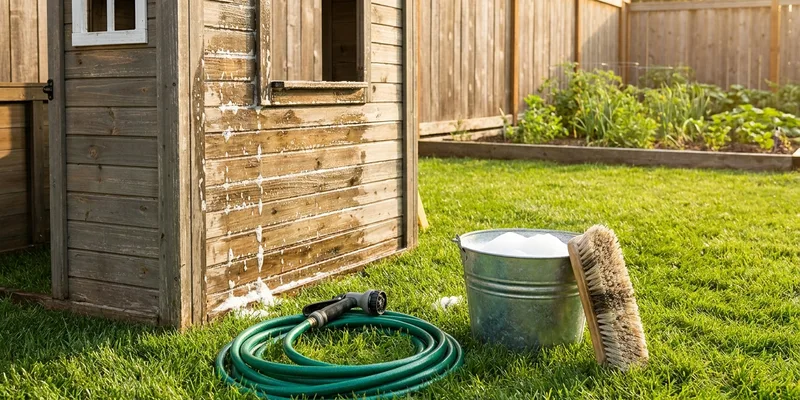
The green or black film on a playhouse is usually surface mildew rather than anything structural, and on molded plastic it comes off with warm water, dish soap and a soft brush. Work the seams and the roof underside where water sits longest, rinse, and let it dry in the sun before children use it again.
Wood is different, because the growth can be in the surface rather than on it. Clean gently, let the wood dry completely, then reseal it. Avoid high pressure washing, which drives water into joints and raises the grain on softwood, leaving a rougher surface that holds moisture even better than before.
If You Use a Cleaning Product
Follow the label for dilution, contact time and rinsing, and check that the product is suitable for the material. The single hard rule is never to mix cleaners: combining bleach with ammonia, or with acidic cleaners, produces toxic gases, and the CDC and EPA both warn against it. Work outdoors, wear gloves and eye protection, and rinse well before the playhouse goes back into use.

Preventing the Regrowth
Cleaning treats the symptom. Trim back whatever shades the playhouse, clear leaf litter off the roof, check the base is not sitting in a puddle, and keep the wood sealed. Our guide on sealing and painting a playhouse covers the finish side in detail.
Common Mistakes to Avoid
- Knocking down a nest to see what happens. Established wasp nests defend themselves, and a ladder makes a bad situation worse.
- Spraying first and reading the label after. The label states where the product can be used and how long to keep children away, and it is the legal instruction.
- Mixing cleaning products. Bleach combined with ammonia or acidic cleaners releases toxic gas. Use one product at a time and rinse between.
- Letting shrubs touch the walls. Vegetation contact is a bridge for insects and a permanent damp patch on the siding.
Frequently Asked Questions
How do you get rid of wasps in a playhouse? Inspect weekly in spring so nests are found while they are still small. Established nests, nests inside a roof or wall cavity, and any nest where a child has a sting allergy should go to a licensed pest control operator rather than being handled from a ladder.
How do you clean mold off a plastic playhouse? Warm water, dish soap and a soft brush handle surface mildew on molded plastic, working the seams and roof underside where water lingers. Rinse thoroughly and let it dry fully in the sun before use.
Can you use bleach on a playhouse? Only in line with the product label, on a material the label covers, rinsed well and dried before children use it. Never combine it with ammonia or other cleaners, since that produces toxic gases.
Why does my playhouse keep getting moldy? Almost always shade, poor airflow and vegetation against the walls. Moving it into more sun, trimming back what shades it and airing it out on dry days addresses the cause rather than the symptom.
Are spiders in a playhouse dangerous? Most are harmless nuisances, though some regions have medically significant species. Sweep corners with a broom rather than reaching in by hand, ask your state extension service if you cannot identify something, and contact a doctor or Poison Control if anyone is bitten and develops symptoms.
The Bottom Line
Pests and mold in a playhouse are almost always a placement and maintenance problem rather than a product problem. Give it sun and airflow, keep vegetation off the walls, and inspect the eaves weekly through spring so nests are found while they are small. When you do reach for a product, follow its label exactly and never mix cleaners. For anything established, in a cavity, or near an allergic child, hand it to a licensed professional.