Last updated: August 18, 2026
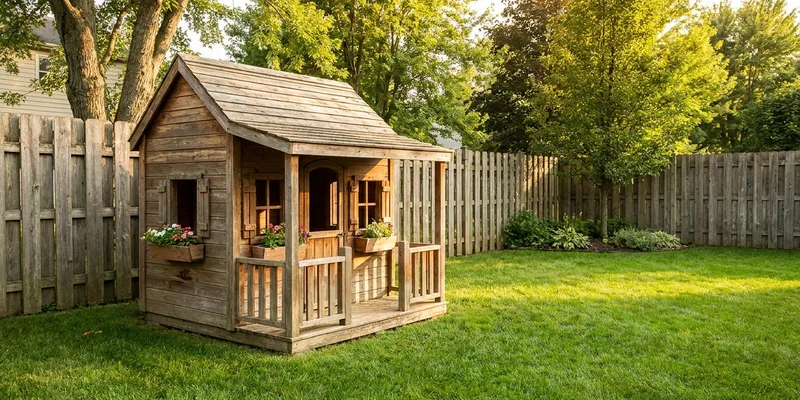
Choosing a playhouse for backyard play comes down to one early decision that shapes everything after it: wood or molded plastic. Almost every other question, how long it lasts, how much maintenance it needs, how easy it is to move, and which ages it suits, follows from that single choice rather than from the brand name on the box.
This guide compares the two materials on the things that actually matter once the playhouse is standing in your yard, walks through sizing and safety details you can check on a listing, and points to the setups that make sense for different yards and ages.
This article contains affiliate links. If you buy through them, we may earn a commission at no extra cost to you. Learn more.
Quick Answer
Should you buy a wooden or plastic playhouse for your backyard?
- For toddlers and preschoolers, a molded plastic playhouse is usually the better buy: it assembles in an afternoon, wipes clean, and needs no sealing or sanding.
- For school age kids, or for a structure you want to keep for a decade, a wooden playhouse in cedar or another rot resistant species holds up longer and looks less like a toy in a small yard.
- Anchor whichever you choose. A lightweight plastic house will move in a storm, and a wooden one on uneven ground racks and loosens at the joints.
- Check the listing for openings, gaps and any raised deck before you buy, since those details decide whether the house suits the age of the child using it.
Wood Versus Plastic: How They Actually Differ
The honest summary is that plastic wins on convenience and wood wins on longevity and looks. Every row below can be verified on a product listing or a manufacturer spec sheet before you spend anything, and together they explain most of the regret people report a year or two after buying.
| What matters | Wooden playhouse | Plastic playhouse |
|---|---|---|
| Expected service life | Many seasons if sealed and kept off wet ground, and repairable board by board | Several seasons, though the panels are rarely repairable once cracked |
| Maintenance | Annual inspection, resealing or restaining, occasional hardware tightening | Rinse and wipe; check listing for UV stabilized panels to slow fading |
| Assembly | Hours to a full weekend, often two adults and a drill | Usually snap together in an afternoon with few or no tools |
| Best age fit | Preschool through school age, especially models with a deck or loft | Toddler through early preschool, with low sills and rounded edges |
| Moving and storing | Heavy; treat placement as semi permanent | Light enough for two adults to shift, which is also why it must be anchored |
If you already know you want a raised deck and a slide attached, the picking criteria shift somewhat, and our guide to an outdoor playhouse with slide covers that combination specifically.
Which Material Fits Your Kids Right Now
Match the material to the age that will use it most in the next two years, not to the age you are imagining five years out. A three year old gets more out of a low plastic cottage they can walk straight into than out of a tall wooden structure with a ladder they are not ready to climb unsupervised.
The reverse is also true. School age children lose interest in a small molded cottage quickly, because there is nothing to climb, nothing to modify and no room for two kids plus their stuff. A wooden playhouse with a real doorway, a window opening and enough headroom to stand in keeps its appeal for years longer.
Sizing a Playhouse to the Space You Have
Measure the footprint, then add clear space on every side for a child to run around the outside, because that circling is most of how a playhouse actually gets used. A house pushed flat against a fence loses that, and the tight gap behind it becomes a collection point for leaves, standing water and wasp nests.
Interior headroom deserves as much attention as the footprint. Listings quote overall height including the roof peak, which is often well above the usable height inside the doorway, so look for a stated interior or door dimension.
Safety Details You Can Check on the Listing
Three things are worth confirming before you buy: openings that could trap a head, whether there is any raised platform, and how the structure attaches to the ground. All three appear in product photos and spec sheets, and none of them require you to see the house in person.
The CPSC Public Playground Safety Handbook identifies openings between 3.5 inches (9 cm) and 9 inches (23 cm) as a head entrapment hazard, because a small child can pass their body through a gap in that range but not their head. Railing spacing, window cutouts and the gap under a raised deck are the places that range shows up on a playhouse.
Raised Decks and Ground Level Houses
A playhouse sitting flat on the ground with no elevated platform is a very different proposition from one on stilts with a ladder. The CPSC handbook treats protective surfacing under and around equipment as a function of fall height, so a ground level cottage generally does not raise that question while a raised deck model does. If yours has a deck, read the handbook’s surfacing guidance rather than guessing at a depth.
Our Top Picks at a Glance
How we chose: we compared widely available backyard playhouses on material and weather resistance, stated assembly effort, age fit, anchoring provisions and the details described above that can be confirmed on a listing. Selections lean on manufacturer specifications and recurring themes in owner reviews rather than any hands-on trial of our own.
🏆 Best Overall
A cedar or similar rot resistant wooden playhouse with a real door opening, window cutouts and pre drilled panels, sized to stand in without a raised deck to complicate the setup.
🧒 Best for Toddlers
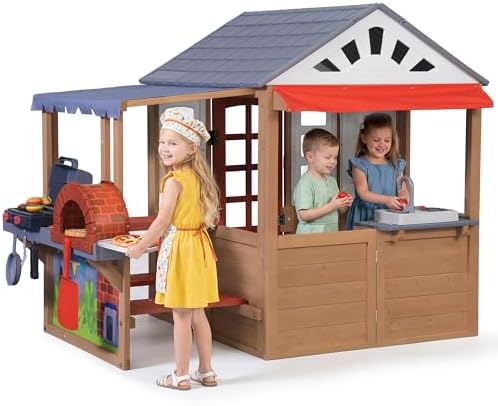
A molded plastic cottage with a low sill, rounded edges and no climbing element, light enough to reposition and simple enough to hose down at the end of the season.

🔧 Best Value
An unfinished wooden playhouse kit you seal and paint yourself, which trades a weekend of your time for a larger structure than a finished model of similar outlay.

Picks by Situation: Small Yards and Wet Climates
Two yards deserve a different pick than the general recommendation: a genuinely small yard where footprint is the binding constraint, and a wet or humid climate where anything wooden sitting on soil has a short life unless it is raised off the ground.
📐 Best for a Small Yard
A compact playhouse with a footprint under a typical patio table, ideally with a lean to or flat roof rather than a wide peak, so it tucks into a corner without dominating the space.
🌧️ Best for Wet Climates
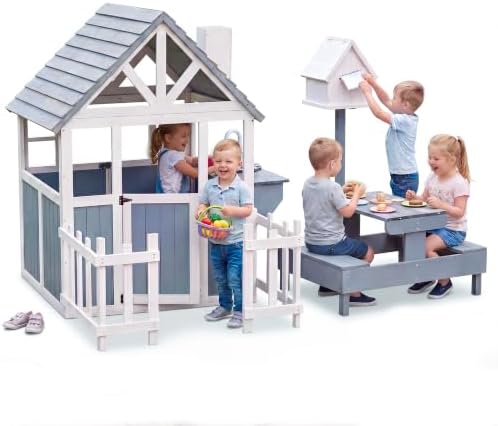
A model that stands on a raised base or supplied floor panel rather than directly on soil, paired with an exterior grade sealer applied before the first season rather than after the wood has already weathered.

Setting It Up So It Lasts
Level the ground first and anchor second. A playhouse assembled on a slope racks slightly under a child’s weight, which loosens fasteners over a season and eventually leaves doors that will not close. Anchoring then keeps a light structure from shifting or tipping in wind, which is the single most common complaint about plastic models.
For wooden houses, seal before the first winter rather than waiting until the surface looks tired, and keep the base out of direct contact with soil wherever the design allows it.
Common Mistakes to Avoid
- Buying for the age your child will be in five years. The playhouse gets used now or it does not get used at all, so the fit that matters is the current one.
- Skipping anchoring on a plastic house. Light panels catch wind well, and an unanchored cottage can move a long way in a storm.
- Assuming exterior height equals usable headroom. The roof peak is often a good deal taller than the door opening.
- Ignoring gaps and railing spacing on the listing photos. The entrapment range the CPSC handbook describes is easy to spot once you know to look for it.
Frequently Asked Questions
Is a wooden or plastic playhouse better for a backyard? Wood lasts longer, looks more like a garden structure and suits older children, while plastic is faster to assemble, easier to clean and better matched to toddlers. The right answer depends on the age of the child and how long you want the structure to stay up.
How long does a plastic playhouse last outside? Several seasons is typical, with fading and brittleness in sun exposed panels being the usual limit rather than structural failure. Look for panels described as UV stabilized, and store or shade the house over winter if that is practical.
Does a backyard playhouse need to be anchored? Yes, in almost every case. Plastic houses are light enough to move in wind, and wooden ones benefit from being fixed to a level base so the frame does not rack over time. Most manufacturers state an anchoring method in the manual.
What size playhouse do I need? Enough interior room for the number of children who will use it at once, plus clear space on every side outdoors so they can run around it. Check for a stated interior or door height rather than judging from the overall roof height.
What age is a backyard playhouse for? Molded plastic cottages generally suit toddlers and preschoolers, and larger wooden houses suit preschool through school age. The CPSC Public Playground Safety Handbook groups play equipment by age band, which is a useful frame when a model includes climbing or a raised deck.
The Bottom Line
Pick the material for the child you have now: plastic for toddlers who want somewhere small to walk into, wood for school age kids who want real headroom in a structure that can be repaired and repainted for years. Level the ground, anchor the house, and check the listing photos for gaps and raised decks before you buy.