Last updated: August 18, 2026
Most playhouse accessories fall into one of two piles: the ones that make the house genuinely more usable, and the ones that make it look nicer in photographs for about three weeks. The difference is easy to predict once you know which problems a playhouse actually creates in a backyard, and almost none of them are decorative.
This guide sorts the category by the problem each accessory solves: keeping the house in place, keeping the inside dry and comfortable, extending the hours it gets used, and giving a child a reason to go out to it. It also names the extras that reliably end up in a garage bin by autumn.
This article contains affiliate links. If you buy through them, we may earn a commission at no extra cost to you. Learn more.
Quick Answer
Which playhouse accessories are worth buying?
- Buy the anchor kit first. It is the only accessory that changes whether the house is still where you left it after a storm.
- A floor mat or outdoor rug is the second best buy, because a bare plastic or timber floor gets cold, gritty and slippery faster than anything else about the house.
- Curtains, a mailbox and a doorbell cost little and do more for actual play than any large add on, because they give a child a role rather than a room.
- Add light only if the house is used at dusk, and keep any powered accessory rated for outdoor use and out of a toddler’s reach.
The Accessories Sorted by Problem
Every worthwhile playhouse accessory answers a specific complaint, and the complaints are predictable: the house moves, the floor is unpleasant, the inside is dark, or the child stopped going out to it. Sorting the category that way makes the shopping list short, and it puts the cheap items at the top rather than the bottom.
| Accessory | Problem it solves | What to check before buying |
|---|---|---|
| Ground anchor kit | A light house shifting or tipping in wind | Anchor type suited to your soil, and enough anchors for every corner |
| Floor mat or outdoor rug | Cold, gritty, slippery flooring inside | Rated for outdoor use, quick draining, sized to the interior footprint |
| Curtains and window trim | A bare shell that feels unfinished | Fabric that tolerates sun and washing, plus a fixing that does not need screws |
| Play kitchen or counter set | Nothing to do inside once the novelty passes | Outdoor safe materials, and pieces large enough to suit the age using them |
| Mailbox, doorbell and signage | No role or story attached to the house | Weather resistant construction, and mounting that does not create a sharp edge |
| Solar or battery light | A dark interior in the late afternoon | Outdoor rating, no trailing cable, and mounting out of reach |
If the house itself is still on the shortlist, our guide to choosing a playhouse for backyard use covers the wood against plastic decision that shapes which accessories will fit.
Anchoring: The Accessory Nobody Regrets
An anchor kit is the one purchase in this category that is not really optional. Molded plastic houses are light for their size, and timber houses on uneven ground rack slightly under a child’s weight until the fasteners loosen and the door stops closing. Anchoring addresses both problems for a modest outlay.
Check the manufacturer’s manual first, because most state an anchoring method and the moldings or brackets designed for it. Where the supplied hardware is a set of short pegs, an aftermarket kit sized for your soil type is the usual upgrade, particularly on sandy or repeatedly saturated ground.
Making the Inside Somewhere a Child Wants to Be
The floor decides this more than the decor does. A bare molded floor is cold in spring and autumn and turns slippery the moment wet shoes and sand arrive, and a timber floor collects grit in the joints. An outdoor rated mat or rug fixes both, and it lifts out for hosing down.
After that, small props beat large ones. Curtains, a mailbox, a doorbell and a name sign cost very little and consistently outlast bigger add ons in terms of use, because they hand the child a story to play rather than another object to look at.
Play Kitchens and Counters
A play kitchen is the one larger accessory that reliably earns its space, provided it is built for outdoor use. Anything made for indoor play warps, fades or rusts within a season outside, so check that the description names outdoor use rather than assuming a plastic item will cope.
Our Top Picks at a Glance
How we chose: we compared widely available playhouse accessories on whether they solve a real backyard problem, whether they are rated for outdoor use, how they mount without creating new hazards, and how easily they can be cleaned or stored. Selections lean on manufacturer specifications and recurring themes in owner reviews rather than any hands-on trial of our own.
🏆 Buy This First
A ground anchor kit with enough anchors for every corner of the house, matched to your soil rather than to the pegs that came in the box. It is the difference between a playhouse that stays put and one you go looking for after a storm.

🧽 Best Comfort Upgrade
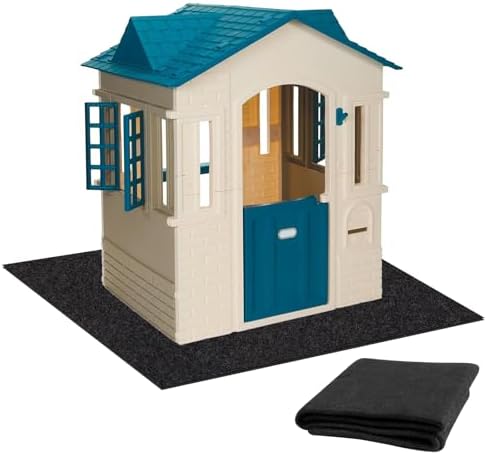
An outdoor rated mat or rug cut or sized to the interior footprint, which keeps grit out of the corners and makes the floor usable in cool weather. Pick one that drains and can be hosed down rather than an indoor rug pressed into service.
🎭 Best for Actual Play
A small set of role props: curtains for the windows, a mailbox by the door and a doorbell that works. Cheap, weather tolerant, and the accessories that most reliably keep a child going back out to the house.

Picks by Situation: Outdoor Kitchens and Late Afternoons
Two additions are worth the money in specific households: an outdoor rated play kitchen where the house is used for long stretches, and a light where play continues past dusk in autumn. Both work well when chosen properly and badly when improvised from indoor equipment.
🍳 Best Larger Add On
An outdoor play kitchen or mud kitchen sized for the age using it, positioned beside the house rather than crammed inside it, so the interior stays free for the play the house is actually for.

💡 Best for Dusk
A solar or battery lantern rated for outdoor use, mounted high enough to be out of a toddler’s reach, with no trailing cable running to the house from an outlet.

Accessories to Skip
Some popular add ons are predictable disappointments. Indoor furniture pressed into outdoor service tops the list, followed by anything fabric that cannot be washed, and by decorative flower boxes mounted where a child walks past at head height.
Be equally wary of anything that adds a climbing route to a house that was not designed for one. Bolting a ladder, a step or a platform to a ground level playhouse turns it into a structure with a fall height, which changes the safety picture entirely. The CPSC Public Playground Safety Handbook ties protective surfacing guidance to fall height rather than to equipment type, so an addition like that pulls in a surfacing question the original house never had.
Fitting and Maintaining What You Add
- Do not drill into molded plastic panels without checking the manual. Many are designed to flex, and a fastener through a panel can start a crack that spreads across a season.
- Watch for new gaps. Anything you mount can create an opening; the CPSC handbook flags openings between 3.5 inches (9 cm) and 9 inches (23 cm) as a head entrapment hazard.
- Keep fabric removable. Curtains and cushions that come off in one motion get washed; the ones that are screwed in place get mouldy.
- Store the small props over winter. Mailboxes, signs and kitchen pieces survive years indoors and one season outdoors.
- Recheck the anchors each spring. Soil movement over a wet winter loosens anchors that were solid in September.
Frequently Asked Questions
What accessories does a playhouse actually need? Anchors and a floor covering are the two that solve real problems. Everything else is optional, though small role props such as curtains, a mailbox and a doorbell deliver more play value for the outlay than any large add on.
Can you put an indoor rug or furniture in an outdoor playhouse? Not for long. Indoor textiles hold water, grow mould and fall apart in a season outside, and indoor furniture warps or rusts. Look for items described as outdoor rated, and expect to bring anything soft inside over winter.
How do you light a playhouse safely? Use a solar or battery lantern rated for outdoor use, mounted out of a young child’s reach and with no cable running across the yard. Leave permanent wiring to an electrician, and check whether your county requires anything for a powered outbuilding.
Can you add a slide or ladder to an existing playhouse? Only if the manufacturer designed for it. Adding a climbing route introduces a platform height that the structure and its anchoring were not specified for, and the CPSC Public Playground Safety Handbook keys protective surfacing to fall height, so the ground underneath becomes part of the question too.
Do playhouse accessories fit any brand? Generic items such as mats, curtains and mailboxes fit almost anything. Brand specific parts, particularly anything that clips into molded panels, usually do not cross between manufacturers, so check dimensions rather than assuming.
What is the best way to keep a playhouse clean? Take the soft items out, sweep the floor, then wash the panels with mild soap and a soft brush. Avoid a pressure washer at close range on molded plastic, since it scores the surface and drives water into panel seams.
The Bottom Line
Spend on the anchor kit and the floor, then on small props that give the house a purpose. Skip indoor furniture, unwashable fabric and anything that bolts a climbing route onto a house that was never designed to have one. If something on the house has broken rather than gone missing, replacement parts are a separate exercise from accessories, and worth doing before you decorate around a failing roof.