Last updated: August 18, 2026
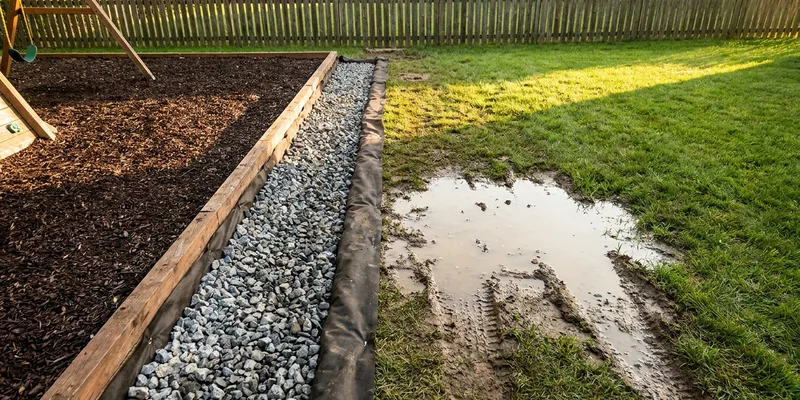
Playground drainage is the thing nobody plans for and everybody eventually deals with, usually in the form of soaked mulch under the swings and a permanent puddle at the bottom of the slide. Mud is a symptom. The cause is almost always that water arrives faster than the ground can take it away, and the fix has to happen underneath rather than on top.
This guide covers how to work out where the water comes from, what the CPSC says about standing water in protective surfacing, and the base layer that stops mud coming back up.
This article contains affiliate links. If you buy through them, we may earn a commission at no extra cost to you. Learn more.
Quick Answer
How do you fix a muddy playground area?
- Find where the water comes from before you buy anything. Run off from higher ground, a roof downspout and a flat spot that traps rain are three different problems.
- Build a draining base. Compacted gravel under a geotextile fabric keeps the surfacing separate from the soil it would otherwise mix with.
- Standing water is not only unpleasant. The CPSC states that good drainage is essential to maintaining loose fill surfacing, and that standing water reduces its effectiveness and leads to material compaction and decomposition.
- Adding more mulch on top of saturated ground is the one move that reliably fails, because the water is still underneath it.
Diagnose the Cause Before You Fix Anything
Go out during heavy rain and watch. Where the water enters the play area tells you which fix applies, and it is usually obvious once you are standing in it. The table matches the pattern you see to the cause behind it and to the work that addresses it.
| What you see | Likely cause | What fixes it |
|---|---|---|
| Water running in from one side | Run off from higher ground, a driveway or a neighboring yard | Intercept it uphill with a swale or drain line and divert it around the area |
| A puddle that never moves | The play area is the low point, or grading left a flat basin | Re-grade for a slight fall, and give the water an outlet to leave by |
| Mud only under swings and at the slide exit | Surfacing displaced by use, so feet are hitting soil | Rake the surfacing back, top it up, consider wear mats there |
| Whole area soft for days | Heavy clay soil, or a compacted layer under the surfacing | Excavate and build a draining gravel base under a geotextile fabric |
| Soil worked up through the mulch | No separation layer, so the two have mixed | Strip the contaminated surfacing, lay fabric, then replace the surfacing |
More than one of these is usually in play at once. Deal with the incoming water first, because there is no point rebuilding a base that a downspout is still emptying onto.
Why Standing Water Matters More Than the Mess
Wet surfacing does not protect the way dry surfacing does. The CPSC Public Playground Safety Handbook states that good drainage is essential to maintaining loose fill surfacing, and that standing water with surfacing material reduces effectiveness and leads to material compaction and decomposition. Compacted mulch is thinner and denser than the depth you measured when you installed it.
The handbook repeats the point in its maintenance guidance, listing pooling water on mulch surfacing as a key thing to look for and noting that wet mulch compacts faster than dry, fluffy mulch. If puddles are noticed regularly, it advises considering larger drainage issues rather than treating the symptom. Its general maintenance checklist has a drainage line of its own: the entire play area should have satisfactory drainage, especially in heavy use areas such as under swings and at slide exits.
Getting the Water to Leave
Drainage is a question of arrival and departure. Reduce what arrives by intercepting run off above the play area with a shallow swale, and by extending any downspout that discharges nearby. Then make sure what does land can leave, which means a slight deliberate fall across the finished ground rather than a flat pad.
The CPSC treats slope and drainage as one question, asking whether loose fill will wash away during heavy rain and suggesting proper drainage re-grading to prevent wash outs. A drain that simply moves the puddle to the other side of the fence is not a solution, and rules on discharging water toward neighboring property vary by county. If your site is on a grade, our guide to leveling a play area on a slope covers the regrading side.

The Base Layer That Stops Mud Coming Back
Mud that appears through the surfacing is soil and mulch mixing. The standard answer is a layered build: excavate to depth, compact a layer of clean gravel so water can move sideways rather than sit, cover it with a geotextile fabric that passes water but keeps the two materials apart, then place the surfacing on top.
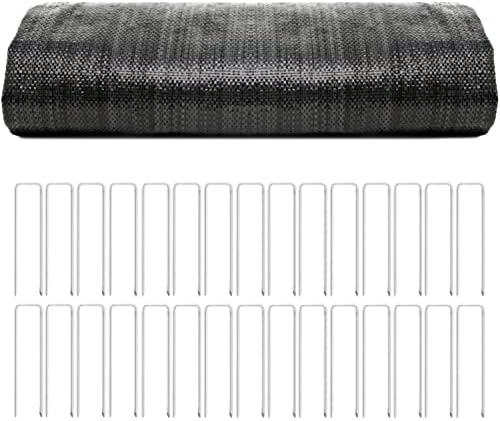
The CPSC uses the same layering logic in the one case where it accepts loose fill over a hard surface, specifying a base layer of gravel for drainage, then a geotextile cloth, then the loose fill surfacing, with impact attenuating mats in high traffic areas such as under swings and at slide exits. Our guide to landscape fabric under playground mulch covers picking the fabric.
Surfacing Choices in a Wet Yard
No loose fill is waterproof, but they behave differently when soaked. Wood mulch and engineered wood fiber absorb water, compact and eventually decompose, which the CPSC links directly to standing water. Pea gravel drains freely and does not rot, and shredded rubber does not absorb water either, though both still need a base that drains beneath them.
Whatever you choose, the depth requirement does not change because the yard is wet. The CPSC recommends that the perimeter provide a method of containing loose fill, and the home handbook adds a reminder to account for water drainage when installing that edging. Our guide to pea gravel for playgrounds covers the free draining option.
Frozen Ground and Winter
Cold weather changes the surfacing rather than the drainage. The CPSC notes that critical height may be reduced in winter where the ground freezes, and warns that most loose fill which freezes solid no longer functions as protective surfacing, recommending children not play on the equipment then.
There is a trap in the warning. The handbook points out that even when the first few inches are loose, the base layer may be frozen and the impact attenuation significantly reduced, so a surface that feels normal underfoot may not be.
Fixes That Make It Worse
- Adding more mulch on top. The water is underneath. Fresh material on saturated ground is wet within a week and decomposing soon after.
- Laying plastic sheeting under the surfacing. It stops water draining away rather than helping, turning the play area into a shallow tank. Use a permeable geotextile instead.
- Grading the area dead flat. A flat pad has nothing to shed water toward. A slight, deliberate fall to one side is what you want.
- Running the drain to the property line. Moving your puddle onto a neighbor’s yard is a dispute waiting to happen, and discharge rules vary by county.
Frequently Asked Questions
How do I stop mud under a swing set? Rake the displaced surfacing back and top it up first, since mud under swings is often simply worn through surfacing. If it returns quickly, the ground underneath is holding water and needs a draining gravel base under a geotextile fabric rather than another load of mulch.
Does playground mulch need drainage underneath? It benefits from it, and on wet soil it needs it. The CPSC states that good drainage is essential to maintaining loose fill surfacing and that standing water reduces effectiveness and leads to compaction and decomposition.
Should I put plastic under playground mulch? No. Plastic sheeting traps water above it. A permeable geotextile fabric separates surfacing from soil while still letting water through, which is what the CPSC’s own layered build over hard surfaces uses.
What is the best playground surfacing for a wet yard? Materials that do not absorb and rot have the advantage, so pea gravel and shredded rubber cope better with damp than wood mulch. The choice still has to meet the depth the equipment’s fall height requires.
Can we use the play area when the ground is frozen? The CPSC recommends children not play on equipment when loose fill surfacing has frozen solid, because it no longer functions as protective surfacing.
The Bottom Line
Watch where the water comes from during a real downpour, then work in that order: cut off what arrives, grade so what lands can leave, and build a gravel base under a geotextile fabric so surfacing stops mixing with soil. Never add mulch to a puddle and never lay plastic beneath surfacing. The CPSC is clear that standing water makes loose fill compact and decompose, so a wet play area is a safety job rather than a housekeeping one.