Last updated: August 18, 2026
A Little Tikes playhouse outdoor search almost always ends in the same confusion: the range covers several distinct types of structure, from a small molded cottage a toddler walks into, up to a climber and slide combination aimed at preschoolers, and the listings do not always make the difference obvious. Picking the right type matters more than picking the right name.
This guide sorts the outdoor Little Tikes range by what each type actually does, explains where molded plastic construction is an advantage and where it is a limitation, and covers the placement and upkeep details that decide how well one of these holds up in a real yard.
This article contains affiliate links. If you buy through them, we may earn a commission at no extra cost to you. Learn more.
Quick Answer
Which Little Tikes outdoor playhouse should you get?
- Choose by type, not by name. The single room cottage, the cottage with an attached slide, and the climber and slide combination suit different ages and different yards.
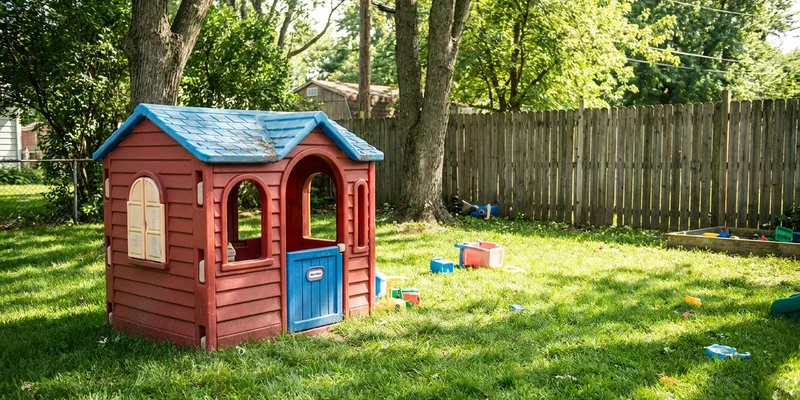
- The Cape Cottage is the compact single room option most people picture, and it is the easiest to fit into a small yard or onto a patio.
- The Country Cottage is the larger walk in cottage with a play kitchen style interior, which holds two children and keeps its appeal longer.
- Anchor whichever you pick. Molded plastic is light enough to move in wind, and every model in this range is light for its size.
The Outdoor Range Sorted by Type
Little Tikes builds outdoor playhouses in a handful of recognizable formats rather than one long model ladder. Sorting the range by type first makes the choice straightforward, because the type decides the age fit and the footprint, and the individual name mostly decides the color scheme and the interior details.
| Type | Best suited to | What to know |
|---|---|---|
| Compact single room cottage | Toddlers and young preschoolers | Smallest footprint in the range; walk in doorway, a window or two, no climbing element |
| Larger walk in cottage | Preschoolers, two children at once | More interior room and often a play kitchen or counter built into a wall panel |
| Cottage with attached slide | Preschoolers | Adds a low deck and therefore a fall height, a use zone and a surfacing question |
| Climber and slide combination | Toddlers through preschool, depending on the model | More climbing than housing; check the stated platform height rather than the roof height |
| Activity or garden playhouse | Younger toddlers | Interactive panels or water play rather than an enclosed room |
If you are still weighing molded plastic against a timber structure in general, our comparison of choosing a playhouse for backyard use covers that decision before you narrow down to a brand.
Cape Cottage and Country Cottage: The Two You Will Keep Seeing
Two names come up repeatedly in this range and they represent the two ends of the cottage format. The Cape Cottage is the compact single room house, and the Country Cottage is the larger walk in version with more interior space. Between them they cover most of what people mean by a Little Tikes outdoor playhouse.
The compact version is the one that fits a patio, a deck corner or a genuinely small yard, and it is light enough for two adults to reposition. The larger version suits a household with two children who want to be inside it at the same time, and it holds its appeal a year or two longer because there is more to do inside. Either way, leave clear space on every side, since running around the outside is most of how a playhouse gets used.
What Molded Plastic Does Well and Where It Falls Short
The strength of this construction is speed and upkeep. Panels snap or bolt together in an afternoon, usually with minimal tools, and the whole structure can be washed down with a hose and a soft brush. There is nothing to sand, seal, stain or re-tighten between seasons, which is the main reason parents pick it over timber.
The limitation is sun and time. Molded panels fade in prolonged direct sunlight and become more brittle with age, and unlike a wooden house a cracked panel is rarely repairable board by board. Placement in partial shade, or moving the unit into a garage or under cover through winter, meaningfully extends its usable life.
Safety Details to Check Before You Assemble
Two things deserve a look before the first use: whether the model includes any raised platform, and how it is meant to be secured. Both are stated in the assembly manual, and both are easy to skip when a box arrives on a Saturday morning and everyone wants it standing by lunch.
Models with a deck and slide introduce a fall height, and the CPSC Public Playground Safety Handbook keys its protective surfacing guidance to fall height rather than to the type of equipment. It also groups play equipment by age band, with separate guidance for children aged 6 to 23 months, 2 to 5 years, and 5 to 12 years, which is worth checking against the age recommendation printed on the box.
Anchoring a Light Structure
Molded plastic is light for its size, which is convenient during assembly and a liability in wind. Most manuals specify an anchoring method, and following it is not optional in an exposed yard. Level the ground first, since a house assembled on a slope leaves doors that will not close properly once the panels settle.
Our Top Picks at a Glance
How we chose: we compared the outdoor Little Tikes formats on footprint, stated age recommendation, whether a raised deck is involved, anchoring provisions and how easily the unit can be cleaned and stored. Selections lean on manufacturer specifications and recurring themes in owner reviews rather than any hands-on trial of our own.
🏆 Best Overall
The larger walk in cottage format, with room for two children, an interior counter or kitchen wall, and no raised deck to complicate placement or surfacing.

📐 Best for a Small Yard
The compact single room cottage, small enough for a patio or a deck corner while still leaving the clear space around it that makes a playhouse worth having.
🛝 Best With a Slide
A cottage or climber format with a low attached slide, which suits preschoolers and adds a climbing element without the platform height of a full playset.

Picks by Situation: Younger Toddlers and Water Play
Two situations call for something other than a straight cottage: a child under two who is not yet using an enclosed room as a room, and a household that wants the outdoor structure to double as summer water play rather than as a house.
🧸 Best for Younger Toddlers
An activity or garden style playhouse with interactive panels rather than an enclosed room, which gives a very young child something to do at the walls instead of a space they do not yet play inside.
💧 Best for Summer Water Play
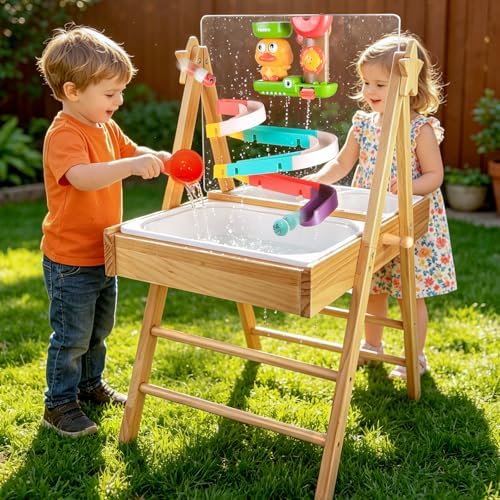
A sand and water table alongside the playhouse rather than a bigger house, which is usually the cheaper way to add months of summer use to the same corner of the yard.
Placement, Storage and Getting a Second Season
Put it somewhere with afternoon shade if the yard allows it, on level ground, and anchored per the manual. Those three choices do more for the lifespan of a molded plastic playhouse than anything you can do later, because fading and brittleness are cumulative and cannot be undone once they set in.
Overwintering under cover is worth the effort where you have the space. A house that spends the cold months in a garage or under a fitted cover reaches its second and third summers looking considerably better than one left out.
Common Mistakes to Avoid
- Buying by name instead of by type. The format decides the age fit and the footprint; the name mostly decides the colors.
- Assuming every model is toddler appropriate. Formats with a deck and slide carry a platform height and a different age recommendation.
- Skipping the anchoring step in the manual. These structures are light for their size and do move in wind.
- Placing it in all day direct sun. Fading and brittleness in molded panels are the main limits on how long the house lasts.
- Cleaning with a pressure washer at close range. It scores the surface and drives water into the panel seams.
Frequently Asked Questions
Which Little Tikes playhouse is best for a small backyard? The compact single room cottage format, of which the Cape Cottage is the best known example. It has the smallest footprint in the range while still leaving room around the outside, which matters more for play value than interior square footage does.
What is the difference between the Cape Cottage and the Country Cottage? Size and interior. The Cape Cottage is the compact single room house suited to a small yard or a patio, while the Country Cottage is the larger walk in version with more interior room and typically a kitchen or counter built into a wall panel.
Can a Little Tikes playhouse stay outside all year? It can, but it will not last as long. Molded plastic fades and becomes more brittle with prolonged sun and weather exposure, so a shaded placement and, where possible, storing the house under cover over winter both extend its usable life noticeably.
Do you need to anchor a Little Tikes playhouse? Yes. Molded plastic is light for its size and can shift or tip in strong wind. Most assembly manuals specify an anchoring method, and level ground under the house also keeps the doorway from binding once the panels settle.
What age are these playhouses for? The cottage formats are aimed at toddlers and preschoolers, while models with a deck and slide carry their own age recommendation on the box. The CPSC Public Playground Safety Handbook groups play equipment by age band, which is a useful cross check when a model includes climbing or a raised platform.
The Bottom Line
Decide on the format first: a compact cottage for a small yard and a young toddler, the larger walk in cottage for two children and a longer run of use, or a slide equipped model if you are ready to think about deck height and surfacing. Then anchor it, keep it out of all day sun, and store it under cover over winter if you can.