Last updated: August 18, 2026
A sand and water table is one of the few pieces of backyard play gear that earns its footprint at almost any age, because the play changes as the child does. A two year old scoops and pours; a five year old builds dams, floats boats, and runs the same experiment forty times to see whether it comes out the same way twice.
The tables themselves look nearly identical in listing photos, which is exactly why so many end up disappointing. This guide covers what actually separates one from another: the height, the basin depth, the drain, the lid, and whether the accessory set is a real toy or a bag of thin plastic that cracks by August.
This article contains affiliate links. If you buy through them, we may earn a commission at no extra cost to you. Learn more.
Quick Answer
Which sand and water table should you buy?
- For toddlers, pick a low table with a wide rim, a lid, and a manufacturer age rating that matches your child, since the accessory pieces are the part most likely to be sized for older kids.
- For preschoolers and up, a two basin table with a divider, a working drain plug, and some kind of ramp or wheel feature holds attention far longer than a plain tub on legs.
- Whatever you buy, check that it has a drain plug and a lid. Those two details decide whether the table gets used all summer or becomes a container of green water behind the shed.
- Empty the water side when play ends and follow current CPSC and pediatric water safety guidance for standing water around young children.
What to Check on the Listing Before You Buy
Every row below can be verified on the product page or in the customer photos before you spend anything. These are the details that decide whether a sand and water table gets used for three summers or three weekends, and none of them show up in the marketing copy.
| What to check | Why it matters | What to look for |
|---|---|---|
| Table height | A table too tall for a toddler means leaning, tipping, and no play | A stated height that puts the rim near your child’s waist, or removable legs that let the table sit low |
| Drain plug | Without one, you tip a full basin of sandy water onto the lawn every time | A screw or pull plug in the basin floor, ideally one on each side |
| Lid or cover | Keeps rain, leaves, and neighborhood cats out between sessions | A fitted hard lid, not a loose sheet of plastic that blows off |
| Basin divider | Sand crossing into the water side turns both sides into sludge | A raised center divider, or two fully separate basins |
| Accessory set | Thin, brittle scoops are the first thing to break and the first thing kids notice | A stated piece count with molded, thicker pieces rather than flat stamped ones |
| Age rating | Small accessory parts are the usual reason a table is rated older than it looks | The manufacturer’s stated age range, matched to the youngest child who will use it |
If you already have a sandbox and only want the water half of the equation, a table is often the wrong purchase. Our guide to a sandbox with a cover covers the alternative for families with the yard space to keep the sand on the ground.
Matching the Table to Your Child’s Age
Age matters less for the basin and more for the height and the accessories. Toddlers need a low rim they can reach over without climbing, large pieces with nothing small enough to swallow, and a stable base that does not tip when a child leans their whole weight on one corner. Preschoolers can handle taller tables and smaller pieces, and they want mechanisms.
The manufacturer’s stated age range is the number to trust here, because it reflects the small parts testing the product went through. A table that looks like a toddler toy but carries an older age rating almost always has an accessory piece that is the reason.
Toddlers and Early Walkers
Look for a low, wide, stable table with a lid and chunky accessories. Many toddler focused tables sell with removable legs so the basin can sit directly on the patio, which is genuinely useful in the first year and lets the table grow with the child afterward.
Preschool and Elementary Age
Older kids want moving parts: a ramp, a spinning wheel, a pump, a channel that carries water from one basin to another. This is also the age where a two basin table with a proper divider pays off, because the play becomes about moving material between wet and dry rather than just scooping.
Our Top Picks at a Glance
How we chose: we compared widely available sand and water tables on basin depth and separation, whether a drain plug and fitted lid are included, the stated age range, and the recurring themes in owner reviews about stability and accessory durability. Selections lean on manufacturer specifications and customer feedback rather than any hands-on trial of our own.
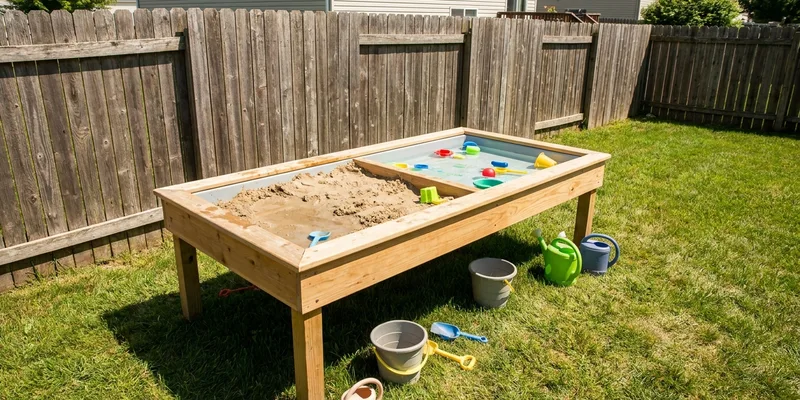
🏆 Best Overall
A two basin sand and water table with a raised center divider, a drain plug, and a fitted lid, the configuration that survives a full season without turning into one basin of wet grit.
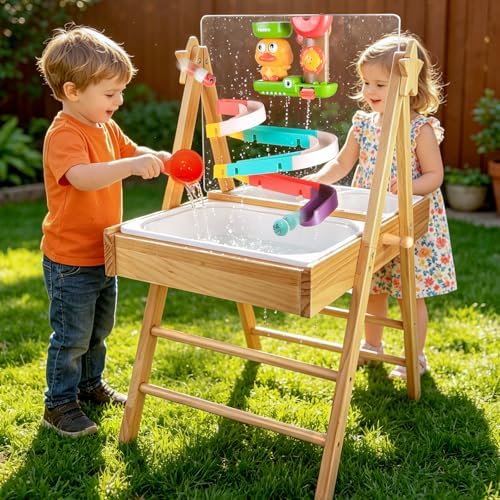
💧 Best for Water Play Features
A table built around a working water feature, a ramp, a wheel, or a hand pump, which is what keeps preschoolers coming back to it rather than treating it as a bucket.
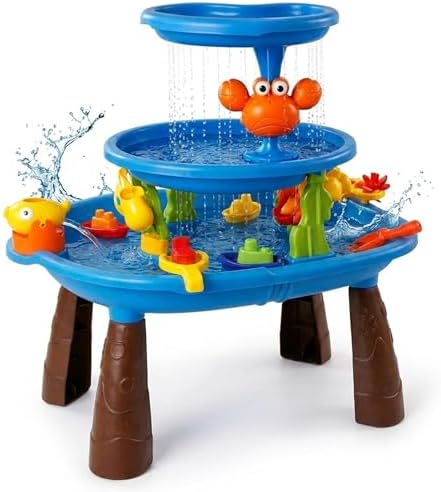
🌱 Best Simple Option
A straightforward single basin table with legs and a cover, enough for a toddler who mostly wants to scoop and pour, without the accessory count you pay for elsewhere.

Picks by Situation: Small Patios and Shared Play
Two situations change the answer. A balcony or a small patio rules out the wider tables entirely, and a household with two or more children at once needs a table they can stand around rather than crowd at one corner.
🏡 Best for a Small Patio or Deck
A compact table with a footprint that fits against a wall, or a basin whose legs come off so it can be stored upright when it is not in use.

👧 Best for Two or More Kids
A longer table with access from all four sides and a piece count high enough that nobody is waiting for the only scoop.
Keeping the Table Clean and the Sand Dry
Standing water in a warm basin goes green quickly, so the routine is simple: drain the water side after each session, tip out what the plug leaves behind, and put the lid on. That single habit does more for the table’s lifespan than anything you can buy.
The sand side needs the opposite treatment. Keep it covered so rain does not soak it, and let it dry out fully if it does get wet, since damp sand packs down and stops being interesting to play with. Use sand sold and labeled as play sand, follow the handling instructions printed on the bag, and empty both basins completely before the first freeze so nothing cracks over winter.
Common Mistakes to Avoid
- Buying a table with no drain plug. You will be tipping a heavy basin of sandy water by hand every single time, and that is exactly how a table stops getting used.
- Ignoring the stated age range. A table that looks toddler friendly may carry an older rating because of a small accessory piece. The rating is the number that reflects actual testing.
- Setting it up on soft grass. Legs sink unevenly, the basin tilts, and the water all runs to one corner.
- Leaving water in it between sessions. Warm standing water goes green fast, and it is the reason most abandoned tables get abandoned.
Where to Go From Here
A sand and water table is the low commitment version of backyard sand play. If your child takes to it and you have the space, the natural next step is a proper sandbox, and our wooden sandbox with a lid guide covers what to look for. The rest of the category, from playhouses to covered sandboxes, sits in our playhouses and sandboxes section.
Frequently Asked Questions
What age is a sand and water table for? Most are rated for toddlers through early elementary age, but the specific rating varies by model because of accessory piece sizes. Check the manufacturer’s stated age range rather than judging by the photos.
What kind of sand goes in a sand and water table? Use sand sold and labeled as play sand, and follow the handling instructions on the bag. Avoid leftover construction or masonry sand, which is not sold for this purpose.
How do you keep the water from going green? Drain the water basin after every session and let it dry before putting the lid on. Standing water in a warm plastic basin turns quickly, and no additive is a substitute for emptying it.
Can you use both sides at the same time? Yes, and that is the point of a divided table, but sand will still cross into the water side even with a raised divider. Expect to rinse the water basin regularly, or run one side at a time if you want to keep the sand dry.
Do sand and water tables need a lid? A lid is what keeps rain, leaves, and animals out between sessions, so a fitted hard cover is worth prioritizing. Tables sold without one usually need a tarp or an aftermarket cover to stay usable.
The Bottom Line
The sand and water table worth buying is the one with a drain plug, a fitted lid, a real divider between the basins, and a stated age range that matches your child. The accessory count and the water features change how long a session lasts, not whether the table survives the summer. Empty the water when play ends, keep the sand covered, and one table will carry a child from scooping to serious engineering.