Last updated: August 18, 2026
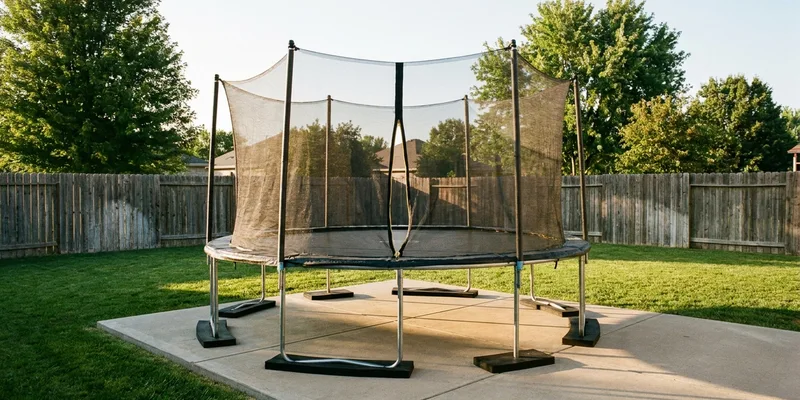
Asking can a trampoline go on concrete usually means the only flat spot in the yard is a patio, a driveway or a slab left over from an old shed. The honest answer is that most manufacturers say no. Sportspower’s manual, to take one example that states it plainly, instructs owners not to position the trampoline on a hard surface such as concrete, tarmac or paving, and lists grass, sand or a play area with an appropriate depth of bark as the suitable alternatives.
This guide covers concrete, gravel and sloping ground in one place, because they are three versions of the same problem: the flattest part of the yard is rarely the safest place to put a trampoline. It explains what each surface does well, what it does badly, and how anchoring changes on each.
This article contains affiliate links. If you buy through them, we may earn a commission at no extra cost to you. Learn more.
Quick Answer
Can a trampoline go on concrete, gravel or a slope?
- Concrete: most manufacturers advise against it. Manuals commonly name concrete, tarmac and paving as surfaces not to use, and list grass, sand or a bark covered play area instead.
- Gravel: workable as a compacted, level base under a trampoline, and it drains well, but loose stone underfoot around the frame is its own hazard.
- Slope: manuals ask for level ground, because an uneven base stresses the frame joints and lets the trampoline shift. Level the ground rather than shimming the legs.
- Anchoring changes with the surface. Auger stakes bite in soil and do nothing in stone or concrete, where fixings or weights are the route, ideally specified by a contractor.
- Whatever the surface, CPSC trampoline safety guidance asks for the trampoline to sit clear of structures, trees and other play areas, with pads covering the springs, hooks and frame.
Can a Trampoline Sit on Concrete?
Most manufacturers say it should not. The wording varies but the instruction is consistent: do not position the trampoline on a hard surface such as concrete, tarmac or paving, and use grass, sand or a play area covered to an appropriate depth with bark instead. Your own manual is the authority here, and it is worth reading before you commit to the patio.
The reasoning is straightforward. A jumper who comes off the trampoline lands on whatever is beside it, and concrete offers nothing. The frame legs also have nowhere to sink, so the whole trampoline sits harder and slides more readily when somebody lands off center.
If Concrete Is Genuinely the Only Option
Some owners have no alternative, and the practical answers are all about what surrounds the trampoline rather than what is under it. Impact absorbing surfacing around the perimeter, an enclosure in good condition, and a fixing method suited to a slab all reduce the exposure. Fixing into concrete is a job to specify properly: manufacturers who discuss it point owners at a licensed contractor to work out footings and anchors for the specific slab, rather than at a bag of hardware.
What About Gravel and Pea Gravel?
Gravel sits somewhere between grass and concrete. As a base, a compacted layer of gravel under a trampoline drains well and stays level far longer than bare soil, which is why it is a common recommendation for a permanent play area. The problem is the surface you stand on, not the base you build.
Loose stone shifts underfoot when someone climbs on or steps off, it works its way into shoes, and it is unforgiving on hands and knees. If you use gravel, the usual approach is a compacted base with a softer surfacing over the top in the area around the frame, rather than loose stone right up to the legs.
Sand, Bark and Mulch as Alternatives
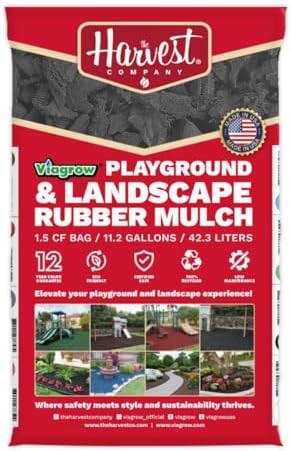
Sand and bark appear directly in manufacturer instructions as acceptable surfaces, and loose fill is what most play areas use around equipment. Sand packs down and needs raking, bark and wood chips break down and need topping up, and bonded or loose rubber holds its depth longest. All three beat a slab on the one measure that matters beside a trampoline, which is what happens when somebody lands on them.
Trampolines on a Slope
Manuals ask for level ground, and the reason is mechanical as much as anything. An uneven base allows movement in the frame, which puts stress on the joints between frame sections and can damage the trampoline. A sloping trampoline also loads one side of the mat more than the other and encourages jumpers to drift downhill.
The fix is to level the ground, not the trampoline. Shimming the low legs with blocks, bricks or paving slabs concentrates load on those points and turns them into a trip hazard and a hard landing spot. Digging into the high side and building the low side back up with compacted material is the durable answer, and our guide on how to level a play area on a slope covers doing that properly.
How Much Slope Is Too Much
There is no universal figure, and any number you find quoted online is somebody’s rule of thumb rather than a standard. What your manual says about level ground is the requirement. In practice, a slope you can correct by cutting into the high side and compacting the low side is workable, while a bank steep enough to need a retaining structure is a different project. That is also the point where an in ground installation starts to make sense, since sinking the trampoline into a slope solves the level problem and the fall height problem together. Our guide to the in ground trampoline kit covers what those installations involve.
The Surfaces Compared
The table below summarises how the common options behave. Read it alongside your own manual, because manufacturers differ on what they will accept and a manual that names a surface as unsuitable overrides any general guidance.
| Surface | How manufacturers treat it | Main drawback | Anchoring |
|---|---|---|---|
| Level grass | The default in most manuals | Grass under the mat dies off and can turn muddy | Auger or U stakes hold well in firm soil |
| Sand or bark | Named as suitable in manuals that list alternatives | Needs topping up and raking through the season | Stakes need to reach undisturbed soil below the loose fill |
| Compacted gravel | Used as a base layer for drainage and levelness | Loose stone underfoot around the frame | Stakes hold poorly in stone; weights or fixings into the base are more reliable |
| Concrete or paving | Commonly listed as a surface not to use | No give at all beside the trampoline, and the frame can slide | Fixings or footings, specified by a licensed contractor |
| Sloping ground | Manuals ask for level ground | Frame joints take uneven stress and the trampoline can shift | Level first, then anchor as for the finished surface |
Anchoring Changes With the Surface
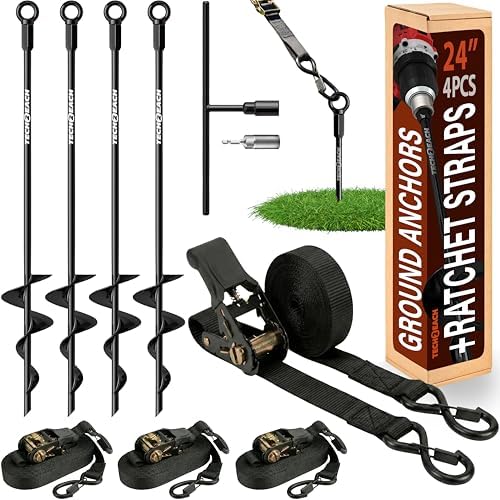
Anchoring is not optional in any yard that gets wind, and the method has to suit the ground. Auger stakes and U stakes rely on soil holding around them, so they work in firm ground and lose most of their grip in loose stone, sand and saturated soil. Straps over the frame spread the load better than clipping to a single leg.
On concrete there is nothing for a stake to grip, so the options are fixings into the slab or weights, and both should be worked out for the specific slab rather than improvised. Our guide to trampoline ground anchors compares the kit types and how they attach.
Common Mistakes to Avoid
- Choosing the patio because it is flat. Flatness is one requirement out of several, and it is the one most easily created elsewhere in the yard.
- Shimming the legs on a slope. Blocks under the low legs concentrate load, create a trip hazard and put a hard object exactly where somebody might land.
- Running loose gravel up to the frame. A compacted gravel base is useful; loose stone as the walking surface around the trampoline is not.
- Assuming stakes work everywhere. Auger anchors need soil to hold them, and they do very little in stone, deep sand or a slab.
- Placing it under trees or against a fence. CPSC trampoline safety guidance asks for the trampoline to sit away from structures, trees and other play areas.
- Skipping the manual. Surface instructions vary by model, and ignoring them can affect the warranty as well as the safety case.
Frequently Asked Questions
Can you put a trampoline on concrete? Most manufacturers advise against it. Manuals commonly instruct owners not to position a trampoline on a hard surface such as concrete, tarmac or paving, and name grass, sand or a bark covered play area as suitable instead. Check the manual for your specific model before deciding.
What can you put under a trampoline on concrete? Impact absorbing surfacing around and under the frame is the usual suggestion where concrete cannot be avoided, along with a sound enclosure. It reduces the exposure rather than removing it, and it does not turn a slab into a recommended surface.
Can a trampoline go on gravel? Compacted gravel works well as a base because it drains and stays level, but loose stone as the walking surface around the frame is unpleasant to land on and shifts underfoot. Most people who use gravel put a softer surfacing over it around the trampoline.
Can you put a trampoline on a slope? Manufacturer instructions ask for level ground, because an uneven base stresses the frame joints and lets the trampoline move. Level the ground by cutting into the high side and compacting the low side, rather than propping up the downhill legs.
Is it safe to shim trampoline legs with blocks? It is not a good solution. Blocks or slabs under the low legs put point loads on the frame, can slip, and place a hard object right where somebody may come off the trampoline. Levelling the ground is the durable fix.
How do you anchor a trampoline on a hard surface? Stakes have nothing to grip, so the routes are fixings into the slab or weights over the frame. Manufacturers who address it advise having the footings or anchor system specified by a licensed contractor for the particular slab and conditions.
Where should a trampoline go in the yard? On level ground, on a forgiving surface, and clear of obstacles. The CPSC trampoline safety alert asks owners to place the trampoline away from structures, trees and other play areas, and to keep shock absorbing pads over the springs, hooks and frame.
The Bottom Line
Concrete is the surface manufacturers most often rule out, and the manual for your trampoline is the authority. Gravel earns its place as a compacted base rather than as the surface you walk on. A slope is fixed by levelling the ground, never by propping up the legs. Once the surface is settled, anchor for that surface specifically, and keep the trampoline clear of structures, trees and other play areas as CPSC guidance asks.