Last updated: August 18, 2026
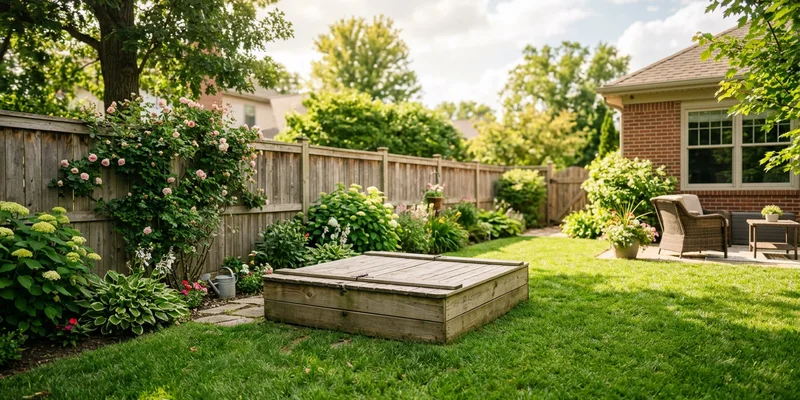
A wooden sandbox with a lid solves the one problem that ends most sandbox projects: an open box of sand collects rain, leaves, and whatever the neighborhood cat decides to do with it. The lid is not an accessory here. It is the feature that determines whether the sand stays usable past the first month.
Wooden boxes come in three broad forms: a plain frame with a separate cover, a box with a hinged lid that folds open into bench seats, and a kit you assemble from precut boards. This guide covers which lid style actually gets used, what to look for in the wood and the hardware, and the ground prep that keeps the bottom of the box from rotting out.
This article contains affiliate links. If you buy through them, we may earn a commission at no extra cost to you. Learn more.
Quick Answer
Which wooden sandbox with a lid should you buy?
- For most yards, a cedar box with a two panel hinged lid that folds open into bench seats gives you a cover a child can open themselves, which is the only kind of cover that gets used consistently.
- If you want the largest sand area for the money, a plain cedar frame with a separate fitted cover costs less in complexity and is easier to lift off, though someone has to actually put it back on.
- Whatever you pick, check the hinge hardware and the corner joinery. Those are the two parts that fail first on a box left outdoors year round.
- Fill it with sand sold and labeled as play sand, and follow the handling instructions on the bag.
Lid Styles Compared
The lid style is the single decision that shapes daily use. A cover that takes two adults to move gets left off; a cover a five year old can flip open gets closed again at the end of play. Here is how the common options actually behave in a backyard.
| Lid style | How it works in practice | Best for |
|---|---|---|
| Hinged bench lid | Two panels fold outward and lie flat as seats; a child can usually manage one panel alone | Families who want the cover closed without an adult doing it every time |
| Single hinged lid | Lifts as one piece and props or lays back; simple, but heavier and needs somewhere to rest | Smaller boxes where the panel weight stays manageable |
| Separate fitted cover | Lifts off completely and has to be stored somewhere while the kids play | Larger boxes where a hinged lid would be too heavy to swing |
| Fabric or mesh cover | Light and quick, drains rain rather than shedding it, but stops less debris | Adding a second layer over an existing box, or covering an odd shape |
| Canopy plus cover | Shade during play, cover between sessions; more parts to fail in wind | Yards with no natural shade over the play area |
If a wooden box is more project than you want, our guide to a sandbox with a cover covers the molded plastic alternatives that arrive ready to fill.
Cedar, Fir, and Treated Lumber
Cedar is the default for a reason: it resists rot and insects without chemical treatment, it weathers to gray rather than falling apart, and it is what most ready made sandboxes are built from. Fir and pine cost less and work fine if you are willing to seal them, but they will need attention sooner in a wet climate.
Whatever the species, the thing to check on the listing is board thickness. Thin boards cup and split after a season of wet and dry cycles, and a split board on a sandbox is a splinter at kid height.
Sealing and Finishing
Untreated cedar can be left to gray naturally, which is what most owners do. If you want to seal it, use a finish the manufacturer approves for the product and let it cure fully before the box goes into service, following the instructions on the can rather than a general rule of thumb.
Our Top Picks at a Glance
How we chose: we compared widely available wooden sandboxes on lid design, wood species and board thickness, corner joinery and hardware, and the recurring themes in owner reviews about assembly and weathering. Selections lean on manufacturer specifications and customer feedback rather than any hands-on trial of our own.
🏆 Best Overall
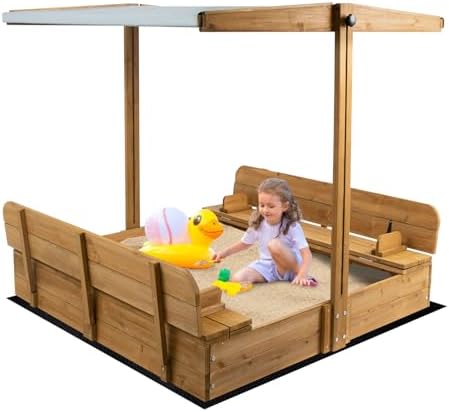
A cedar sandbox with a two panel hinged lid that folds open into bench seats, the configuration that keeps the cover in daily use rather than leaning against the fence.
📐 Best Large Box
A larger square cedar frame with a separate fitted cover, giving two or three children room to build without the weight of a hinged panel that size.

🌤️ Best With Shade
A wooden sandbox that pairs a canopy for play time with a cover for the rest of the week, worth it in a yard with no tree over the play area.

Picks by Situation: Small Yards and Filling the Box
Two practical situations come up constantly. Small yards and patios need a box whose footprint you can actually live with, and every wooden sandbox needs sand that someone has to buy and carry.
🏡 Best for a Small Yard
A compact cedar box with a hinged lid, small enough to sit against a fence line or on a patio without taking the whole lawn.

⛏️ What to Fill It With
Sand sold and labeled as play sand, bought in enough bags to reach a usable depth across the whole box rather than a thin layer in the middle.

Ground Prep and Drainage
A wooden sandbox set directly on grass will hold water underneath, and the bottom boards will show it within a couple of seasons. Level the spot first, then put down landscape fabric or a permeable liner so the sand does not mix with soil while water still drains through.
Skip solid plastic sheeting. It traps water in the box instead of letting it pass, which is the single fastest way to end up with wet sand that never dries and a frame that rots from the bottom edge up. For quantity, use the coverage figure printed on the sand bag together with the manufacturer’s stated fill capacity for your box rather than a general estimate.
Keeping the Sand Clean
The lid does most of the work, but only if it is closed. Get in the habit of shutting it at the end of play, rake the top layer occasionally to break up packed spots, and let the box dry out fully after a soaking rather than covering wet sand tightly.
Animals are the other half of the problem, and a closed lid is the answer to nearly all of it. Our guide on keeping cats out of a sandbox covers what to do when a cover alone is not enough, including how to handle sand that has already been used as a litter box.
Common Mistakes to Avoid
- Buying a box whose lid an adult has to lift. If closing it is a chore, it stops happening, and an open sandbox is a rain and animal problem within days.
- Setting the box straight on unprepared grass. Water sits underneath, the bottom boards rot, and the box racks out of square. Level and line the spot first.
- Lining the bottom with solid plastic. It traps water instead of draining it. Use landscape fabric or a permeable liner.
- Ignoring the hardware in the listing photos. Thin hinges and short screws are what fail first on an outdoor box, well before the wood does.
Where to Go From Here
A wooden box with a working lid is the version of sand play that lasts, but it is not the only version. If you want water in the mix or you are short on yard space, our sand and water table guide covers the smaller footprint option. The rest of the category sits in our playhouses and sandboxes section.
Frequently Asked Questions
What wood is best for a sandbox? Cedar is the common choice because it resists rot and insects without chemical treatment and weathers well outdoors. Fir and pine work if you are willing to seal and maintain them, and board thickness matters as much as species.
Does a wooden sandbox need a bottom? Not a solid one. Most are open at the bottom over landscape fabric or a permeable liner, which keeps sand out of the soil while letting rainwater drain through instead of pooling.
What kind of sand goes in a wooden sandbox? Sand sold and labeled as play sand, used according to the handling instructions on the bag. Leftover construction or masonry sand is not sold for this purpose.
How do you keep rain out of a sandbox? A fitted lid that actually gets closed is the whole answer. Hinged bench style lids get used most consistently because a child can open and close one without help.
Do you need to seal a cedar sandbox? No. Cedar can be left to weather to gray. If you prefer to seal it, use a finish the manufacturer approves and let it cure fully before the box is used.
How long does a wooden sandbox last outdoors? That depends on the wood, the hardware, and whether water sits under it. Good ground prep, a closed lid, and a box that dries out between soakings extend it considerably compared to a box set flat on wet grass.
The Bottom Line
Buy the lid first and the box second. A cedar sandbox with a two panel hinged cover that folds into bench seats is the version that stays closed, stays dry, and stays usable, because closing it is easy enough that it actually happens. Prep the ground with fabric rather than plastic, fill it with sand sold as play sand, and check the hinges and corner joinery in the listing photos before you commit.