Last updated: August 18, 2026
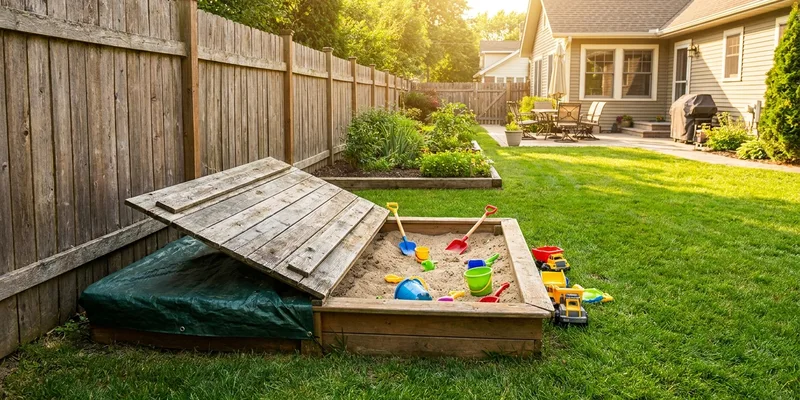
A sandbox with cover is worth buying over an open one for a single practical reason: an uncovered sandbox becomes a litter box, a rain puddle and a leaf trap within a few weeks, and cleaning sand is far harder than keeping it clean in the first place. The cover is the part that decides whether the sandbox still gets used in August.
Not all covers do the job equally well, though. This guide compares the four cover designs you will actually encounter, explains which one suits which yard, and covers sand choice, drainage and placement, the three things that determine whether the sand underneath stays usable.
This article contains affiliate links. If you buy through them, we may earn a commission at no extra cost to you. Learn more.
Quick Answer
What kind of sandbox cover actually works?
- A rigid hinged lid is the most reliable design, because it seals fully, keeps animals out and is easy enough to use that it actually gets closed every time.
- Fabric covers keep leaves and animals out and shed most rain, but only if they fit tightly and are secured at the edges rather than just laid over the top.
- Convertible lids that fold into bench seats are the best fit for small yards, since the lid does two jobs and there is nothing to store separately.
- Whatever cover you choose, the sandbox still needs drainage underneath. A sealed lid over wet sand keeps the water in rather than out.
The Four Cover Designs Compared
Cover type is the main thing separating one sandbox from another, and it drives both how clean the sand stays and how often the lid actually gets closed. Each design below can be identified from listing photos, and each has a clear failure mode worth knowing before you buy.
| Cover type | Strengths | Where it falls short |
|---|---|---|
| Rigid hinged lid | Seals fully, keeps animals out, quick enough that it gets used | Heavier to lift on larger boxes; hinges are the part that wears |
| Lid that converts to bench seats | No separate cover to store; doubles as seating during play | Two halves means a seam, so it sheds rain less completely than one piece |
| Fitted fabric or mesh cover | Light, cheap, works on any shape, packs away small | Only effective if drawn tight and secured; sags and pools water if loose |
| Two piece clamshell | Top half lifts off and the base becomes the play area | The removed half needs somewhere to go, and is often left off |
If you have decided on timber rather than molded plastic, our guide to a wooden sandbox with lid goes deeper on hinge hardware, lid weight and sealing the boards.
Why the Cover Matters More Than the Box
An uncovered sandbox degrades fast. Rain saturates the sand and it stays damp for days, leaves and seed pods work their way down into it, and neighborhood cats treat exposed sand as an obvious place to dig. Each of those is much easier to prevent than to fix once the sand is contaminated.
The CPSC Public Playground Safety Handbook advises covering sandboxes when they are not in use, which is the same conclusion parents reach on their own after one summer with an open box. The practical version of that advice is choosing a cover light and quick enough that closing it is a two second habit rather than a chore.
The Cover You Will Actually Close
This is the real selection criterion. A heavy two person lid on a large box gets propped open by the second week. A hinged lid a child can close themselves, or a fabric cover with a simple drawstring, gets used because using it costs nothing. Weigh convenience above sealing perfection.
Drainage, Placement and What Goes Underneath
A sealed lid does not help if water is already in the sand. Sandboxes need drainage at the base, which usually means drilled holes in a plastic shell or a permeable landscape fabric under a timber frame, sitting on soil or gravel rather than on a solid patio slab where water has nowhere to go.
Placement decides the rest. Partial shade keeps the sand from getting uncomfortably hot in midsummer and slows fading on plastic shells, while a spot away from overhanging trees dramatically reduces how much leaf litter and sap ends up in the sand in the first place. Avoid solid plastic sheeting under the sand, which traps water; permeable landscape fabric keeps weeds and soil out while still draining.
Choosing the Sand Itself
Buy sand sold and labeled for play use rather than the cheaper construction or masonry sand from the same aisle. Play sand is washed and screened to remove the fines and debris that make ordinary sand dusty, and the labeling is what tells you the product is intended for children rather than for mixing concrete.
Check the manufacturer’s own safety information for the specific product you buy, since that is where any handling guidance is published. If you want an alternative to mineral sand entirely, some brands sell washed play sand substitutes made from other materials, which are worth comparing on the listing.

Our Top Picks at a Glance
How we chose: we compared widely available covered sandboxes on cover design and sealing, ease of opening and closing, drainage provisions, materials and how they weather, and whether the lid does a second job such as seating. Selections lean on manufacturer specifications and recurring themes in owner reviews rather than any hands-on trial of our own.
🏆 Best Overall
A wooden sandbox with a rigid hinged lid that seals flush to the frame, drilled or fabric lined for drainage, and light enough at the lid that a child can open it without help.

🪑 Best for a Small Yard
A convertible design whose lid folds open into two bench seats, so there is no separate cover to store and the footprint stays the same whether it is open or closed.

🧒 Best for Toddlers
A molded plastic shell with a lift off lid, low sides a small child can step over unaided, and a shape light enough for one adult to tip out and rinse at the end of the season.

Picks by Situation: Existing Boxes and Cat Problems
Two situations do not need a new sandbox at all: an open box that is otherwise sound and just needs a cover, and a covered box that cats are still getting into because the cover does not seal at the edges.
🧵 Best Cover for an Existing Box
A fitted fabric or mesh cover with a drawstring or elastic edge, sized to your box, which is by far the cheapest way to rescue an open sandbox that is otherwise in good shape.

🐾 Best Against Cats
A rigid lid that closes flush rather than a loose sheet, since cats work at edges and gaps. Our guide on keeping cats out of a sandbox covers what to do when the cover alone is not enough.
Keeping the Sand Usable Through the Season
Open the lid on dry days rather than keeping it shut permanently. Sand that is never aired out stays damp underneath, and damp sand in a sealed box is how mold and a musty smell start. A few hours of sun and air on a dry afternoon does more than any product you can add.
Rake it occasionally, remove debris, and top up once a season as sand migrates out on clothes and shoes. Replace the sand entirely if an animal has been in it, rather than trying to clean it in place.
Common Mistakes to Avoid
- Buying a lid too heavy to close casually. A cover that needs two adults gets propped open and stops being a cover.
- Laying plastic sheeting under the sand. It traps water; permeable landscape fabric is what you actually want.
- Siting the box under a tree. Leaves, sap and seed pods find their way in every time the lid is open.
- Using construction sand instead of play sand. The washed and screened product is labeled for play use for a reason.
- Keeping the lid closed all the time. Sand needs to dry out, and a permanently sealed damp box gets musty.
- Trying to clean sand an animal has used. Replace it, and fix the gap in the cover that let the animal in.
Frequently Asked Questions
What is the best type of sandbox cover? A rigid hinged lid that seals flush to the frame, provided it is light enough to open and close easily. Fitted fabric covers work well too when they are drawn tight and secured at the edges, and they are the practical answer for an existing box that came without a lid.
Do sandboxes really need a cover? Yes. The CPSC Public Playground Safety Handbook advises covering sandboxes when they are not in use, and in practice an uncovered box collects rain, leaves and animal waste quickly enough that it becomes unusable within a season.
How do you keep water out of a sandbox? A cover that sheds rain plus drainage underneath, since both are needed. Drilled holes in a plastic shell or permeable landscape fabric under a timber frame let water that does get in escape instead of sitting in the base.
What sand should you put in a sandbox? Sand sold and labeled specifically as play sand, which is washed and screened rather than the coarser construction or masonry product. Check the manufacturer’s safety information for the specific product before use.
How often should sandbox sand be replaced? Top it up each season, and replace it fully if it has been contaminated by an animal or has developed a persistent musty smell. Airing the box on dry days meaningfully extends how long a fill lasts.
The Bottom Line
Choose the cover first and the box second. A rigid hinged lid that seals flush and opens easily keeps sand cleanest, a convertible bench lid is the best answer in a small yard, and a fitted fabric cover rescues an open box you already own. Then get the basics right underneath: drainage at the base, permeable fabric rather than plastic sheeting, partial shade away from overhanging trees, and sand labeled for play use.