Last updated: August 18, 2026
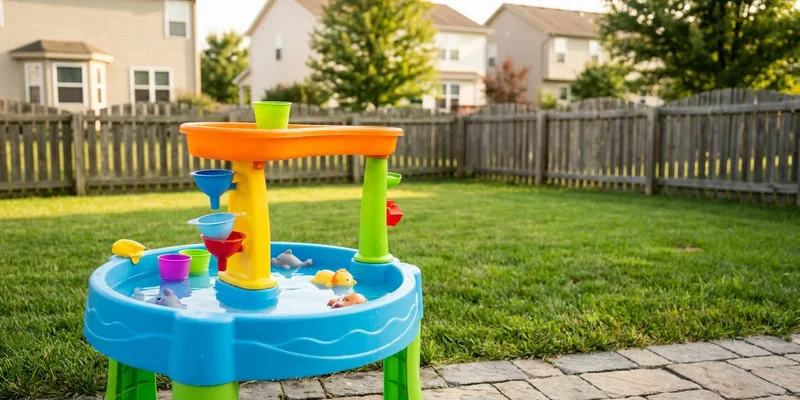
A water table for toddlers is one of the few backyard purchases at this age that holds attention for more than a weekend, because pouring water is genuinely absorbing to a two year old in a way that most toys are not. It is also one of the easiest to get wrong, since the tables that photograph best are frequently the ones built for older children.
Two details decide almost everything at this age: whether the rim sits at a height your toddler can reach over without leaning, and whether the base stays put when they put their whole weight on one corner. This guide covers those first, then the drain, the lid, the age rating, and the water safety routine that has to come with any standing water in a yard.
This article contains affiliate links. If you buy through them, we may earn a commission at no extra cost to you. Learn more.
Quick Answer
Which water table is right for a toddler?
- Height first. The rim should sit low enough that your child can reach the water without going up on their toes or leaning their chest onto the edge, which is what tips a table over.
- Stability second. A wide footprint and legs that lock properly matter more than any water feature, because a toddler leans on the rim rather than standing beside it.
- Check the manufacturer’s stated age range and take it seriously, since a table that looks toddler friendly is often rated older because of a small accessory piece.
- Empty it when play ends, every time. Young children can drown in very small amounts of water, and constant close supervision plus emptying afterwards is what current CDC and pediatric drowning prevention guidance calls for.
What to Check on the Listing Before You Buy
Everything below can be confirmed on the product page, in the specifications, or in customer photos before you spend anything. These are the details that separate a table a toddler uses all summer from one that gets outgrown, tipped over, or abandoned behind the shed by July.
| What to check | Why it matters at this age | What to look for |
|---|---|---|
| Rim height | Too tall and a toddler leans on the edge instead of reaching in | A stated height around your child’s waist, or removable legs so it can sit low |
| Base stability | Toddlers put their weight on the rim, not beside it | A wide footprint, locking legs, and a base that does not flex in customer video |
| Drain plug | Emptying after every session has to be easy or it stops happening | A screw or pull plug in the basin floor rather than tipping the whole table |
| Age rating | Small accessory parts are the usual reason a table is rated older | The manufacturer’s stated range, matched to your youngest user |
| Lid or cover | Keeps rain, leaves and animals out, and signals that play is over | A fitted hard lid, not a loose sheet that blows off |
| Accessory pieces | Thin stamped scoops crack early and small ones are a choking concern | Chunky molded pieces with a stated count, sized for small hands |
Why Height and Stability Beat Features at This Age
Marketing sells water tables on features: waterfalls, spinning wheels, ramps, boats. Those matter from about preschool age. For a toddler, the play is pouring water from one container into another and watching it move, and the thing that stops that play is not a missing waterfall. It is a rim they cannot comfortably reach.
Stability is the same story from the other direction. A toddler steadies themselves on whatever is nearest, and if that is the table rim then the table needs a base that will not lift. Wide footprints, low centers of gravity and legs that lock rather than push fit are what to look for, and customer video shows this far better than a studio photograph does.
When to Skip the Sand Side
Combination sand and water tables are excellent value later on, but at toddler age the sand crossing into the water turns both halves into grit within an afternoon and doubles the cleanup. A water only table is the simpler starting point. Our guide to a sand and water table covers the combined version for when your child is ready for it.
The Water Safety Part, Stated Plainly
Any standing water in a yard needs treating as standing water. Young children can drown in very small amounts, drowning is quiet rather than noisy, and it happens quickly. That is why the routine matters more than the product: an adult within arm’s reach during play, and the basin emptied the moment play ends rather than at the end of the day.
We are not a safety authority and this is not medical advice. The CDC publishes current drowning prevention guidance for young children, and the American Academy of Pediatrics publishes water safety recommendations for parents. Read those for the details, and treat a water table as one more container to empty rather than as an exception because it is small.
Our Top Picks at a Glance
How we chose: we compared widely available toddler water tables on stated height and whether the legs come off, base width and stability, whether a drain plug and fitted lid are included, the manufacturer’s stated age range, and recurring themes in owner reviews about tipping and accessory durability. Selections lean on manufacturer specifications and customer feedback rather than any hands on trial of our own.
🏆 Best Overall
A low water table with a wide, stable base, a working drain plug, a fitted lid and a manufacturer age range that starts at toddler age. Nothing exotic, just the four things that decide whether it survives the summer.

🍼 Best for the Youngest Users
A basin with removable legs so it can sit directly on the patio for a child who is not yet steady on their feet, then stand up later as they grow into it.
💧 Best With Water Features
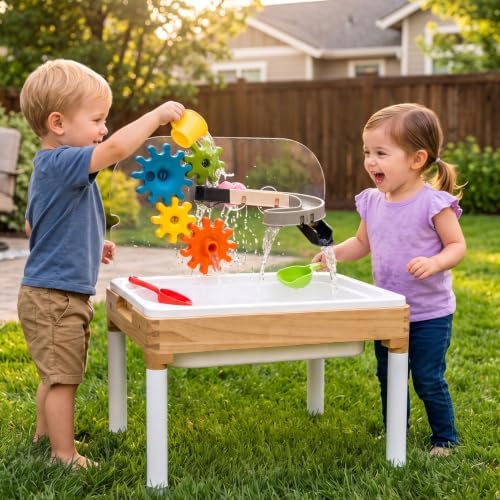
A table built around a simple mechanism, a waterfall, a spinning wheel or a hand pump, for the toddler who has moved past pouring and wants to see something happen when they do it.
Picks by Situation: Small Decks and Two Toddlers
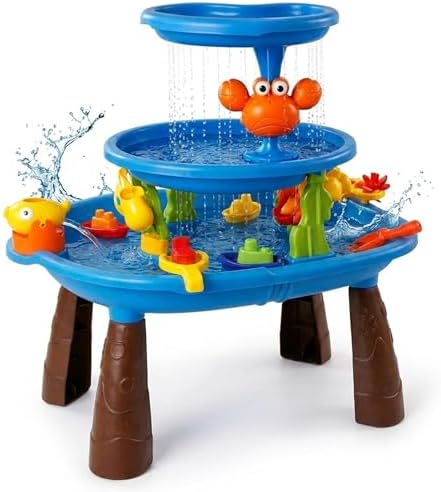
Two circumstances change the answer. A balcony, a small deck or a narrow side yard rules out the wider tables entirely, and a household with two toddlers at once needs access from more than one side or the whole thing becomes a dispute over the only scoop.
🏡 Best for a Small Deck or Patio
A compact basin with a footprint that fits against a wall and legs that come off for upright storage, which is what makes a water table workable in a space that has no room for one.

👧 Best for Two Children at Once
A longer table with access from all four sides and enough included pieces that nobody is waiting, which matters more than any feature when siblings share it.
Filling, Draining and Keeping It Clean
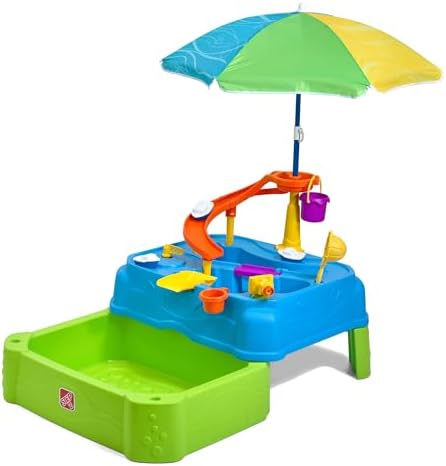
Fill from a hose or a watering can where the table will stand, since a full basin is heavy and awkward to move. Set it on a firm level surface rather than soft grass, where the legs sink unevenly and the water all runs to one corner within minutes.
Cleaning is straightforward if emptying is a habit. Rinse the basin, wipe it with soap and water when a film builds up, and let it dry before the lid goes on. Partial shade keeps both the water and the child comfortable through the middle of the day and slows fading on the plastic, and a spot near an outdoor tap saves carrying water. Empty it completely before the first freeze so nothing cracks over winter.
Common Mistakes to Avoid
- Buying by features rather than height. A waterfall on a table your toddler cannot reach into is a waterfall for somebody else.
- Ignoring the stated age range. It usually reflects an accessory piece size, and that is exactly the detail worth respecting at this age.
- Choosing a table with no drain plug. If emptying means tipping a full basin by hand, it will not happen every session.
- Leaving it full between sessions. Standing water is both a safety issue and the reason the basin goes green.
Frequently Asked Questions
What age is a water table suitable for? Many are rated from toddler age upward, but the specific rating varies by model because of accessory piece sizes. Use the manufacturer’s stated age range rather than judging from the photos.
How much water goes in a toddler water table? Only as much as the play needs, and it should be emptied when play ends. Young children can drown in very small amounts of water, so treat the basin as standing water regardless of how little is in it and follow current CDC drowning prevention guidance.
Do water tables need a lid? A fitted lid keeps rain, leaves and animals out between sessions and makes the end of play obvious. Tables sold without one usually need a cover or a tarp to stay usable through a season.
How do you stop the water from going green? Empty the basin after every session and let it dry before the lid goes on. Warm standing water in a plastic basin turns quickly, and no additive substitutes for emptying it.
Is a water table or a sand and water table better for a toddler? Water only is simpler at toddler age, since sand crossing into the water side turns both halves into grit and doubles the cleaning. The combination version makes more sense once the child is building rather than pouring.
The Bottom Line
Pick on rim height and base stability, then confirm the drain plug, the lid and the stated age range. Water features keep an older child interested; for a toddler, being able to reach the water comfortably is what keeps them at the table. Set it on a firm level surface in partial shade, stay within arm’s reach while they play, and empty it the moment play ends.