Last updated: August 18, 2026
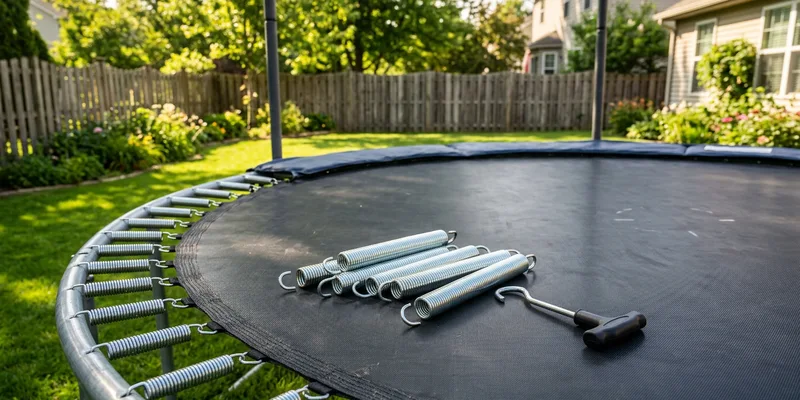
A trampoline springs replacement is the cheapest repair on a trampoline and the one most often ordered wrong. Springs are not sold by the size of the trampoline, they are sold by their own length measured hook to hook while relaxed, and two 14 foot frames from different brands regularly take different springs.
This guide covers how to measure a spring correctly, how to tell worn springs from tired mat fabric, whether to replace the whole set or only the bad ones, and how to fit new springs without hurting yourself in the process.
This article contains affiliate links. If you buy through them, we may earn a commission at no extra cost to you. Learn more.
Quick Answer
How do you buy the right trampoline replacement springs?
- Take three springs off the frame, measure each one from the outside of one hook to the outside of the other while relaxed, and average the result. Parts suppliers advise rounding down to the nearest standard size, since used springs have already stretched.
- Common replacement lengths sold for backyard trampolines run from about 3.5 inches (8.9 cm) up to around 8.5 inches (21.6 cm), with 5.5 inch and 7 inch springs the ones most frequently listed.
- Count the total number of springs on your frame as well. Sets are sold in fixed counts, and a previous repair may have left gaps.
- Replace the whole set once several springs have gone soft or rusty. Mixing tired and new springs pulls the mat out of shape.
- Keep the frame pad on the trampoline afterwards. The CPSC trampoline safety alert says not to use a trampoline without shock absorbing pads that completely cover the springs, hooks and frame.
Measure Before You Order
Spring length is the only number that decides fit, and it is not printed anywhere on the trampoline. The frame diameter tells you nothing on its own, because manufacturers pair the same frame size with different spring counts and different spring lengths to tune how the trampoline bounces.
| What to check | Why it matters | How to do it |
|---|---|---|
| Spring length | The single figure a replacement set is sold by | Unhook three springs, measure each from the outside of one hook to the outside of the other while relaxed, then average and round down to the nearest listed size |
| Spring count | Sets ship in fixed quantities, and gaps make the mat pull unevenly | Count every spring on the frame rather than counting half and doubling |
| Hook style | Hooks vary in gauge and opening, and a fat hook will not seat in a narrow V-ring | Compare an old spring against the listing photos before ordering |
| Wire gauge | Thicker wire gives a firmer bounce and usually a longer life | Check the listing specification; heavier gauge sets state it plainly |
| Frame diameter | Needed for the pad and mat, not for the springs themselves | Measure straight across the outside of the steel frame, through the center |
Get the mat sorted first if it is also on its way out, since spring length and mat size are chosen together. Our guide to trampoline mat repair explains which damage is worth fixing.
How to Tell Worn Springs From a Tired Mat
A trampoline that has lost its bounce is not automatically a spring problem. Springs fail visibly: they sit longer than their neighbors when relaxed, the coils no longer close up, the hooks have opened out, or rust has pitted the wire. A mat that has gone stiff and chalky feels dead underfoot while the springs still look tight.
The quickest check is to lay several relaxed springs side by side on the ground. Springs that have permanently stretched will be noticeably longer than the least used ones, which usually sit near where nobody lands. If most of the set has stretched, the whole set is finished.
What Actually Wears Springs Out
Springs fatigue from repeated full extension, which is why the section of the frame nearest the ladder or the favorite landing spot goes first. Corrosion does the rest. Galvanized and zinc coated wire resists it better than bare steel, and springs left uncovered through wet winters rust from the inside of the coil outwards where you cannot see it.
Replace the Whole Set or Just the Bad Ones?
Replace the full set when more than a handful have stretched, when the trampoline is several seasons old, or when you cannot match the existing springs exactly. Swapping only two or three is reasonable on a young trampoline where a couple of springs were damaged by an obvious event, such as a storm or a spring that unhooked and bent.
The reason mixing is a problem is tension, not appearance. New springs sit shorter and pull harder than tired ones, so the mat gets dragged towards the new section and the load spreads unevenly across the edge webbing. That shortens the life of the mat you were trying to protect.
Our Top Picks at a Glance
How we chose: we compared widely sold replacement spring sets on how clearly the listing states hook to hook length, wire gauge and coating, on the quantity supplied against common frame counts, and on the fit and rust complaints that repeat across owner reviews. Selections lean on manufacturer specifications and recurring review themes rather than any hands-on trial of our own.
🏆 Best Overall
A galvanized 7 inch set, the length most commonly listed for family sized round frames, bought in a quantity that covers the whole trampoline in one order.

📏 Best for Smaller Frames
A 5.5 inch set, the usual fit on compact and kids trampolines where a longer spring simply will not reach between the frame and the V-ring.
💪 Best Heavy Duty
An 8.5 inch heavy gauge set for larger frames, where thicker wire is what keeps the bounce consistent across a full season of use.
Picks by Situation: Tools and Protection
Fitting springs by hand is how people end up with bruised knuckles and bent hooks. Two inexpensive items turn the job from a fight into an hour of steady work, and both get used again every time you take the trampoline apart.
🔧 Best Fitting Tool
A spring pull tool with a T handle, which lets you stretch a spring using your body weight rather than your fingers and keeps the hook under control.

🧤 Best Hand Protection
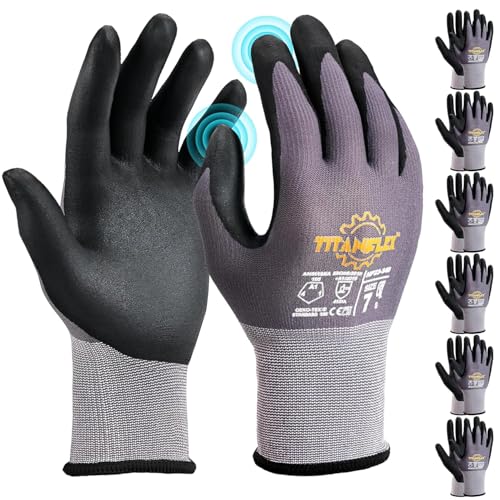
Grip coated work gloves in a child or adult size, since the sharp end of a loaded spring is the most common injury during this job.
Fitting New Springs Safely
Work around the circle, never along it. Hook the first spring, then the one directly opposite, then quarter the remaining gaps and keep halving. That keeps the mat centered and stops the last few springs becoming impossible to reach, which is exactly what happens if you work your way round in order.
Hook the frame end first and pull towards the mat, with the open side of the hook facing down into the V-ring so it cannot lift out under load. Keep everyone clear of the working area while springs are under tension, and put the frame pad back before anyone uses the trampoline, since the CPSC trampoline safety alert lists pads that completely cover the springs, hooks and frame as a basic precaution for home trampolines.
Common Mistakes to Avoid
- Measuring a stretched spring. A spring still on the frame reads long. Take it off, let it relax, then measure hook to hook and round down to the nearest size the seller lists.
- Buying by trampoline size. Frame diameter does not determine spring length. Two 14 foot trampolines from different brands can need different springs.
- Mixing new springs with old ones. The new springs pull harder, the mat shifts towards them, and the edge webbing takes the strain.
- Leaving gaps in the ring. A missing spring concentrates load on its neighbors and on the mat between them, so order enough to fill every hole.
- Fitting springs with bare hands. A loaded spring that slips is the classic trampoline repair injury, and a pull tool costs a fraction of the trouble.
- Reassembling without the pad. CPSC trampoline safety guidance says not to use a trampoline unless shock absorbing pads completely cover the springs, hooks and frame.
Frequently Asked Questions
How do you measure trampoline springs for replacement? Take three springs off the frame so they are fully relaxed, measure each from the outside of one hook to the outside of the other, and average the readings. Parts suppliers advise rounding down to the nearest standard size, because springs that have been in service have already stretched slightly.
What size springs does my trampoline take? There is no answer from the frame size alone. Replacement springs for backyard trampolines are commonly listed from around 3.5 inches (8.9 cm) up to about 8.5 inches (21.6 cm), and 5.5 inch and 7 inch are the two lengths that appear most often. Measure an actual spring rather than guessing from the diameter.
Should I replace all the trampoline springs at once? Replace the whole set if several have stretched or rusted, or if the trampoline is a few seasons old. Swapping only two or three makes sense on a newer trampoline where specific springs were damaged, because new springs pull harder than tired ones and pull the mat off center.
Can you use a trampoline with a missing spring? It is not worth doing. A gap moves load onto the neighboring springs and onto the section of mat between them, which is where edge webbing tears start. Springs are sold in sets partly so that filling gaps is easy.
How long do trampoline springs last? It depends on how much the trampoline is used, how wet the climate is and whether the springs are covered when not in use, so no single figure fits every yard. Check the manufacturer’s stated warranty on the set you buy rather than relying on a general rule.
Do trampoline springs rust? Bare steel rusts quickly outdoors. Galvanized and zinc coated springs hold up much better, and keeping the frame pad in place and covering the trampoline when it sits unused for weeks slows the process further.
Do I need a spring tool to replace trampoline springs? Not strictly, but it makes the job faster and much safer. A T handle pull tool lets you stretch the spring with your arm and shoulder instead of your fingers, which is where most repair injuries come from.
The Bottom Line
Measure three relaxed springs hook to hook, average them, round down to the nearest size listed, and count every spring on the frame before ordering. If more than a few have stretched, buy the whole set rather than mixing tensions. Use a pull tool and gloves, work around the circle in opposing pairs, and put the frame pad back over the springs, hooks and frame before anyone jumps.