Last updated: August 18, 2026
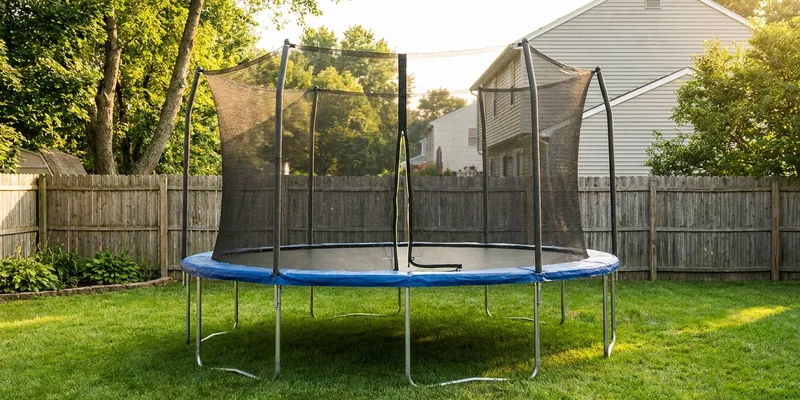
A trampoline net replacement is one of the few repairs where getting the diameter right is only half the job. Two 14 foot trampolines from different brands can need completely different nets, because pole count, pole style and whether the net mounts inside or outside the frame all change the fit.
This guide covers exactly what to measure before you order, how the two mounting styles differ, when a universal net works and when it does not, and how to install a new one so it stays taut through the season.
This article contains affiliate links. If you buy through them, we may earn a commission at no extra cost to you. Learn more.
Quick Answer
How do you buy the right trampoline replacement net?
- You need four numbers before you order: frame diameter, pole count, pole diameter, and whether the net sits inside the springs or outside the frame.
- Inside mounted nets attach to the mat’s V-rings and keep jumpers off the springs. Outside mounted nets wrap the frame and leave the springs inside the enclosure.
- Universal nets fit a range of setups but usually need the pole count and pole style to match; they rarely solve an unusual arched pole design.
- Replace the net rather than patch it once the mesh is sun degraded. CPSC trampoline safety guidance also calls for pads that completely cover the springs, hooks and frame, so check those at the same time.
Measure Before You Order
Almost every wrong net that gets returned failed on one of the five points below, and all five can be checked in about ten minutes with a tape measure. Write them down before you open a single listing, because the product titles all look alike once you start scrolling.
| What to measure | Why it matters | How to check it |
|---|---|---|
| Frame diameter | The headline size every net is sold by | Measure straight across the outside of the steel frame, not the mat, passing over the center |
| Pole count | Net loops and sleeves are sewn to a specific number of poles | Count the upright poles; four, six and eight are the common configurations |
| Pole diameter | Determines whether foam sleeves and pole caps will fit | Measure the pole across its widest point, or read it from the manual |
| Mounting style | Inside and outside nets are not interchangeable | Look at where the net’s lower edge attaches: to the mat’s V-rings, or around the frame |
| Pole shape | Arched and curved poles need nets made for them | Straight uprights take most universal nets; arched designs usually do not |
| Net height | A short net is a false sense of security | Measure from the mat surface to the top of the poles on your existing setup |
If you are replacing the net because the whole trampoline is showing its age, it is worth checking sizing options before spending on parts. Our trampoline sizes comparison covers what each diameter suits.
Inside-Mounted vs Outside-Mounted Nets
Inside mounted nets attach to V-rings on the jumping mat, so the enclosure sits inside the ring of springs. A jumper who reaches the edge meets netting before they ever reach the springs, which is why this style has become the more common design on newer trampolines. The trade-off is that the effective jumping area feels slightly smaller.
Outside mounted nets wrap around the outside of the frame, leaving the springs and the frame pad inside the enclosure. They give a fractionally larger usable mat, but a jumper can land on the pad, so the condition of that padding matters more. Neither style is universally better, but they are not interchangeable, so buy the style your trampoline was built for.
What the Standards Cover
The consumer standard for trampoline enclosures is ASTM F2225, which works alongside ASTM F381 for the trampoline itself. Manufacturers who build to those standards generally say so on the listing, and it is a reasonable thing to look for on a replacement net. Note that the CPSC Public Playground Safety Handbook, which sets use zones and surfacing rules for playground equipment, does not treat trampolines as recommended playground equipment, so it is not the reference for enclosure specifications.
When a Universal Net Works
Universal nets are cut to a standard diameter with sleeves or ties spaced for the common pole counts, and they genuinely do fit a wide range of straight pole trampolines. They are the practical answer when the original manufacturer no longer sells parts for your model, which happens quickly in this category.
They fall down on unusual geometry. Arched pole enclosures, models where the poles curve inward over the mat, and any design where the net is structurally part of the mat attachment usually need the original part or a close equivalent. If your poles are not straight uprights, check the listing photos carefully rather than trusting the word universal.
Our Top Picks at a Glance
How we chose: we compared widely available replacement nets on how clearly the listing states diameter, pole count and mounting style, on mesh weight and UV treatment, and on the fit complaints that show up repeatedly in owner reviews. Selections lean on manufacturer specifications and recurring review themes rather than any hands-on trial of our own.
🏆 Best Overall
A 14 foot replacement net matched to a four pole enclosure, the most common configuration on family sized trampolines and the easiest size to source.

📏 Best for Six Pole Frames
A 12 foot replacement net cut for a six pole enclosure, where a four pole net would leave slack between the uprights.

🔁 Best Universal Option
A universal enclosure net for straight pole trampolines, the sensible route when the original manufacturer no longer supplies parts for your model.

Picks by Situation: Poles and Fasteners
A net that keeps sagging is often not the net’s fault. Two supporting parts wear out on roughly the same schedule as the mesh, and replacing them at the same time is what keeps the new enclosure taut.
🧵 Best Fastener Set
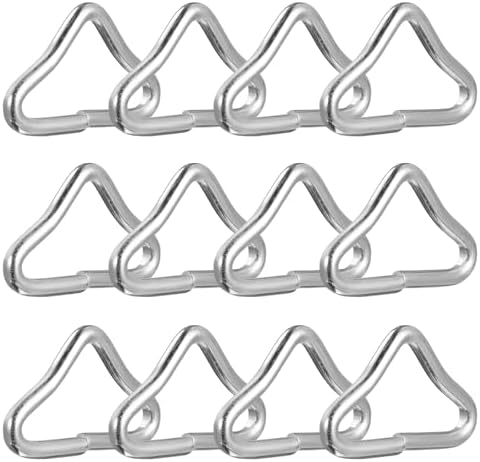
Replacement clips, straps and hooks for attaching the net to the mat rings or frame, since the originals perish faster than the netting itself.
🛟 Best Pole Sleeves
Foam pole sleeves to cover bare uprights, which is both a comfort and a wear issue once the original foam has cracked away.

Installing the New Net
Fit the net on a warm, still day. Netting is more pliable in the sun, and wind turns a large sheet of mesh into a fight. Work around the trampoline in stages rather than fully tensioning one section at a time, attaching every fastener loosely first and then taking up the slack in a second pass around the circumference.
Check the frame pad while the enclosure is off, since that is the only time you get clear access. CPSC trampoline safety guidance calls for shock absorbing pads that completely cover the springs, hooks and frame, so a pad that has split or slipped is worth replacing at the same time. If the pad is gone entirely, our guide on trampoline mat repair covers what is worth fixing and what signals the end of the frame’s life.
Common Mistakes to Avoid
- Ordering on diameter alone. Pole count and mounting style decide the fit as much as the size does, and both are easy to check before you buy.
- Mixing inside and outside mounting styles. A net built to attach to the mat’s V-rings will not wrap the frame correctly, and the reverse is equally true.
- Trusting the word universal on an arched pole design. Curved and arched enclosures usually need the original part or a purpose made equivalent.
- Reusing perished clips and straps. The fasteners degrade in sun on the same schedule as the mesh, and old ones let the new net sag within weeks.
- Patching a sun degraded net. Mesh that has gone brittle across its whole surface fails somewhere else as soon as you repair one hole.
- Ignoring the frame pad. CPSC trampoline safety guidance calls for pads that fully cover the springs, hooks and frame, and net replacement is the easiest moment to check them.
Frequently Asked Questions
How do you measure a trampoline for a replacement net? Measure straight across the outside of the steel frame through the center for diameter, count the upright poles, measure a pole across its widest point, and note whether the net attaches to the mat’s V-rings or wraps the frame. Those four figures determine the fit.
Are trampoline nets universal? Partly. Universal nets fit many straight pole enclosures at a standard diameter and pole count, but they rarely work on arched or curved pole designs, or where the net is structurally tied into the mat attachment.
How often should you replace a trampoline net? When the mesh has gone brittle, discolored or started fraying in more than one place, since sun degradation affects the whole net rather than one spot. Inspect it at the start of each season and after any storm damage.
Can you replace just the net and keep the poles? Usually yes, provided the poles are straight, uncorroded and match the new net’s pole count and diameter. Replacing the foam sleeves at the same time is worth doing while the enclosure is apart.
What is the difference between an inside and an outside trampoline net? An inside net attaches to the jumping mat so the enclosure sits within the ring of springs, keeping jumpers off them. An outside net wraps the frame, leaving the springs and pad inside the enclosure. They are not interchangeable.
Is it safe to use a trampoline without a net? The enclosure is one layer of protection, and the consumer standard for enclosures is ASTM F2225. Separately, CPSC trampoline safety guidance calls for one person on the trampoline at a time, no somersaults, pads completely covering the springs, hooks and frame, and placement away from structures, trees and other play areas.
What size net do I need for a 14 ft trampoline? A net sold for a 14 foot frame, matched to your pole count and mounting style. The diameter alone is not enough, since 14 foot trampolines ship with four, six or eight pole enclosures depending on the model.
The Bottom Line
Take four measurements before you shop: frame diameter, pole count, pole diameter, and inside or outside mounting. A universal net is a solid answer for a straight pole trampoline whose maker no longer stocks parts, but arched pole designs need the proper part. Replace the clips and foam sleeves at the same time, and check the frame pad while the enclosure is off, since that is the one moment you get clear access to it.