Last updated: August 18, 2026
A replacement slide for a swing set is one of the few playset repairs where the part almost always outlives the reason you are buying it. Slides crack at the mounting flange, go chalky after a few summers of direct sun, or were already missing from a set you bought secondhand. The structure is fine; one molded plastic piece is not.
The catch is fit. Slides are sold by deck height, not by brand, and the bolt pattern at the top rarely lines up between manufacturers without a little work. This guide covers how to measure your tower, which slide types suit which deck heights, and what to check on a listing before you order.
This article contains affiliate links. If you buy through them, we may earn a commission at no extra cost to you. Learn more.
Quick Answer
Which replacement slide fits your swing set?
- Measure the deck height first, from the ground to the top surface of the platform. Slides are sold to match that number, and a slide built for a taller deck will sit too shallow to be safe or fun.
- For most residential towers, a wave slide sized to a 4 foot or 5 foot deck is the direct like for like swap.
- Check the top flange and bolt spacing against your existing mount before ordering, since holes rarely align perfectly between brands.
- Buy the mounting hardware separately if the listing does not include it. Reused bolts from a cracked slide are a common source of a wobbly install.
What to Check Before You Buy a Replacement Slide
Every row below is something you can confirm on the product listing or with a tape measure in your own yard, before money changes hands. Almost every returned slide is a fit problem, not a quality problem.
| What to check | Why it matters | What to look for |
|---|---|---|
| Deck height | Determines the slide’s length and angle; the single most important number | A slide listed for your exact deck height, measured from ground to the top surface of the platform |
| Top flange and bolt pattern | Decides whether the slide bolts to your tower without drilling new holes | Listed hole spacing and flange width, compared against your existing mount |
| Slide type | Wave, straight, spiral and tube slides need different amounts of clear ground | A shape that fits the space beside your tower, not just the deck height |
| Material and UV treatment | Untreated polyethylene fades, chalks and grows brittle in strong sun | A stated UV stabilized or UV protected molded polyethylene body |
| Exit height and run out | A slide that ends too high or drops onto hard ground is the injury risk, not the ride | A flat run out section at the bottom, sitting over protective surfacing |
If the tower itself has soft spots or loose joints, a new slide is treating the symptom. Our guide to wooden swing sets with monkey bars covers what a sound frame looks like when it is time to replace more than one part.
How Deck Height Decides Which Slide Fits
Deck height is the number the whole purchase turns on. Measure from the ground to the top surface of the platform, not to the top of the guard rail. Residential towers are commonly built around 3, 4, 5 or 6 foot decks, and slides are listed against those same steps.
A slide meant for a taller deck leaves the exit end floating above the ground, which turns the last section into a drop. A slide meant for a shorter deck does the opposite: the angle steepens and the run out disappears. Neither can be corrected by shimming the top.
When your deck height falls between sizes
Decks settle, and a 5 foot deck that has sunk on one side can measure closer to 4 foot 8. Measure at all four corners and use the lowest reading as your working number. If the tower itself is out of level, correcting that before you order is cheaper than buying two slides. Our walkthrough on leveling ground for a playset covers how to fix the base rather than the symptom.
Slide Types and the Space Each One Needs
Wave slides are the default on residential playsets: a molded body with one or two gentle humps, mounted straight off the deck. Straight slides trade the humps for a single ramp and generally take slightly less ground length. Spiral and tube slides wrap around a vertical axis, so they need less horizontal run but a lot more clear space to the side and a stronger mounting point.
Ground space is the constraint people underestimate. A wave slide off a 5 foot deck extends a good distance from the tower, and that distance is on top of the clear area the slide exit needs. Pace it out before you order rather than after the box arrives.
Tube slides are a different job
A spiral tube slide is heavier, arrives in sections, and mounts with a bracket assembly rather than a simple flange. If your tower was not designed for one, fitting it means adding support at the deck edge. Treat it as a modification, not a swap.

Our Top Picks at a Glance
How we chose: we compared widely available replacement slides on the deck heights they are sold against, whether the listing states a UV stabilized body, and how clearly the flange and hole spacing are documented. Selections rely on manufacturer specifications and recurring themes in customer reviews rather than any hands-on trial of our own.
🏆 Best Overall
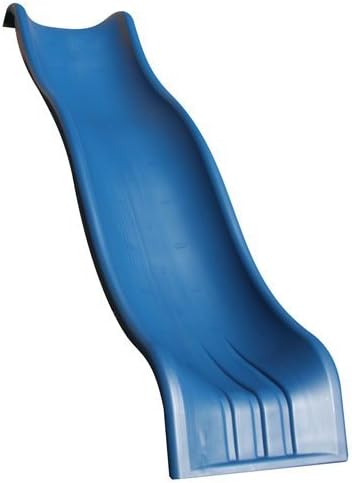
A molded wave slide sized for a 4 foot deck, the most common residential tower height and the size with the widest choice of like for like replacements.
📏 Best for Taller Towers
A longer wave slide built for a 5 foot deck, with the extra length that keeps the exit angle sensible on a taller platform.

🧒 Best for Toddler Towers
A short molded slide for a low play tower or a first playset, where the deck sits well under 4 feet and a full length wave slide would be far too steep.

Picks by Situation: Hardware and Odd Mounts
Two situations come up often enough to plan for. The first is a slide that fits perfectly but arrives without bolts. The second is a mount that does not line up, which is the normal outcome when the new slide and the old tower came from different manufacturers.
🔩 Best for a Clean Install
A playset hardware kit with carriage bolts, washers and lock nuts, so the new slide goes on with fresh fasteners rather than whatever came out of the cracked flange.

Installing the New Slide Without Creating a Hazard
Mount the top flange flush against the deck edge with the bolt heads on the sliding surface and the nuts underneath, so nothing on the ride side can catch clothing. Tighten evenly, then check that the bed does not flex or lift away from the deck under weight. A slide that moves at the top will crack there eventually.
The exit end needs to sit level and stable on the ground, not perched on a high spot or bridging a dip. If the ground there has washed out, fix it rather than propping the slide up on a paver.
Give the exit the clear space it needs
According to the CPSC Public Playground Safety Handbook, the use zone at the exit of a slide should extend a minimum of 6 feet (1.8 m), and where the slide platform is higher than 4 feet (1.2 m), that exit zone should equal the platform height, up to a maximum of 8 feet (2.4 m). That area needs to be clear of obstacles and covered with protective surfacing, which is a separate job from mounting the slide. Our guide to playground mulch covers what goes under it.
Common Mistakes to Avoid
- Measuring to the guard rail instead of the deck surface. Measuring higher lands you a slide that is too long.
- Assuming brands are interchangeable. Compare flange width and hole spacing to your mount before ordering, not after.
- Reusing bolts from the broken slide. The flange usually cracks because the fastener was loose or corroded, and the same bolt will do it again.
- Propping the exit end on blocks or pavers. A hard object at the bottom of a slide is exactly where you do not want one.
- Fixing the slide and ignoring the surfacing. The exit zone matters more to safety than the slide model does.
Frequently Asked Questions
How do I know what size replacement slide I need? Measure from the ground to the top surface of the deck at all four corners and use the lowest reading. Slides are sold against that deck height, so a 4 foot deck takes a slide listed for a 4 foot deck.
Are swing set slides universal? No. Deck heights are broadly standardized, but the top flange width and bolt spacing vary between manufacturers, so a slide that matches your height may still need new holes drilled in the deck edge.
Can I put a taller slide on a shorter deck? Not safely. The exit end will hang above the ground, turning the last section into a drop rather than a run out. Match the slide to the deck height instead.
What are replacement slides made of? Almost all residential slides are molded polyethylene. Look for a stated UV stabilized material, since untreated plastic fades and grows brittle faster in sun.
How much clear space does a slide exit need? The CPSC Public Playground Safety Handbook puts the exit use zone at a minimum of 6 feet (1.8 m), rising to the platform height for platforms over 4 feet (1.2 m) and capped at 8 feet (2.4 m). Keep that area clear and surfaced.
The Bottom Line
Buy a replacement slide by deck height first and shape second. Measure from the ground to the top of the platform, compare the flange and bolt spacing to your mount, and order fresh hardware rather than reusing bolts from the broken part. Then give the exit the clear, surfaced run out the CPSC handbook describes.