Last updated: August 18, 2026
Playground border edging is the least interesting thing you will buy for a play area and the one that quietly decides whether everything else works. Loose fill surfacing only protects a child at the depth it was installed to, and without something holding it in place, that depth walks out into the lawn one sneaker at a time.
This guide covers what separates a border built for a deep mulch bed from the shallow strip sold for flower beds, what to check on a listing before you order, how much linear footage a real play area needs, and how to set it so it stays put through a season of kids.
This article contains affiliate links. If you buy through them, we may earn a commission at no extra cost to you. Learn more.
Quick Answer
What kind of border edging works around a playground?
- Height is the specification that matters. The CPSC Public Playground Safety Handbook advises never using less than 9 inches of loose fill, with shredded or recycled rubber the exception at 6 inches, so a border has to retain a bed that deep.
- Rubber or composite edging is the usual choice around play equipment because it has no splinters, no sharp steel top edge and enough flex to follow a curve.
- Anchoring decides everything. A tall border spiked with short stakes tips outward under the pressure of a full mulch bed and a running child.
- Leave a low or ramped section so a wheelbarrow, a stroller or a wheelchair can get in without stepping over a raised lip.
What to Check Before You Order
Every row in the table below can be confirmed from a product listing before anything arrives. Border edging is sold overwhelmingly to gardeners, so the specifications that matter to a flower bed sit front and center while the ones that matter under a swing set are further down the page.
| What to check | Why it matters | What to look for |
|---|---|---|
| Profile height | The border has to retain the full loose fill depth, not a garden bed depth | A stated height that covers the depth you are installing to, with the CPSC handbook figures as the benchmark |
| Anchoring system | A full mulch bed pushes outward constantly, and kids push back from the other side | Long spikes or stakes sized to the profile, not the short pins bundled with garden strip |
| Top edge | The border sits at ankle height where children run and fall | Rounded or capped edges, no exposed steel lip and no protruding fastener heads |
| Material | It lives outdoors under water, mulch and UV for years | Recycled rubber, composite or heavy gauge plastic; untreated timber rots and treated timber is the wrong material near play surfacing |
| Section joins | Loose fill escapes through gaps long before it escapes over the top | Interlocking ends or connector pins rather than sections butted together, and a stated bend radius if the outline curves |
| Access point | Barrows, strollers and wheels have to cross the line somewhere | A ramped section, a removable piece, or a deliberate low run at the entrance |
If you have not settled on a surfacing material yet, that decision comes first, because the material sets the depth and the depth sets the profile height you need from the border.
Why the Border Is Doing Safety Work
Loose fill surfacing is rated by depth, so anything that reduces depth reduces protection. The CPSC Public Playground Safety Handbook advises never using less than 9 inches of loose fill material, with shredded or recycled rubber the one exception at a recommended 6 inches, and it calls for frequent maintenance so levels never drop below that minimum. A border makes that maintenance rare rather than constant.
The handbook also singles out the areas under swings and at slide exits as more susceptible to displacement, which is where material gets kicked toward the perimeter. Containment and raking are two halves of the same job rather than alternatives.
Height, not just presence
A 4 inch garden strip around a 9 inch bed is decoration. The border needs to stand at or above the finished level of the surfacing, and since loose fill is installed above its target depth so it can settle, the initial fill sits higher still. The full depth discussion, straight from the handbook’s table, is in our guide to how deep playground surfacing should be.
Our Picks by Situation
How we chose: we compared widely available edging products on stated profile height, anchoring hardware, edge treatment and material, and on the problems owners raise most often after a winter outdoors. Selections lean on manufacturer specifications and recurring themes in customer reviews rather than any hands-on trial of our own.
🏆 Best Overall
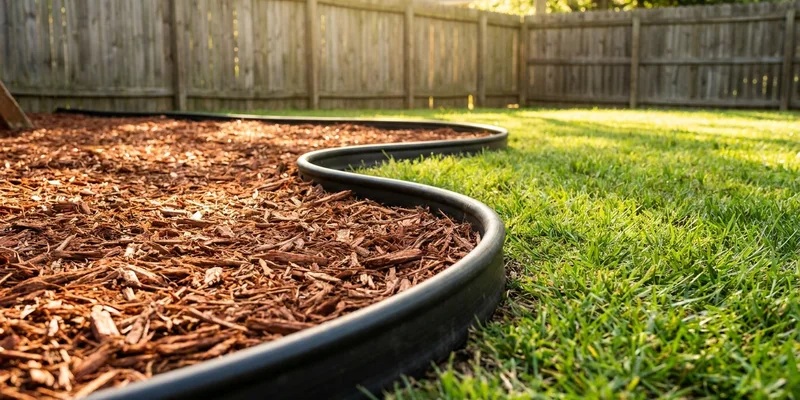
Recycled rubber playground border edging in interlocking sections. It has no splinters and no steel edge, it flexes around curves, and the profile is designed to retain a deep loose fill bed rather than a shallow garden one.
🧱 Best for Straight Runs
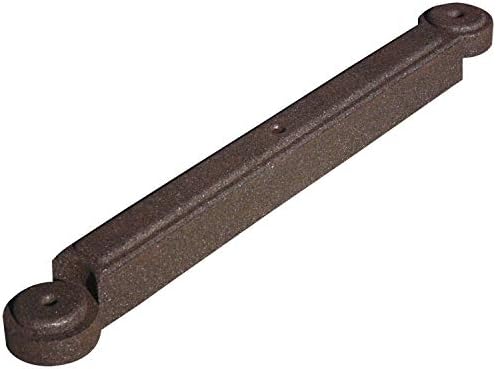
Rubber landscape timbers. They give a squarer, more finished look along a fence line or a patio edge, stack to raise the retained height, and take a spike through predrilled holes.

🌀 Best for Curves and Uneven Ground
Deep profile no dig plastic edging on a roll. It follows an irregular outline in one continuous piece, which removes the joins that loose fill escapes through.

The Parts People Forget to Order
Two items decide whether the border you chose holds its line or leans outward by August. Neither costs much relative to the surfacing itself, and both are routinely left out of the order because the edging listing implies the hardware is included.
🔩 Anchoring
Long steel anchor spikes sized to the profile height. The short pins that ship with garden edging are meant to hold a strip against soil, not a bed of loose fill against a hundred pounds of running child.

🧵 The Layer Behind It
A permeable weed barrier that runs up to and slightly under the border. It stops weeds coming through the seam, which is where they always start, and keeps mulch from working its way into the soil at the perimeter.

Measuring and Setting the Border
Set the border before you order surfacing, because the enclosed shape tells you exactly how much material to buy. Lay the perimeter out with a hose or marking paint, walk it, then measure the finished line for linear footage and add a section for waste and joins.
That perimeter has to enclose the whole use zone rather than the footprint of the equipment. The CPSC Outdoor Home Playground Safety Handbook advises extending surfacing at least 6 feet from the equipment in all directions, and further to the front and rear of swings, a distance equal to twice the height of the top bar from which the swing is suspended. Our swing set safety zone guide shows how to mark that out in a real yard.
Setting it so it stays
Dig a shallow trench along the marked line so the base of the edging sits below grade, seat the sections in it, then drive the spikes at an angle into undisturbed soil rather than straight down into loose trench fill. Backfill and tamp behind the border before any mulch goes inside, because the outward pressure only starts once the bed is full.
Common Mistakes to Avoid
- Buying garden bed edging for a play area. The profile is too shallow to retain a loose fill depth and the anchor pins are sized for soil, not for a full bed.
- Using treated timber as a border. Treated wood is not the right material next to play surfacing, and untreated timber rots out at ground level within a few seasons.
- Enclosing the equipment instead of the use zone. The border should follow the surfaced area the CPSC describes, which extends well past the frame and further behind swings.
- Leaving no way in. A continuous raised lip means every barrow of top up mulch gets lifted over it, and it is a trip point at the one spot children enter and leave.
- Setting the border after filling. Retrofitting means digging the trench through material you have already spread, and the line ends up following the mulch instead of the use zone.
Frequently Asked Questions
Do I really need a border around playground mulch? Loose fill only protects at the depth it was installed to, and without containment it migrates into the lawn and thins out first under the swings. The CPSC calls for frequent maintenance so levels never drop below the minimum depth, and a border makes that a rare job rather than a weekly one.
How tall should playground border edging be? Tall enough to retain your finished surfacing depth. The CPSC Public Playground Safety Handbook advises never using less than 9 inches of loose fill, except shredded or recycled rubber at a recommended 6 inches, so size the profile against the material you are installing.
Can I use landscape timbers around a play area? Rubber or composite timbers are a reasonable choice because they do not splinter or rot. Treated wood is not appropriate next to play surfacing, and untreated wood fails at ground level after a few wet seasons.
Is metal edging safe around a playground? A thin exposed steel lip sits at ankle height in the exact area children run and fall, which is why rubber, composite and capped plastic profiles are the usual recommendation for play areas.
How much edging do I need? Measure the perimeter of the surfaced use zone, not the equipment. The CPSC advises surfacing extending at least 6 feet from equipment in all directions and further to the front and rear of swings, so lay the outline out on the ground before you count linear feet.
Should the fabric go under the border or up against it? Run the weed barrier out to the border and slightly under it. The seam between fabric and edging is where weeds come through first, so overlapping there closes the gap.
The Bottom Line
Buy the border for the depth of surfacing you are installing, not for the look of the yard. Rubber or composite profiles avoid splinters and sharp edges at ankle height, long spikes driven into undisturbed soil keep the line from leaning outward, and a ramped access point saves you lifting a barrow over the lip every spring. Set the perimeter around the full use zone before you order material, and the mulch order sizes itself.