Last updated: August 18, 2026
Sorting outdoor toys by age is the fastest way to avoid the two classic mistakes: buying something a child cannot use yet, and buying something they were finished with a year ago. The age printed on the box is the single most useful piece of information on any listing, and it is also the one most shoppers scroll straight past.
This guide groups the outdoor toys that hold up in a backyard by the age bands manufacturers grade them for, explains what that grading actually means, and covers what to check before ordering so the toy is still in use next summer rather than in the garage.
This article contains affiliate links. If you buy through them, we may earn a commission at no extra cost to you. Learn more.
Quick Answer
How do you pick outdoor toys by age?
- Start with the manufacturer’s age grading on the box. It reflects the small parts and hazards of that specific product, which no general guide can do for you.
- For toddlers, buy big, stable, and pushable. Ride-on toys, balls, and anything with a low center of gravity get used daily.
- For preschoolers, water and sand beat almost everything else on a hot day, and bubbles hold attention longer than most boxed toys.
- From school age onward, the toys that survive are the ones with a target or a score, because that is what makes a child pick the same thing up twice.
Outdoor Toys by Age Band
The table below groups the categories that reliably get used outdoors by the age bands they are usually graded for. Treat the bands as a starting point and the box as the authority, because two similar looking toys can carry different ratings depending on their parts and materials.
| Age band | What tends to get used | What to check |
|---|---|---|
| About 1 to 2 | Push and ride-on toys, large balls, stacking cups in a shallow water tray | Wide wheelbase, no small parts, nothing that tips when leaned on |
| About 3 to 5 | Sand and water play, bubble machines, sprinklers, trikes, low slides | Age grading first, then whether it needs an adult to run it every time |
| About 6 to 9 | Catch and throw games, scooters, jump ropes, toss games with a score | Whether the child can set it up and start it without help |
| About 10 and up | Skill toys, sports equipment, target games, pogo sticks | Whether it is genuinely challenging; toys aimed too young get ignored immediately |
| Mixed ages | Sprinklers, balls, toss games with adjustable distance | Anything that can be handicapped by distance or teams works across a wide range |
If you are equipping a yard rather than buying a single toy, it helps to plan the space as a whole. Our other backyard games guides cover the setups that share the same lawn.
What the Age Grading on the Box Means
Age labeling on toys is a safety statement before it is anything else. The Consumer Product Safety Commission enforces a small parts rule that is why so many toys carry a warning against use by children under three, and the grading on a specific product reflects the hazards of that product’s own parts, materials, and construction.
That is why the number on the box beats any general age guide, including this one. A ball pit set and a bat and ball set aimed at the same nominal age can be graded differently, and the difference is usually a component small enough to be a choking hazard rather than anything to do with how hard the game is.
Reading a Range Rather Than a Number
Grading often appears as a range, and the top of that range is a marketing estimate rather than a limit. Plenty of children keep using a toy past its stated upper age, and no harm comes of it. The bottom of the range is the number to respect, since that is the one tied to the hazard.
Our Picks by Age
How we chose: we compared widely available outdoor toys on stated age grading, stability and part size, weather tolerance, and whether a child can start the activity without an adult. Selections lean on manufacturer specifications and recurring themes in customer reviews rather than any trial of our own.
🧸 Best for Toddlers
A wide, low ride-on or push toy built for outdoor surfaces, stable enough that leaning on it does not tip it over and simple enough to be used unsupervised in a fenced yard.

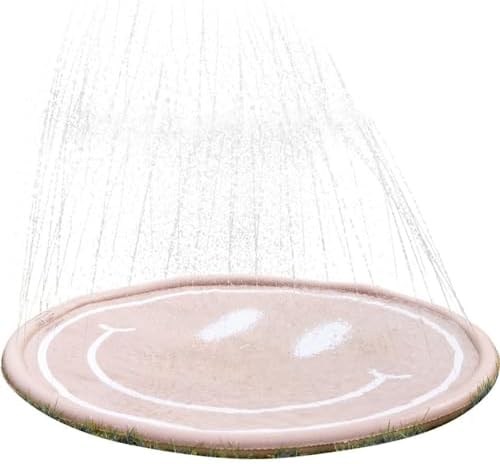
💦 Best for Preschoolers
A sprinkler or splash mat, which is the category that gets used every hot day for several summers running and needs nothing but a hose to start.
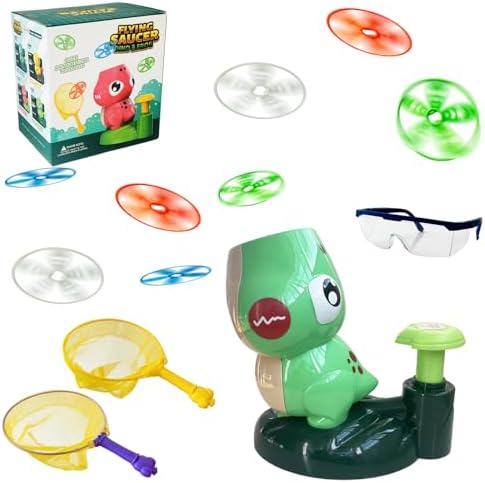
🎯 Best for School Age
A catch and throw set with a target, because scoring is what makes a child pick the same toy up on a second afternoon rather than once.
Picks by Situation: Older Kids and Storage
Two things get overlooked. Children from about ten stop using anything that feels aimed at younger kids, so the toy has to be genuinely difficult. And every household with outdoor toys eventually has a storage problem, which is what quietly destroys most of them.
🦘 Best for Older Kids
A skill toy such as a pogo stick sized for their weight range, which stays interesting precisely because it takes a while to get good at.

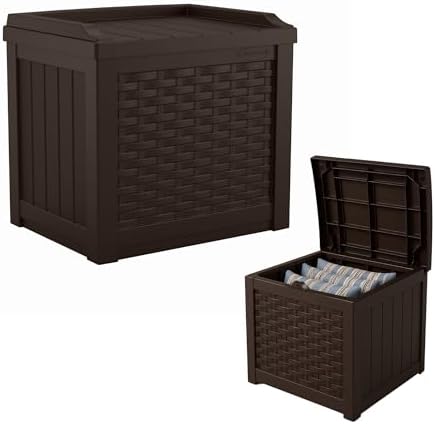
📦 Best Storage Fix
A weatherproof outdoor storage bin, which does more for the lifespan of a toy collection than any single upgrade to the toys themselves.
What Actually Gets Used and What Gets Ignored
The toys that stay in rotation share one trait: a child can start using them alone. Anything that needs an adult to inflate it, fill it, assemble it, or referee it gets used on the days a grown-up is free, which is a much shorter list than the days a child is bored. That single test predicts use better than price or brand.
The toys that get abandoned are usually the ones with a single trick. A toy that does one thing is fascinating for a week, while an open-ended one, a ball, a bucket, a scooter, keeps working because the child supplies the variation. When in doubt, the simpler item usually wins.
Where a Big Purchase Fits
Large equipment sits differently, because a slide, a sandbox, or a small trampoline is bought for years rather than for a season. Those decisions turn on space and safety rather than novelty, and they deserve researching on their own terms.
Weather, Storage, and Making Toys Last
Sunlight is what kills outdoor plastic. Ultraviolet exposure makes cheap plastics brittle and faded within a season or two, and a toy left in full sun year round ages far faster than one that spends its winter in a bin. Nothing you buy resists that better than simply putting things away.
Water is the other agent. Anything with a battery compartment, a fabric panel, or a bearing suffers from sitting out in the rain, and toys stored damp in a sealed box grow mildew instead. Let things dry before they go into storage, and drill a drain hole in anything that holds a puddle.
A Simple Rotation Trick
Keeping every toy available at once makes most of them invisible. Storing half the collection out of sight and swapping the bins every few weeks revives interest in things that had been ignored.
Common Mistakes to Avoid
- Buying above the child’s age band because they seem advanced. The lower age number is a hazard statement about parts, not a judgment about ability.
- Choosing toys that need an adult to start them. They get used far less than anything a child can pick up alone.
- Buying one-trick toys. Novelty runs out in about a week, while open-ended toys last for years.
- Leaving everything out year round. Sun and rain age outdoor plastic and fabric much faster than play does.
- Buying for the birthday party rather than for normal days. Most outdoor toys are used by one or two children at a time.
Frequently Asked Questions
What outdoor toys are best for a 2 year old? Wide, stable, and pushable ones: ride-on toys with a low center of gravity, large balls, and shallow water play. Check the age grading on the box, since it accounts for small parts in that specific product.
What does the age on a toy box actually mean? It is primarily a safety statement. The Consumer Product Safety Commission enforces a small parts rule that drives the common warning against use by children under three, and the grading reflects the hazards of that product’s own parts and materials.
What outdoor toys hold a 6 to 9 year old’s attention? Anything with a target or a score, plus wheels. Catch and throw sets, toss games, scooters, and jump ropes get repeat use because there is something to get better at.
What do you buy for a 10 year old who says everything is boring? Something genuinely difficult. Skill toys and sports equipment work at this age precisely because they are not immediately easy, while anything that looks aimed at younger kids gets rejected on sight.
How do you stop outdoor toys from breaking so fast? Store them out of the sun and let them dry before they go in the bin. Ultraviolet exposure and standing water do more damage to outdoor toys than children do.
Are expensive outdoor toys worth it? Sometimes, for large equipment that has to be structurally sound. For small toys, whether a child can start playing without an adult predicts use far better than price does.
The Bottom Line
Buy to the age grading on the box, then apply one test: can the child start using it without an adult? Big and stable for toddlers, water and sand for preschoolers, something with a score for school age, and something genuinely hard for older kids. Then store it all out of the sun so it survives to next summer.