Last updated: August 18, 2026
A jungle gym for the backyard is an outdoor climbing structure for children: a frame of bars, rungs and platforms they go up, through and over. Worth saying plainly, because the same phrase is also used for the padded floor mat sold for babies, and the two have nothing in common beyond the name.
This guide covers the four kinds of outdoor climbing frame families actually buy, how to choose between steel and wood, how much yard a frame needs once its clear zone is included, and what the CPSC recommends for height, anchoring and the ground underneath.
This article contains affiliate links. If you buy through them, we may earn a commission at no extra cost to you. Learn more.
Quick Answer
Which jungle gym should you buy for a backyard?
- Measure the clear space first, not the frame. The CPSC recommends a use zone extending at least 6 feet in all directions from the equipment, so a compact frame still needs a surprising footprint.
- A steel climbing dome gives the most climbing for the least yard and the least maintenance. A wooden tower frame gives more play types, more assembly and an annual sealing job.
- Choose for the ages you have now. A frame sized for a nine year old is unusable for a four year old, and upper body bars in particular are not for the youngest children.
The Four Kinds of Backyard Climbing Frame
Outdoor jungle gyms come in four broad shapes suiting different yards and different ages. Work out which row fits your family before comparing products, because the specifications worth reading differ in each case.
| Type | What it is | Suits | Watch out for |
|---|---|---|---|
| Climbing dome | A geodesic half sphere of steel tube, bolted together | Small and medium yards, mixed ages, low maintenance | Bar spacing and stated age range, and hot steel in full sun |
| Metal frame | A tube frame with bars, rings, a swing and often a small slide | Families who want several activities in one compact structure | Thin tube on budget models, and legs that need anchoring properly |
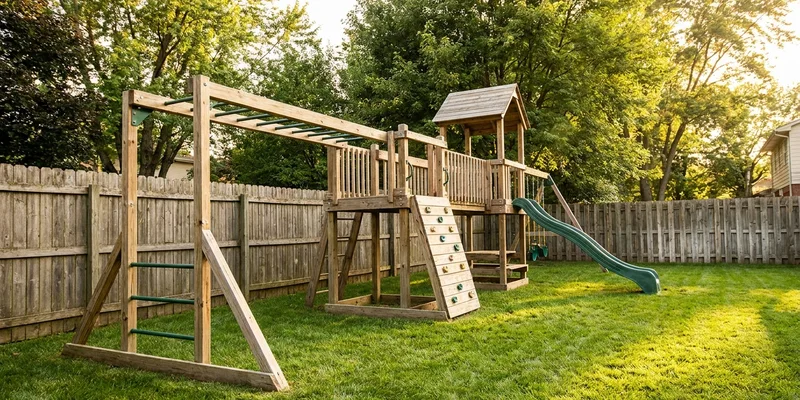
| Wooden tower | Timber posts, a deck, a climbing panel, a slide and overhead bars | Larger yards and longer term use, with annual upkeep | Footprint, assembly time and the yearly sealing job |
| Modular steel set | Panels and tubes that bolt into different layouts | Awkward yards and families who want to extend later | Whether extension parts stay available after you buy |
If a dome is what you have in mind, our guide to the climbing dome for kids compares the sizes directly, and the wider climbing and active play section covers the rest.
Steel, Wood, or Plastic
Steel is the low effort choice. A powder coated tube frame needs nothing beyond a bolt check each spring, takes up less yard for the amount of climbing it offers, and does not rot at ground level. The drawbacks are that dark coated steel gets hot in afternoon sun, and a scratched coating rusts if it is left.
Wood gives more variety in one structure, because a timber tower carries a deck, a slide, a climbing panel and overhead bars in a way a tube frame cannot. It costs more yard, far more assembly, and a sealing job every year or two if it is going to last.
Where plastic fits
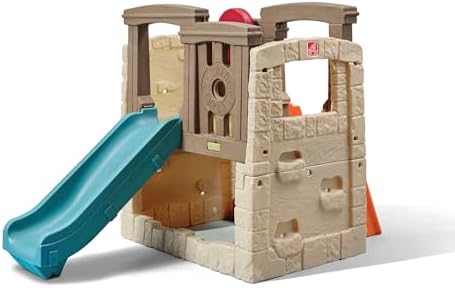
Moulded plastic frames are aimed at toddlers and preschoolers, and within that band they are a good answer: nothing to splinter or rust, light enough to move and easy to wash. They are outgrown quickly, so treat one as a few years of use.

How Much Yard You Actually Need
The frame dimensions in the listing are not the space requirement. The CPSC Public Playground Safety Handbook specifies a use zone extending a minimum of 6 feet (1.8 m) in all directions from the perimeter of stationary playground equipment, clear of fences, trunks and anything else a falling child could strike. Add that ring to the footprint and the real number is often double what people expect.
Swings need more than that. The handbook recommends a use zone in front of and behind a swing of at least twice the vertical distance from the pivot point to the top of the protective surface, which is why a frame with a swing bay does not fit the corner a frame without one does. Our article on the swing set safety zone works through laying that out. A frame also has to sit level, so a sloped yard means levelling a pad first rather than packing one leg up on a slab.
Our Top Picks at a Glance
How we chose: we compared widely available backyard climbing frames on steel gauge or timber section, stated age range and weight limits, whether anchors are included, and how much of the structure is climbable. These picks lean on manufacturer specifications and recurring themes in customer reviews rather than any hands-on trial of our own.
🏆 Best Overall
A steel climbing dome, which gives more climbing surface per square foot of yard than anything else in this category, suits a wide age range at once and asks for little beyond an annual bolt check.
🎢 Best All in One
A metal frame that combines bars, a swing and a short slide, for families who want several kinds of play from one structure without the footprint of a timber tower.

🧒 Best for Preschoolers
A low moulded plastic climbing frame with wide steps and short drops, for the years before a child can hang from a bar unsupported.
Age Range, Reach, and Overhead Bars
Read the stated age range alongside the CPSC guidance rather than instead of it. The handbook notes that four year olds are generally the youngest able to use upper body equipment such as horizontal ladders, so a frame marketed across a wide age span will still have parts only the older end can use safely.
For height, the handbook recommends a maximum measured from the grasping surface down to the protective surface below of 60 inches (152 cm) for preschool-age children and 84 inches (213 cm) for school-age children. It also caps the grasping diameter of a rung at 1.55 inches (39 mm), worth checking on tube frames where the bar children hang from is the structure itself.
Rung spacing on ladders and bars
Where a frame includes an overhead ladder, the handbook recommends no more than 12 inches (30 cm) between rung centers for preschool-age children and no more than 15 inches (38 cm) for school-age children. Wider spacing asks for a reach most children in the younger band do not have.
Anchoring and What Goes Underneath
A climbing frame has to be held down. Children climbing one side put a tipping load into it, and light steel frames will lift a leg and walk across a lawn over a summer. Most manufacturers supply stakes or specify a footing, and a frame that ships without anchors has a gap to fill rather than no need for them. Go round every bolt at the start of each season while you are at it.
Underneath, the CPSC Public Playground Safety Handbook advises never using less than 9 inches of loose fill material, with shredded or recycled rubber the one exception at a recommended 6 inches, and notes that loose fill compresses at least 25 percent over time, so an initial fill of 12 inches settles to about 9. The CPSC Outdoor Home Playground Safety Handbook rules out installing home equipment over concrete or asphalt, and says grass and dirt do not count as protective surfacing.

Common Mistakes to Avoid
- Measuring the frame instead of the clear zone. The CPSC calls for at least 6 feet in all directions, and more front and rear of swings.
- Buying for the age children will be in three years. A frame sized for the future is one nobody uses now.
- Ignoring upper body guidance. Overhead bars are not for the youngest children, whatever age range is printed on the box.
- Leaving the frame unanchored. A climbing load tips a light steel frame, and stakes cost little next to resetting one that has moved.
- Treating lawn as a landing surface. Turf over compacted soil is not protective surfacing, and the CPSC is explicit about that for home equipment.
Frequently Asked Questions
What is a jungle gym? In a backyard context it is an outdoor climbing structure for children, made of bars, rungs and platforms. The same phrase is also used for a padded baby play mat, which is a completely different product despite the shared name.
How much space does a backyard jungle gym need? The footprint plus a clear zone around it. The CPSC Public Playground Safety Handbook specifies a use zone extending at least 6 feet (1.8 m) in all directions from the perimeter of stationary equipment, and more in front of and behind any swing.
What age is a jungle gym for? It depends on the parts. The CPSC handbook notes that four year olds are generally the youngest able to use upper body equipment such as horizontal ladders, so frames with overhead bars suit older children even where the box quotes a wider range.
Do climbing frames need to be anchored? Yes. Children climbing one side put a tipping load into the frame, and lighter structures lift a leg without anchors. Follow the manufacturer’s stated method, stakes or a concrete footing.
What should go under a jungle gym? Protective surfacing rather than lawn. The CPSC handbook advises never less than 9 inches of loose fill, with shredded or recycled rubber the exception at 6 inches, and the home handbook rules out concrete or asphalt.
The Bottom Line
Start with a tape measure and the CPSC clear zone rather than with a product page, because that number rules out more frames than any other. A steel dome is the best return on a small yard, a timber tower is the answer where space and appetite for maintenance both exist, and a low plastic frame covers the preschool years. Whatever the shape, anchor it, check the age guidance for the overhead parts, and put real surfacing underneath.