Last updated: August 18, 2026
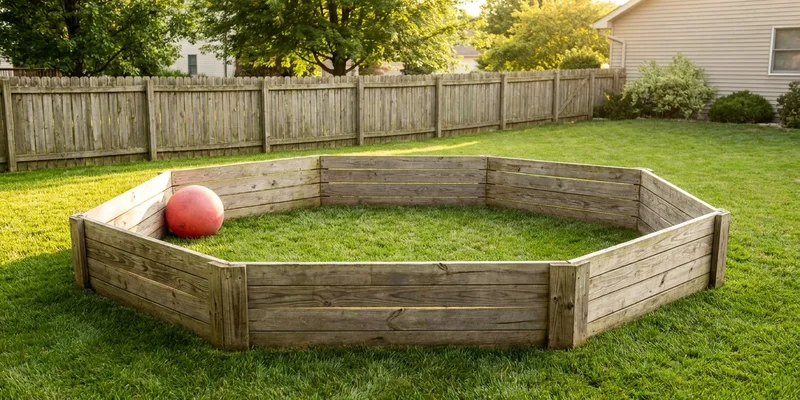
A gaga ball pit is the rare piece of backyard equipment that a group of children will use for hours without an adult organizing anything. The game is simple, the rules explain themselves in one round, and players who are out rejoin quickly, which is why camps and schools install them and why they keep appearing in home yards.
This guide covers the four ways a pit gets built, the sizes that are commonly sold, what the ground inside the pit needs, and the construction details that decide whether the walls survive a summer of children slamming into them.
This article contains affiliate links. If you buy through them, we may earn a commission at no extra cost to you. Learn more.
Quick Answer
Which gaga ball pit should you buy for a backyard?
- For a permanent pit, a bracket kit combined with lumber you buy locally is usually the sensible route, because shipping large panels costs more than the boards are worth.
- If the pit needs to move or store away, a folding panel kit or an inflatable pit is the practical answer, at the cost of a wall that flexes when players hit it.
- Size the octagon to your group, not to your yard’s maximum. A pit that is too big makes for slow games with players standing around.
- Plan the ground inside before you build. Grass inside a busy pit turns to bare dirt and then to mud, so most permanent pits end up on mulch or turf.
The Four Ways to Build a Gaga Pit
Every gaga pit is an octagon of low walls, and the differences come down to what those walls are made of and whether the structure comes apart. Each option below has a clear case, and the right one depends mostly on whether the pit is staying in one place.
| Pit type | Who it suits | What to know |
|---|---|---|
| Bracket kit plus local lumber | Permanent backyard pits | You buy only the metal corner brackets and cut boards locally, which avoids shipping heavy panels |
| Complete wooden panel kit | Buyers who want everything in one delivery | Convenient but bulky to ship, and the panels still need sealing against weather |
| Folding plastic or composite panels | Households that need the yard back | Sets up and packs away in minutes; walls flex more, so the ball rebounds differently |
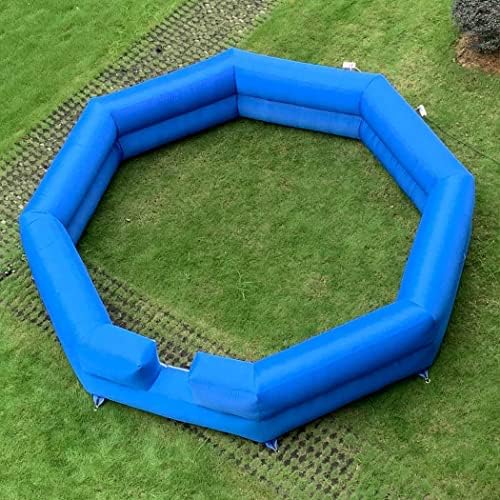
| Inflatable pit | Parties, travel, and youngest players | Soft walls and quick setup, but needs a blower and is vulnerable to punctures |
| Fully custom build | Anyone comfortable with basic carpentry | Cheapest per square foot, but the corner angles are the part people get wrong |
If the pit is joining a yard that already has other equipment, it pays to plan the whole layout at once. Our other backyard games guides cover the setups that compete for the same flat ground.
What Size Pit Do You Actually Need
Kits are commonly sold as octagons in the range of roughly 15 to 20 feet across, and bigger is not automatically better. A larger pit spreads players out, which slows the game down and means more time standing and less time playing. A smaller pit produces fast, chaotic rounds, which is what most children want.
Match the size to the group you actually have. A pit for three or four siblings and the occasional friend does not need to match what a summer camp installs for twenty children at once. If in doubt, build for the number of players who will be in it on a normal weekday, not for the birthday party.
Wall Height and Why It Is a Compromise
Wall height decides how the game plays. Low walls let the ball escape often, which interrupts the game constantly. Tall walls keep the ball in but make it harder for smaller children to climb in and out, and they are what players collide with at speed. Kits state their panel height, so check it against the size of the children who will use it rather than assuming a standard.
The Ground Inside Is Half the Decision
Whatever is inside the pit when you build it will not be there in three months if it is grass. A busy gaga pit concentrates all the footwork into one enclosed octagon, and the turf goes first to bare patches, then to dirt, then to mud after the first heavy rain. Planning the surface up front avoids rebuilding later.
The usual answers are wood mulch, engineered wood fiber, or artificial turf over a prepared base. Mulch is cheap and forgiving underfoot but migrates and needs topping up. Turf is tidy and permanent but needs the ground levelled and drained properly first, since a pit that holds water is unusable for days after rain.
Drainage Comes Before Everything
An octagon of solid walls on flat ground is a shallow basin. If the spot already collects water, fix that before you build, because raising a pit that is full of mulch is an unpleasant job. A slight slope with a drainage gap at the low side is what keeps it playable.
Our Top Picks at a Glance
How we chose: we compared widely available gaga pit kits on bracket strength and corner design, panel material and height, whether the pit disassembles, and what the buyer still has to source locally. Selections lean on manufacturer specifications and recurring themes in customer reviews rather than any trial of our own.
🏆 Best Overall
A steel bracket kit that you pair with lumber bought locally, which is the route that puts the money into the structure instead of into shipping heavy boards across the country.

📦 Best Complete Kit
A full panel kit that arrives with everything needed, for buyers who would rather assemble than shop for lumber and cut angles.
🔄 Best Portable
A folding panel pit that sets up on any flat surface and packs away, suited to yards that also have to serve as a lawn.

Picks by Situation: Parties and the Ball Itself
Two purchases sit alongside the pit: a temporary option for events where a permanent structure makes no sense, and the ball, which is the part that gets kicked over the fence and needs replacing long before the walls do.
🎈 Best for Parties and Events
An inflatable gaga pit that goes up in minutes on a lawn and packs into a bag afterwards, with soft walls that suit younger players.
⚪ Best Ball
A soft rubber playground ball of the size normally used for gaga, which is what keeps the game low, fast, and painless when it catches someone.

Building Details That Decide How Long It Lasts
Two things break gaga pits: the corners and the ground contact. Corner joints take every impact from a player hitting the wall, which is why bracket kits use steel at the angles rather than relying on screwed butt joints. If you build without brackets, the corners are where to over-engineer.
Ground contact is the second failure point. Untreated lumber sitting directly on soil wicks moisture and rots from the bottom edge upward, usually within a couple of seasons. Ground contact rated material, or boards raised slightly clear of the soil, is what turns a two year pit into a ten year one.
Finishing the Inside Face
Sand and seal the inside face properly, because players slide along the walls and put their hands flat against them constantly. Rounded top edges are worth the extra pass with a sanding block, since the top edge is what children lean over and land on.
Common Mistakes to Avoid
- Building the biggest pit that fits. Oversized pits produce slow games where half the players stand still.
- Leaving grass inside. It survives a few weeks, then becomes dirt and then mud, and fixing it means emptying the pit.
- Skipping drainage. A walled octagon on flat ground holds water, and a wet pit is out of action for days.
- Setting untreated lumber straight onto soil. The bottom edge rots first and takes the whole wall with it.
Frequently Asked Questions
How big should a backyard gaga ball pit be? Kits are commonly sold as octagons roughly 15 to 20 feet across. Size it to the number of children who will normally play, since a larger pit spreads players out and slows the game rather than improving it.
Is it cheaper to build or buy a gaga pit? Buying a bracket kit and sourcing lumber locally is usually the better value, because shipping heavy panels costs more than the boards themselves. A full kit is more convenient and a fully custom build is cheapest if you are confident with the angles.
What goes on the ground inside a gaga pit? Wood mulch, engineered wood fiber, or artificial turf over a prepared base. Grass does not survive concentrated play inside an enclosed octagon, so most permanent pits are built with a surface already planned.
What ball is used for gaga ball? A soft rubber playground ball. The game keeps the ball low and players strike it with an open hand, so a soft ball is what makes it comfortable rather than a hard sports ball.
Can a gaga pit stay outside all year? A wooden pit built from ground contact rated material can, provided it is sealed and drains. Folding and inflatable pits last much longer if they are stored between sessions.
What age is gaga ball suitable for? The game scales well because the rules are simple and players rejoin quickly, and mixed ages play together more easily than in most yard games. Check the age grading on any specific kit, since panel height and materials vary between products.
The Bottom Line
For a permanent backyard gaga pit, a steel bracket kit plus locally bought ground contact lumber is the best value, sized to the children you actually have rather than to the yard. Sort the drainage and the internal surface before you build, seal the inside face, and buy a spare ball early.