Last updated: August 18, 2026
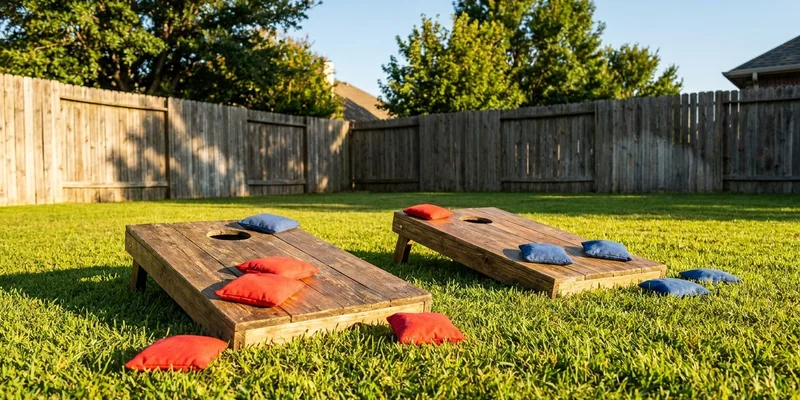
A cornhole set for kids is not simply a small version of the adult game. A full-size board is heavier than most children can carry, the standard pitching distance is further than a seven year old can reliably throw, and competition bags are heavier than small hands want to launch. Getting all three of those wrong at once is why plenty of family cornhole sets end up leaning against the garage wall.
This guide covers the board sizes that are commonly sold, what the American Cornhole League actually specifies for sanctioned play, how bag weight and fill change the game for younger players, and how to set the distance so a child can score.
This article contains affiliate links. If you buy through them, we may earn a commission at no extra cost to you. Learn more.
Quick Answer
Which cornhole set should you buy for kids?
- For most families with elementary age children, a tailgate size board with lighter bags is the practical pick, because kids can carry it, set it up, and actually land bags in the hole.
- Full-size boards are worth it if adults will play too and the set is expected to last into the teenage years. The ACL specifies those boards at 2 feet by 4 feet.
- Bag weight is the quiet variable. Competition bags are heavier than most children want to throw, so a lighter youth bag often does more for enjoyment than a different board.
- Move the boards closer for young players. There is no official youth distance, so families simply shorten it and step it back as the throw improves.
Cornhole Board Sizes That Are Commonly Sold
Board size is the first decision because it fixes the weight, the storage problem, and how far you can sensibly stand back. Only one of these is a competition size; the rest exist because families and campgrounds wanted something smaller. The sizes below are what is widely available for home use.
| Common size | Who it suits | What to know |
|---|---|---|
| 2 by 4 feet | Families where adults play too, and older children | The ACL competition size; heavy, needs real storage space, but the set kids grow into |
| 2 by 3 feet, often sold as tailgate size | Elementary age players and small yards | Noticeably lighter to carry and set up, plays well at a shortened distance |
| 1 by 2 feet, often sold as mini | Preschoolers and indoor or tabletop play | A different game really, closer to a beanbag toss than to cornhole |
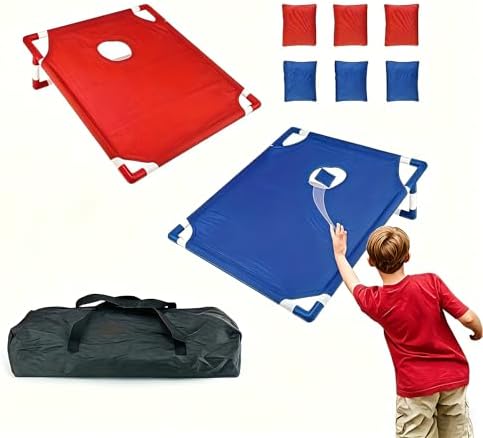
| Fabric or plastic fold-flat targets | Travel, beaches, and youngest children | Very portable, but bags slide instead of sticking, so scoring feels different |
If cornhole is joining a lawn that already hosts other games, plan the whole space at once. Our other backyard games guides cover the setups that share the same flat ground.
What the Official Cornhole Dimensions Actually Are
Official dimensions come from the American Cornhole League, and they are worth knowing even if you buy smaller. The ACL rules put each board at two feet wide by four feet long, with a hole six inches in diameter centered across the width and the center of the hole nine inches from the back edge of the board.
The same rules set the board angle by fixing both ends: the front edge sits between 2.5 and 3.5 inches above the ground, and the top surface at the back sits 12 inches above the ground. For play, the ACL places the boards 27 feet apart, measured from the front of one board to the front of the other.
Why Kids Should Not Start at 27 Feet
The ACL rulebook covers its own sanctioned play and does not publish a shorter youth pitching distance, so there is no official number to quote for children. In practice families set the boards at whatever distance lets a child land bags on the board, then step it back a few feet each season. Starting at the adult distance mostly teaches a child that they cannot do it.
Bag Weight and Fill Change the Game for Small Hands
Bags matter as much as boards. The ACL specifies bags at six inches wide by six inches long and weighing between 15.5 and 16.5 ounces. For an adult that weight is what makes a bag sit where it lands, but for a small child it is enough to wreck the throwing motion entirely.
Lighter youth bags fix that, at the cost of some control on the board. Fill matters too. Traditional whole corn fill swells, rots if it gets wet, and attracts rodents in storage, while resin or plastic pellet fill is weatherproof and is what most sets now ship with. If a set advertises real corn fill, plan on bringing it indoors after every session.
Our Top Picks at a Glance
How we chose: we compared widely available sets on board size and construction, playing surface finish, bag fill and weight, and whether a carry case is included. Selections lean on manufacturer specifications and recurring themes in customer reviews rather than any trial of our own.
🏆 Best Overall for Families
A tailgate size board set with a carry handle and weatherproof bags, light enough that children can set it up themselves and small enough to store standing in a garage corner.

🎯 Best to Grow Into
A full 2 by 4 foot set matching the ACL board specification, the right call if adults play too and you want one set that stays relevant for years.

💚 Best Value
A folding kids cornhole set with bags included, aimed at households that want one box to open rather than boards and bags bought separately.
Picks by Situation: Younger Throwers and Indoor Days
Two situations need something other than a standard set: a child whose hands are not ready for competition weight bags, and a stretch of weather that pushes the game indoors without anyone wanting to hurl a pound of pellets across the living room.
🪶 Best Lighter Bags
A set of youth weight bags to replace the heavy ones that come with most boards, which is the cheapest single change that gets a younger child scoring.

🏠 Best for Indoors and Travel
A mini or tabletop cornhole game that packs flat, for rainy days, campgrounds, and children too small for a full board.

Setting Up in a Backyard Without Ruining the Lawn
Cornhole needs a strip of flat ground and very little width, which makes it one of the easiest games to fit into a narrow yard. Set the boards so players throw along the long axis of the lawn, and leave room behind each board, because bags that slide off the back travel further than people expect.
The boards themselves are what damage grass, not the play. A board left in place for weeks kills the patch underneath and traps moisture against the plywood, so both the lawn and the set do better if the boards are stood against a wall after use.
Keeping the Set Playable Outdoors
Plywood absorbs water at the edges and around any exposed screw hole, and a swollen board never plays flat again. If the set will live outside, look for a sealed or laminated playing surface and store the boards on edge so water cannot pool on the face.
Common Mistakes to Avoid
- Buying full-size boards for young children only. They are heavy, hard to store, and the standard distance is discouraging for small throwers.
- Keeping competition weight bags for a six year old. Bag weight is the single biggest barrier to a young child enjoying the game.
- Choosing real corn fill for an outdoor set. It swells when damp, rots, and is a storage problem all winter.
- Measuring the pitching distance to the wrong point. The ACL measures front of board to front of board, not player to board.
Frequently Asked Questions
What size cornhole boards are best for kids? Tailgate size boards, commonly sold at 2 by 3 feet, suit elementary age children best. They are light enough to move without help and play well at a shortened distance, while still feeling like real cornhole rather than a toy.
What are the official cornhole board dimensions? The American Cornhole League specifies each board at two feet by four feet, with a six inch hole centered across the width and its center nine inches from the back edge. The front edge sits 2.5 to 3.5 inches above the ground and the back surface sits 12 inches above the ground.
How far apart should cornhole boards be for kids? The ACL sets 27 feet from front of board to front of board for its play and publishes no separate youth distance. Families shorten it to whatever lets a child land bags on the board and move it back gradually.
How much should cornhole bags weigh? ACL bags measure six inches by six inches and weigh between 15.5 and 16.5 ounces. Youth bags are sold lighter than that, which is usually the better choice for children under about ten.
Are corn filled or resin filled bags better? Resin or plastic pellet fill is the more practical choice outdoors because it does not swell, rot, or attract pests. Whole corn fill has its followers, but it has to be stored dry and indoors.
Can cornhole boards stay outside? Not for long. Plywood swells at the edges and warps once water sits on the face. Store the boards on edge under cover, and look for a sealed playing surface if they will be outdoors regularly.
The Bottom Line
For most families with young children, a tailgate size board with lighter bags at a shortened distance is the set that actually gets played. Buy full-size 2 by 4 foot boards only if adults are part of the equation, swap the bags before you swap the boards, and keep the plywood out of the weather so it stays flat.