Last updated: August 18, 2026
A backyard kickball set is about as much equipment as a game needs: one rubber ball, four bases, and a patch of grass. That simplicity is exactly why the differences between sets are easy to miss. Almost all of them look the same in a listing photo, and the two things that decide whether the set survives a summer are the ball and how the bases stay on the ground.
This guide covers the ball sizes that are commonly sold and who each one suits, why anchored bases matter more than the number of pieces in the box, and how to lay out a diamond in a yard that was never shaped like a ball field.
This article contains affiliate links. If you buy through them, we may earn a commission at no extra cost to you. Learn more.
Quick Answer
Which backyard kickball set should you buy?
- For a mixed group of elementary age kids, a set built around a 10 inch rubber playground ball with a pump and anchored bases covers almost every backyard game.
- Smaller children do better with an 8.5 inch ball. It is lighter, easier to kick square, and much less intimidating when it comes at them.
- Throw-down rubber bases beat plastic pegs on a lawn. Pegs pull loose, get stepped on, and end up somewhere in the grass by August.
- If the set is for organized league play, check that league’s own rulebook for the required ball size, since requirements differ between organizations.
What to Check in a Kickball Set Before You Buy
Every point below is visible on the listing before you order, and together they explain most of the gap between a set that lasts several summers and one that goes flat in a week. Kickball has very few parts, so a weakness in any single part shows up immediately.
| What to check | Why it matters | What to look for |
|---|---|---|
| Ball diameter | Ball size decides who can actually kick it well | 8.5 inch for preschool and early elementary, 10 inch for older kids and adults |
| Ball material and wall | Thin rubber splits at the seam after a season of pavement | Molded rubber with a stated thickness or a heavy duty description, not vinyl |
| Inflation needle and pump | Every playground ball ships flat and needs topping up all season | A pump plus at least one spare needle included in the box |
| Base type | Bases that shift turn every close play into an argument | Weighted throw-down rubber bases, or bases with a stake or anchor loop |
| Number of bases | A diamond needs four positions, and home plate wears fastest | Three bases plus a home plate, ideally with a pitching marker |
| Carry bag | Loose bases in a garage disappear one at a time | A mesh bag sized to hold the inflated ball, not just the deflated one |
If kickball is one of several games sharing the same lawn, it is worth planning the space as a whole rather than buying gear game by game. Our other backyard games guides cover the setups that compete for the same flat ground.
Ball Size Is the Decision That Matters Most
Kickball sets are sold around two common ball diameters, 8.5 inches and 10 inches, and picking the wrong one is the most common reason a set gets abandoned. A ball that is too big for a small child rolls past their foot or knocks them off balance, and a ball that is too small for older kids gets kicked over the fence on the first play.
The 10 inch rubber ball is the one most people picture when they think of kickball. It has enough mass to travel when an older child gets under it and enough surface to be caught two-handed. The 8.5 inch ball suits preschool and kindergarten age players, and it also suits a small yard where a full-size ball leaves the property too often.
Inflation Changes the Game More Than People Expect
A soft ball absorbs the kick and barely moves. An overinflated ball is hard, stings bare legs, and bounces unpredictably off the grass. Rubber playground balls carry a recommended inflation printed on the ball or in the instructions, so inflate to that rather than to whatever feels firm, and check it every few weeks because these balls lose air steadily through the valve.
Bases That Actually Stay Where You Put Them
Base style matters more on a lawn than on a diamond. Three types are sold: flat throw-down rubber bases, plastic bases with ground pegs, and inflatable or foam bases. On mown grass, weighted rubber throw-downs are the practical choice, since they sit flat and survive the mower.
Plastic bases with pegs hold better on loose dirt but leave a spike in the ground, which is a genuine hazard in a yard where kids also run barefoot. If you use them, pull them after every game rather than leaving them in the lawn between weekends.
Our Top Picks at a Glance
How we chose: we compared widely available kickball sets on ball diameter, rubber quality, whether a pump is included, and base style. Selections lean on manufacturer specifications and recurring themes in customer reviews rather than any trial of our own.
🏆 Best Overall
A complete set built around a 10 inch rubber playground ball with a pump, spare needles, and weighted throw-down bases, which is the configuration that covers elementary age players and family games.

🧒 Best for Younger Kids
An 8.5 inch rubber playground ball, light enough for preschoolers to kick cleanly and small enough that it stays inside a modest yard.

💚 Best Value
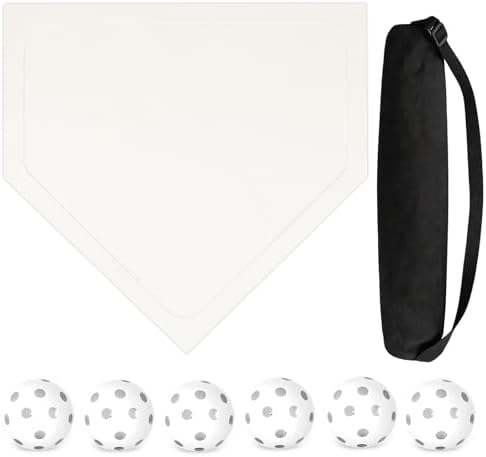
A bare bases and plate set to pair with a ball you already own, which is the cheapest way to turn a lawn into a diamond if there is already a playground ball in the garage.
Picks by Situation: Pavement Play and Big Groups
Two situations call for different gear than the standard grass setup: a driveway or blacktop surface that shreds a thin ball, and a birthday party group large enough that one ball is not enough to keep everyone moving.
🛞 Best for Blacktop and Driveways
A heavy duty rubber ball with a thicker wall and a deep pebble texture, which is what survives repeated contact with concrete instead of splitting along the seam.

🎉 Best for Group Play
A multi-ball pack so a large group can warm up, run drills, or split into two games without one deflated ball ending the afternoon.

Laying Out a Diamond in a Normal Yard
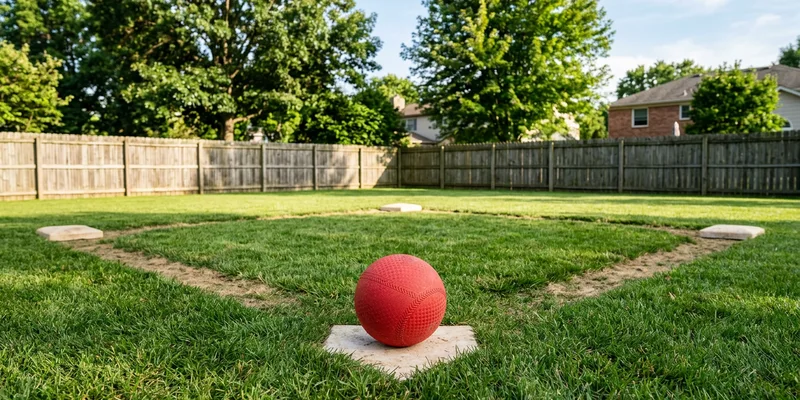
Backyard kickball is a scaled-down game, and that is fine. Set the base paths to whatever your flat area allows and keep them equal, since an uneven diamond is what makes games feel unfair. Put home plate where a kicked ball travels away from windows and the street.
Leave run-off room behind the plate and past first base, because kids overrun bases at full speed and a base a stride away from a deck or a fence post is where the injuries happen. If the yard cannot give you that space, shorten the base paths rather than pushing them to the edges.
House Rules Worth Setting Before the First Game
Two rules prevent most backyard disputes. Ban throwing at anyone above the shoulders, which is the standard restriction in organized kickball and the one that keeps parents comfortable. Then agree in advance on what happens to a ball that leaves the yard, because a kicked ball over the fence is either an automatic out or an automatic home run, and deciding mid-game never goes well.
Common Mistakes to Avoid
- Buying the biggest ball for the youngest kids. A 10 inch ball is genuinely hard for a four year old to kick, and they lose interest fast.
- Ignoring whether a pump is included. Every rubber playground ball arrives flat, and a set without a pump is unusable on day one.
- Leaving pegged bases in the lawn. They snag mowers, they trip barefoot runners, and they are the part most likely to break.
Frequently Asked Questions
What size ball is used for kickball? Sets are commonly sold with either an 8.5 inch or a 10 inch rubber playground ball. The 10 inch ball is the familiar size for older kids and adults, while 8.5 inch suits preschool and early elementary players. Organized leagues set their own requirement, so check that league’s rulebook.
How many bases do you need for kickball? Four positions, meaning first, second, and third base plus home plate. Many sets add a fifth marker for the pitching spot, which is useful because it stops arguments about where the pitcher has to stand.
How big should a backyard kickball diamond be? As big as your flat area allows, with the base paths equal to each other. A smaller square diamond plays better than a stretched one that runs into fences.
Can you play kickball on concrete? Yes, but the ball wears much faster and falls hurt more. If the driveway is the only option, use a thicker heavy duty ball and consider knee-friendly rules such as no sliding.
How do you keep a kickball from going flat? Inflate to the pressure printed on the ball rather than by feel, top it up every few weeks, and store it out of direct heat. Most slow leaks come from the valve, so wet the needle before inserting it.
Is kickball good for young kids? It works well because the skills are simple, running and kicking, and no equipment goes near anyone’s face. With a smaller ball and a shortened diamond, mixed ages can genuinely play together.
The Bottom Line
For most families the right backyard kickball set is a 10 inch rubber ball with a pump and weighted throw-down bases, dropped to an 8.5 inch ball if the players are preschool age. Put your attention into ball size and base style rather than the piece count on the box, then lay the diamond out so that strong kicks travel away from the house.