Last updated: August 18, 2026
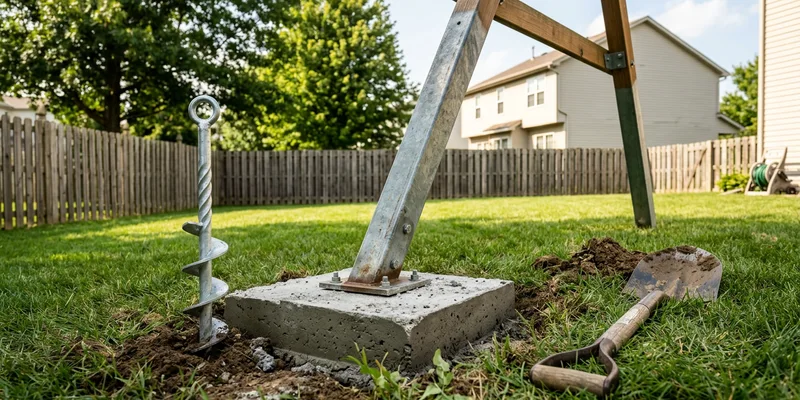
The choice between concrete footings vs ground anchors comes up the moment a playset manual mentions bags of concrete and the yard suddenly feels permanent. In CPSC terms they do the same job. The Public Playground Safety Handbook defines a footing simply as a means for anchoring playground equipment to the ground, which puts a poured footing and a screw in earth anchor in the same category.
What separates them is permanence, soil and how much load the frame puts into the ground. This comparison sets out where each belongs and what the CPSC says about installing either.
This article contains affiliate links. If you buy through them, we may earn a commission at no extra cost to you. Learn more.
Quick Answer
Should you use concrete footings or ground anchors?
- The manufacturer decides, not you. The CPSC states that secure anchoring is a key factor to stable installation and that the anchoring process should be completed in strict accordance with the manufacturer’s specifications.
- Concrete footings suit tall wooden towers, permanent installations and soil that gives a screw anchor nothing to bite on.
- Ground anchors suit metal frames, lighter structures and any set you might move, since they need no curing time and come back out.
- Whichever you use, it goes below the surface. The CPSC says anchoring devices such as concrete footings should be installed below ground level and beneath the base of the protective surfacing material.
Concrete Footings and Ground Anchors Compared
The two differ on almost every practical axis except the one that matters most, which is that both have to end up buried. The table covers the factors that decide the choice in a backyard rather than on a commercial playground.
| Factor | Concrete footings | Ground anchors |
|---|---|---|
| How it resists movement | Mass, plus the grip of cured concrete against the surrounding soil | Friction or mechanical bite of a helix, arrowhead or spike within the soil |
| Best suited to | Tall wooden towers, permanent sets, loose or sandy soil, exposed windy sites | Metal A frames, lighter structures, firm loam and clay, sets that may move |
| Installation | Dig, set the post base or hook, pour, then wait for the concrete to cure before loading | Screw or drive in, bolt or strap to the leg, and the set is usable the same day |
| Reversibility | Effectively permanent. Removing footings is a demolition job | Removable. Augers back out, drive in anchors can be cut or dug free |
| Main failure mode | Frost heave lifting the footing, and water sitting against wood at the collar | Loosening over a freeze and thaw cycle, or pulling out of soft ground |
Note what is not in the table. Neither method is inherently safer than the other. The safer one is the one the manufacturer specified for that frame.
What the CPSC Actually Says
The CPSC does not pick a side. The Public Playground Safety Handbook says secure anchoring is a key factor to stable installation and that the anchoring process should be completed in strict accordance with the manufacturer’s specifications. The Outdoor Home Playground Safety Handbook says play equipment may need to be restrained with anchors to keep it from tipping over while in use, following the manufacturer’s instructions.
Where the guidance is specific is on depth. The public handbook names anchoring devices as one of the two most common causes of tripping in play areas, and states that all anchoring devices, such as concrete footings or horizontal bars at the bottom of flexible climbers, should be installed below ground level and beneath the base of the protective surfacing material, adding that this also prevents children sustaining additional injuries if they fall on exposed footings.
When Concrete Footings Make Sense
Concrete earns its place under tall, heavy, permanent structures. A wooden tower with a deck, a roof and a slide has real mass and a high center of gravity, and many manufacturers of those sets specify a footing at each post rather than a surface anchor. If your manual calls for concrete, that is the end of the discussion.
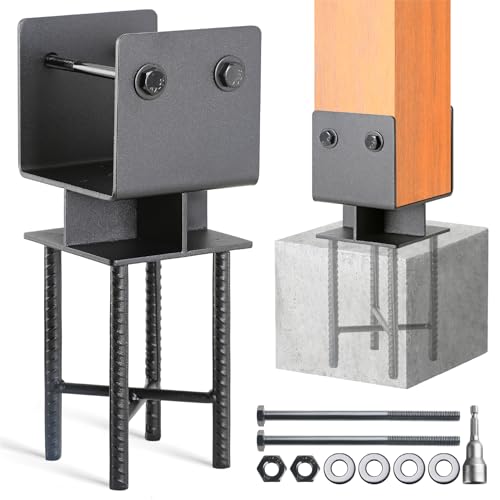
Concrete also answers soil that defeats mechanical anchors. Sand, loose fill and disturbed ground give an auger nothing to grip, and a poured footing sidesteps the question by relying on mass instead. One detail matters at the joint: use a post base or bracket that holds timber above the concrete rather than encasing it, because concrete poured around a buried post traps water exactly where rot starts, and the CPSC checklist asks for rot to be checked carefully where equipment meets the ground.
When Ground Anchors Are Enough
Ground anchors suit most backyard sets: metal A frame swings, smaller wooden frames, climbing domes and trampolines. They install in an afternoon, need no curing time, and come out again if the set moves to another corner of the yard or leaves with the children who outgrew it.
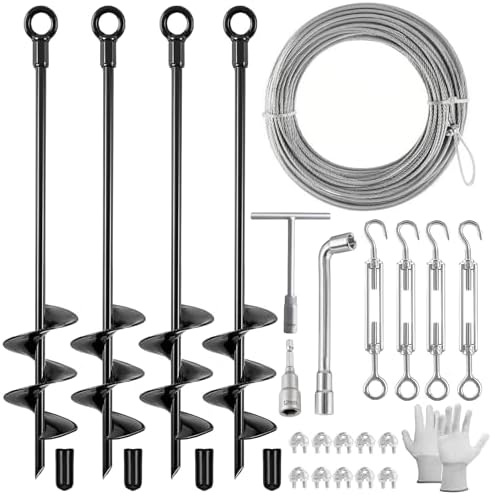
Match the anchor to the soil rather than to the frame. Screw in augers hold well in firm loam and clay and spin uselessly in sand, while drive in arrowhead anchors on a cable hold in loose and gravelly ground. Follow the manufacturer’s count, and where none is given put an anchor at every ground contact point, since anchoring two legs of a four leg frame moves the pivot rather than removing it. Our guide to ground anchors for play equipment works through the four types.
Installing Either One Without Creating a Trip Hazard
The instruction that applies to both is depth. Anchoring devices, including concrete footings, go below ground level and beneath the base of the protective surfacing, according to the CPSC. In practice that means digging a recess for the anchor head and bracket, or finishing the top of a footing low enough that surfacing covers it, then raking the surfacing back over.
The hardware above ground gets the same treatment as the rest of the set. The CPSC recommends lock washers, self locking nuts or other locking means to keep bolts from loosening. On treated timber, use hardware compatible with the treatment chemicals, since the CPSC notes that ACQ, CBA and CA-B type preservatives are known to corrode certain materials. Our swing set anchor kit guide covers what a complete kit should include.
What actually fails is the ground
Neither method fails because it was the wrong idea. Soil that freezes and thaws lifts anything set in it, raising footings out of true and loosening anchors, and the symptom is identical either way: a leg that rocks slightly under load. Fresh fill does the same, which is why anchoring is the last step after leveling rather than part of it.
Common Mistakes to Avoid
- Upgrading to concrete because it feels safer. The frame was designed around a specified anchoring method, and the CPSC guidance is to anchor in strict accordance with the manufacturer’s specifications.
- Leaving a footing flush with the finished grade. The handbook asks for footings below ground level and beneath the surfacing, and lists exposed footings as a trip hazard.
- Setting timber posts directly in poured concrete. Water collects at the collar, and rot starts where the checklist tells you to look hardest.
Frequently Asked Questions
Do swing sets need concrete footings? Only where the manufacturer specifies them. The CPSC advises completing the anchoring process in strict accordance with the manufacturer’s specifications, and many metal and lighter wooden sets are designed around mechanical ground anchors instead.
Are ground anchors as strong as concrete? They work differently rather than being weaker. Concrete resists movement through mass, an anchor through grip in the soil, and that grip depends on what your soil is.
Can I use ground anchors instead of the concrete my manual specifies? Not as a free substitution. The specification is part of how the frame was designed to resist tipping, so ask the manufacturer before changing it rather than deciding on what is easier to install.
How deep should a footing or anchor be? The holding depth comes from the manufacturer of the equipment or the anchor. What the CPSC does specify is the top: anchoring devices such as concrete footings should sit below ground level and beneath the base of the protective surfacing material.
Will frost heave lift a footing? It can, which is why local practice on footing depth exists and why loose anchoring appears on the CPSC’s routine inspection list. Check the set after the first thaw and look for a leg that rocks under load.
The Bottom Line
Start with the manual, because the CPSC’s own instruction is to anchor in strict accordance with the manufacturer’s specifications. Where you have a genuine choice, concrete footings suit tall permanent wooden towers and soil that will not hold an anchor, and mechanical ground anchors suit metal frames, lighter sets and anything you might relocate. Both must finish below ground level and beneath the surfacing, both need locking hardware and treatment compatible fixings, and both belong on the annual check, because ground movement loosens either one.