Last updated: August 18, 2026
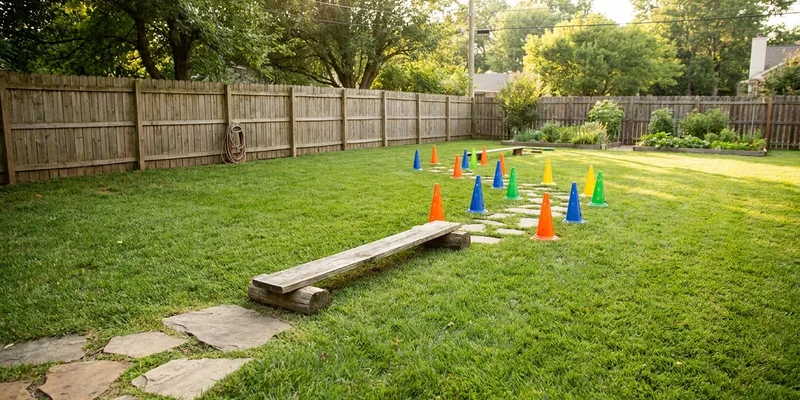
A backyard obstacle course for kids does not need a kit. The most used courses are built from pool noodles, laundry baskets, sidewalk chalk, and a garden hose laid in a wiggly line, rebuilt in a different order every week. That variety is the entire point, and it is the thing a fixed installation cannot give you.
This article covers how to structure a course from loose materials you already own, which station types to mix, how to keep it sensible without turning it into a project, and how to score it so kids run it more than once. If you are looking at permanent frames and hanging obstacles instead, that is a different purchase.
This article contains affiliate links. If you buy through them, we may earn a commission at no extra cost to you. Learn more.
Quick Answer
How do you make a backyard obstacle course for kids?
- Mix five station types, something to run around, something to go over, something to go under, something to balance on, and something to throw or carry. That mix is what stops a course feeling like one long sprint.
- Use loose materials so the layout changes. Cones, noodles, chalk, buckets, and a hose cover almost every station, and rearranging them is free.
- Keep everything at ground level unless you are ready to think about fall surfacing, which is a separate question with its own published guidance.
- Time it. A stopwatch is what turns a five minute activity into an afternoon, because kids will run the same course repeatedly to beat their own number.
The Five Station Types and What to Build Them From
A course reads as a course when the movements keep changing. Five categories cover it, and each can be built from something already in the garage or the garden. Rotate which category comes first each time and the same materials produce a course that feels new.
| Station type | What to build it from | How to set it |
|---|---|---|
| Weave and turn | Cones, buckets, flower pots, water bottles | Space them close for younger children, wider for a faster run |
| Go over | Pool noodles on garden stakes, a jump rope on two chairs, chalk lines | Keep the bar low and make it fall down easily rather than trip anyone |
| Go under | A rope between two trees, a pop-up tunnel, a table | Clear the ground underneath completely; crawling finds every stone |
| Balance | A plank on the grass, chalk lines, stepping stones, a garden hose laid out | On the ground, not raised; a wobbly beam is where a course goes wrong |
| Carry or throw | Bean bags into a laundry basket, a sponge and a bucket of water | Add a rule such as restarting the station if the item is dropped |
If your children keep asking for hanging rings and monkey bars rather than cones and chalk, that is a permanent equipment question. Our guide to a ninja warrior obstacle course for kids covers the kits and frames instead.
How to Lay Out a Course That Flows
Start at the far end of the yard and work back toward a finish line the audience can see. A course that ends in front of the deck gets cheered, and that matters more to a seven year old than any single station. Keep the route roughly a loop so the runner ends near the start.
Alternate hard and easy stations, since two demanding ones in a row is where younger children give up. Set the whole thing out so an adult standing in one spot can see every station.
Keeping It Sensible Without Overbuilding
Most backyard courses are safe because everything is at ground level and soft. The moment a station gets raised, the calculation changes: anything a child can fall from has a fall height and a surface underneath it, and the Consumer Product Safety Commission publishes the Public Playground Safety Handbook to cover surfacing and fall zones. If you are raising a beam or hanging anything, that guidance is where the numbers belong.
Everything else is common sense applied in advance. Walk the route yourself first and take out the sprinkler head, the garden edging, and the exposed tree root, then check that no station sends a running child toward a fence, a deck edge, or a set of steps.
Materials to Leave Out
Skip anything with a hard point or a rigid edge at shin height, anything that could tip onto a child, and anything with rope arranged in a loop that a head or a neck could pass through. Pallets are a popular free material and a poor one, since they splinter, hide nails, and are heavy enough to hurt when they fall over.
Scoring, Timing, and Keeping Interest
A stopwatch is the cheapest upgrade available. Timing the run gives every child a target that is theirs alone, which is what makes mixed ages workable: nobody is competing against a bigger sibling, only against their own previous time. A chalk scoreboard on the patio keeps the numbers visible.
Penalty seconds work better than restarts. Knock the noodle off, add five seconds; miss the basket, add five seconds. Restarting a whole course after a mistake is what makes younger children quit.
Ideas That Suit Different Ages
Younger children want short courses with obvious tasks and an adult nearby: three or four stations, a clear start and finish, and no timing at first. Chalk shapes to jump between, a tunnel, and bean bags into a basket is a complete course for a four year old.
Older children want difficulty and a number: six to eight stations, penalty seconds, a leaderboard, and a station that involves carrying something without spilling it. This is also the age where they should be building the course themselves, which usually absorbs more of the afternoon than running it does.
Common Mistakes to Avoid
- Building it once and leaving it. The variety is the value, and a fixed course gets ignored within a week.
- Raising the balance station. On the ground it is a game, raised it becomes a fall height question with published guidance behind it.
- Using pallets and scrap timber. Splinters, hidden fasteners, and weight make them the wrong free material.
- Making every station hard. Younger children stop at the second difficult obstacle and do not restart.
A Few Things Worth Buying
Almost none of this needs purchasing, but two items earn their place because they replace improvised parts that keep breaking or blowing away. Both pack into a bag rather than staying in the yard.
🚩 Cones and an Agility Ladder
Weighted cones stay put in wind and survive being run over, and a flat agility ladder gives a footwork station that chalk lines cannot.

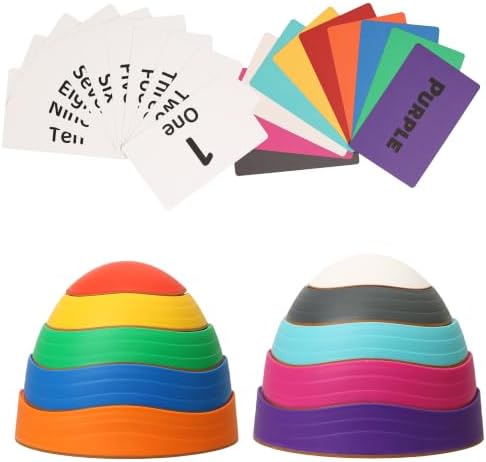
🪨 Stepping Stones and Balance Pods
Low plastic stepping stones with rubber feet give a balance station that sits on the grass, without raising anything to a height worth worrying about.
Frequently Asked Questions
What do you need for a backyard obstacle course? Very little. Cones or buckets, pool noodles, a rope, sidewalk chalk, a laundry basket, and bean bags cover all five station types. A stopwatch is the only item that reliably increases how many times the course gets run.
How many obstacles should a kids course have? Three or four for preschoolers, six to eight for school age children. More than that and the course takes longer to build than to run, which is the point where it stops being rebuilt.
Is a backyard obstacle course safe? Ground level courses on grass are about as safe as running around the yard normally. Once anything is raised or hung, fall height and the surface underneath become real questions, and the CPSC Public Playground Safety Handbook is the reference for that guidance.
How do you make an obstacle course harder? Add penalty seconds instead of restarts, run it in reverse, require an object to be carried, or make one station need two people. Changing the rules is more effective than adding obstacles.
Can you leave an obstacle course set up? You can, but interest drops fast. Most families get more use from packing the pieces into a bag and rebuilding a different layout each time.
What is the difference between this and a ninja warrior course? This is loose materials rearranged for each session. A ninja warrior setup is fixed equipment, usually a hanging line or a frame with attachments, which is a purchase and an installation rather than an afternoon idea.
The Bottom Line
Build the course from loose things you already own, mix the five station types, keep it all at ground level, and time it. The families who get the most out of a backyard obstacle course are the ones who rebuild it constantly rather than the ones who build it well once.