Last updated: August 18, 2026
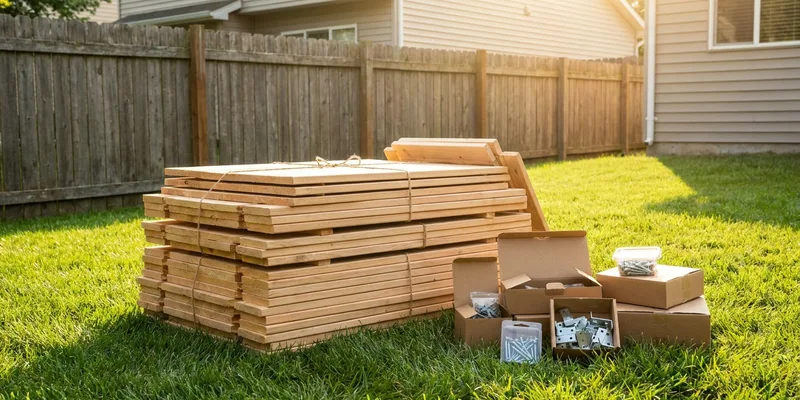
A wooden playhouse kit sits between two very different projects. At one end is a box of precut, predrilled panels that goes together in an afternoon with a drill and a second pair of hands. At the other is a set of plans and a lumber list, where the kit is really just the hardware and the roofing.
Both get sold under the same phrase, which is why so many people order the wrong one. This guide covers what separates a true kit from a plans package and from a fully assembled playhouse, how much work each one is, and the site prep and finishing that decide how long it survives outdoors.
This article contains affiliate links. If you buy through them, we may earn a commission at no extra cost to you. Learn more.
Quick Answer
Should you build a wooden playhouse from a kit or buy one assembled?
- Buy a precut kit if you own a drill, can follow an illustrated manual, and have someone to hold panels upright. This is the sweet spot for most families and the widest part of the market.
- Buy a plans and hardware package only if you are comfortable cutting lumber to a list and squaring a frame yourself. The savings are real, the weekend is not.
- Buy assembled, or pay for assembly, if you have no tools, no help, or a hard deadline such as a birthday. Delivery access is the thing to check first.
- Whichever route you take, level the site and plan the finish before the panels arrive. Both are far harder once the playhouse is standing.
Kit, Plans, or Assembled: What You Are Actually Buying
The listing language blurs these three, so read the included items list rather than the title. The question to answer is simple: does the box contain wood cut to final size, or does it contain instructions for cutting wood you supply yourself.
| Option | What arrives | What you need |
|---|---|---|
| Precut panel kit | Panels cut and often predrilled, hardware, roofing, illustrated manual | A drill, basic hand tools, a level surface, and a helper for the wall panels |
| Plans and hardware package | Drawings, a cut list, brackets and fasteners; lumber bought separately | A saw, measuring and squaring skills, and a full weekend or more |
| Fully assembled playhouse | A finished structure delivered in one piece or two large sections | Delivery access wide enough for the sections, and a prepared, level pad |
| Assembly service add on | The kit plus an installer scheduled after delivery | Site prep done in advance, and scheduling that fits the delivery window |
| Plastic playhouse | Molded panels that clip together, no tools or few tools | Almost nothing, though the look and lifespan differ from wood |
If you are still deciding between wood and molded plastic altogether, our backyard playhouse guide compares the two materials on cost of ownership, maintenance, and how they hold up in different climates.
How Much Work a Kit Really Is
A well designed precut kit is an afternoon to a full day for two people, and the difficulty is not in the carpentry but in the sequencing: getting the base square, keeping wall panels upright while you fasten them, and lining up the roof. Rushing the base is what causes doors that will not close later.
The tool list is short: a cordless drill with the right driver bits, a level, a tape measure, and a stepladder for the roof. Kits that specify predrilled panels save the most time, because misaligned pilot holes are where a straightforward build turns into an afternoon of adjustments.
The Part People Underestimate
Wall panels are awkward rather than heavy, and a single person holding a panel plumb while driving screws is how kits end up out of square. Plan for a second adult at the wall raising stage even if you do everything else alone.
Our Top Picks at a Glance
How we chose: we compared widely available wooden playhouse kits on whether panels arrive precut and predrilled, the quality of the included hardware and roofing, footprint relative to a typical yard, and the recurring themes in owner reviews about instructions and part fit. Selections lean on manufacturer specifications and customer feedback rather than any hands-on trial of our own.
🏆 Best Overall Kit
A precut, predrilled wooden playhouse kit with a covered porch and an illustrated manual, the format that gets built in one weekend instead of becoming a stack of lumber behind the garage.

🏡 Best Small Footprint
A compact wooden playhouse kit sized for a small yard or a corner of a patio, with a single door and window rather than a porch and a loft.
🔨 Best for Confident Builders
A plans and hardware package for anyone happy to buy lumber and cut to a list, which buys you a bigger playhouse for the same outlay at the cost of a longer project.

Picks by Situation: Finishing and Anchoring
Two purchases matter after the build and are almost never in the box. A wooden playhouse needs a weather finish, and any lightweight structure in an open yard needs anchoring against wind.
🎨 For Weather Protection
An exterior grade sealer or stain rated for the wood in your kit, applied before the playhouse takes its first real soaking rather than after.

⚓ For Wind and Stability
A ground anchor set suited to your soil, securing the base so a light wooden structure stays where you put it.

Site Prep, Anchoring, and Local Rules
Level ground first. A playhouse on uneven soil racks out of square, doors bind, and water collects under one corner and stays there. A compacted gravel pad, patio blocks, or a simple timber frame with gravel inside all work, and any of them beats setting the floor straight on grass.
Anchor the finished structure. A wooden playhouse is light enough that wind is a genuine consideration, and most manufacturers specify an anchoring method for exactly that reason. Follow the manufacturer’s instructions for your model rather than improvising, since the fastening points are designed in.
Permits, Setbacks, and HOA Rules
Whether you need a permit, how far the structure has to sit from a property line, and whether your association allows it at all are decided locally, and they vary between neighboring towns. Check with your county or city building department and your homeowners association before you buy, not after the panels are in the driveway. We are not in a position to name a distance or a size threshold for your address.
Finishing and Keeping It Standing
Seal or stain the wood early. Bare wood left through a wet season is the fastest route to a playhouse that looks tired in year two, and finishing panels before or during assembly is far easier than working around a completed structure with a brush.
After that, maintenance is light: check the fasteners each spring, look over the roof covering after storms, keep the base clear of piled leaves, and sand any rough patches at kid height.
Elevated Playhouses and Fall Height
Some playhouse kits are raised on posts or include a platform, deck, or slide, which turns the fall height and the surface underneath into real considerations rather than afterthoughts. The Consumer Product Safety Commission’s Public Playground Safety Handbook is the reference for fall heights and protective surfacing, and it is the source to use rather than an estimate from a listing. Our playhouse with a slide guide covers the elevated versions specifically.
Common Mistakes to Avoid
- Ordering a plans package thinking it is a kit. Read the included items list. If lumber is not listed, you are buying instructions and hardware.
- Building on unlevel ground. The floor racks, the door stops closing, and water sits under one corner. Level and drain the site first.
- Not anchoring the finished structure. A light wooden playhouse in an open yard needs the manufacturer’s specified anchoring, not a hope that it stays put.
- Assuming no permit is needed. Rules differ by county, city, and association, so confirm locally before ordering rather than after.
Where to Go From Here
A kit is the right answer for most families, and the wrong answer for anyone without a helper or a level patch of ground. If you would rather buy something that arrives ready to use, our backyard playhouse guide covers the assembled and molded plastic options. The full category, sandboxes included, sits in our playhouses and sandboxes section.
Frequently Asked Questions
How long does it take to build a wooden playhouse kit? A precut, predrilled kit is typically an afternoon to a full day for two people. Plans and hardware packages take considerably longer because you are cutting lumber and squaring the frame yourself.
What tools do you need for a playhouse kit? A cordless drill with driver bits handles most of it, along with a level, a tape measure, and a stepladder for the roof. Plans based projects also need a saw and the ability to cut accurately to a list.
Do you need a permit for a backyard playhouse? That depends entirely on your county, city, and homeowners association, and the rules differ between neighboring towns. Check with your local building department and your association before ordering.
Does a wooden playhouse need to be anchored? Most manufacturers specify an anchoring method, and a light wooden structure in an open yard benefits from it. Follow the instructions for your specific model rather than improvising a fixing.
What goes under an elevated playhouse or slide? Fall height and protective surfacing are covered in the CPSC Public Playground Safety Handbook, which is the source to consult for depths and materials rather than a figure from a product listing.
The Bottom Line
For most families the precut, predrilled kit is the right buy: a drill, a helper, and a level patch of ground get you a wooden playhouse in a weekend. Choose plans and hardware only if cutting lumber to a list sounds like a good weekend, and choose assembled if tools, help, or time are the constraint. Level the site, seal the wood early, anchor the finished structure, and confirm local rules before the panels arrive.