Last updated: August 18, 2026
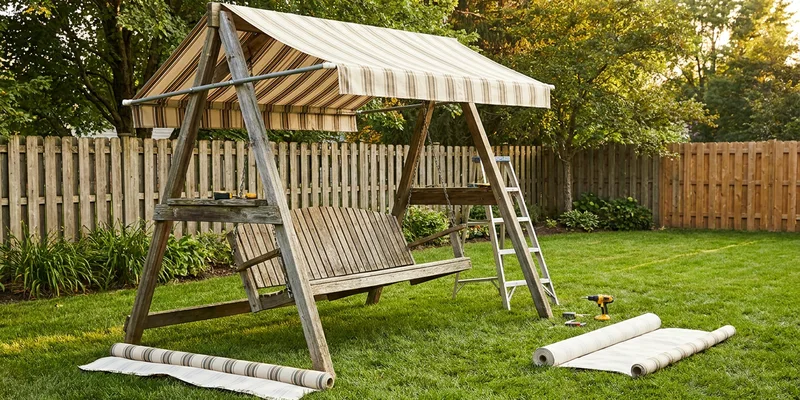
A swing set canopy replacement is usually the first part anyone buys for a playset, because the fabric roof is the component with the shortest life by a wide margin. Sun breaks down the coating, wind works at the grommets, and three or four seasons in you are looking at a faded tarp with a tear running from one corner tie.
The good news is that a canopy is not structural, so replacing it is a tape measure job rather than a repair. The complication is that canopies are sold by finished panel dimensions rather than by playset model. This guide covers how to measure, what the fabric descriptions mean, and how to fit the new one so it lasts longer than the last.
This article contains affiliate links. If you buy through them, we may earn a commission at no extra cost to you. Learn more.
Quick Answer
How do you replace a swing set canopy?
- Measure the old canopy flat on the ground, edge to edge, rather than measuring the roof frame. Canopies are sold by finished fabric size.
- If the old one is missing, measure the outside distance across the roof beams and add enough overhang for the fabric to wrap and tie.
- Look for a UV treated polyester or vinyl coated fabric with reinforced corners, since corners and grommets fail long before the fabric field does.
- Fit it snug but not drum tight, since a canopy stretched hard tears at the grommets.
What to Check Before You Buy a Replacement Canopy
Nearly every returned canopy is the wrong size, and nearly every early failure starts at an edge rather than in the middle. These points are all visible in the listing specifications or photos.
| What to check | Why it matters | What to look for |
|---|---|---|
| Finished fabric size | Canopies are listed by panel dimensions, not by playset brand or model | Length and width of the flat panel, matched to your measurement with a little overhang to spare |
| Fabric type and coating | Decides how many seasons you get before the color and the coating go | UV treated polyester, or a vinyl coated polyester for heavier weather |
| Corner and edge reinforcement | Tears almost always start at a corner or a tie point, not in the open field | Double stitched hems and reinforced corner patches around the fixing points |
| Attachment method | Determines whether it fits your beams at all | Sleeve pockets that slide over the beams, or grommets with ties, matched to how your roof is built |
| Water shedding | A flat canopy that ponds water sags, then stretches, then tears | A pitched fit over sloped beams, or a fabric that stays taut enough to shed rather than pool |
If the beams themselves are grey, splitting or soft where the ties pull, a new canopy is going onto a frame that needs attention first. Our overview of wooden swing sets with monkey bars covers what sound structural timber looks like.
How to Measure a Swing Set Canopy
Take the old canopy off, lay it flat on a driveway or lawn, and measure edge to edge in both directions. That flat panel measurement is the number sellers list against, so it is the only measurement that translates directly to a product listing. Measuring the roof frame instead gives you a number that is always too small.
If the old canopy is gone, measure the outside to outside distance across the two roof beams, then measure the length of the beams. Add enough on each side for the fabric to wrap over and reach its tie points, which on most residential towers is a modest overhang rather than a dramatic one.
Sleeve canopies versus grommet canopies
Two fitting systems dominate. Sleeve style canopies have sewn pockets along two edges that the roof beams slide through, so the fabric is held by the frame itself. Grommet style canopies are flat panels with metal eyelets around the perimeter, tied or bungeed to hooks, screws or the beams. They are not interchangeable, so check which one your tower is built for before you order, since a sleeve canopy cannot be retrofitted to a frame that was never designed to slide through it.
Fabrics and How Long They Actually Last
Most replacement canopies are polyester with a waterproof coating, sold with a UV treatment that slows fading and keeps the coating flexible. Vinyl coated polyester is heavier and holds up better to wind and standing water, at the cost of being stiffer to fit and heavier on the frame. Untreated polyethylene tarps are the cheapest route and behave like it, going chalky and brittle fastest.
Whatever the fabric, owner reports describe the same failure pattern across brands: corners and grommets go first, then the seam on the windward edge. Reinforcement at the fixing points predicts lifespan better than headline fabric weight does.

Our Top Picks at a Glance
How we chose: we compared widely available replacement canopies on how clearly the finished panel size is stated, whether the fabric is described as UV treated, how the corners and tie points are reinforced, and which fitting system they use. Selections rely on manufacturer specifications and recurring themes in customer reviews rather than any hands-on trial of our own.
🏆 Best Overall
A UV treated polyester replacement tarp in one of the common residential panel sizes, with reinforced corners and a clearly stated flat measurement so you can match it to your tape.

🌧️ Best for Harsh Weather
A heavier vinyl coated canopy for towers that sit exposed to wind and heavy rain, where a light polyester panel tends to stretch and pond.

🔧 Best for a Clean Fit
A set of bungee ball ties, which hold a grommet canopy firmly while still giving under a gust instead of tearing the eyelet out.

Picks by Situation: Getting Another Season From What You Have
Not every faded canopy needs replacing yet. If the fabric is sound and only the coating and color have gone flat, a fabric protectant is a reasonable holding move for one more season, particularly if you would rather replace the canopy in spring than in the middle of summer.
☀️ Best Stopgap
An outdoor fabric UV protectant spray, worth a single application on a canopy that is fading but not yet torn, to slow the coating breakdown until you replace it properly.

Fitting the New Canopy So It Lasts
Fit the canopy on a warm, still day. Fabric is more forgiving when it is warm, and a canopy fitted in cold weather will be under more tension once summer arrives. Work from one corner around the perimeter, seating each tie loosely first and only then taking up the slack evenly, so the tension ends up shared rather than concentrated on whichever corner you tightened first.
Snug, not drum tight, is the target. The fabric should shed water without ponding, but still have enough give to move in a gust. Overtightening is the single most common installation error and it puts all the load straight onto the grommets.
Take it down for the off season
A canopy left up through winter takes snow load, ice and months of freeze and thaw for no benefit, since nobody wants shade over the tower in February. Removing it, drying it fully and storing it flat and out of sunlight adds meaningfully to its life.
Common Mistakes to Avoid
- Measuring the frame instead of the fabric. Listings quote the finished flat panel size, so measure the old canopy laid out on the ground.
- Stretching it drum tight. A canopy under maximum tension tears at the first grommet the wind reaches.
- Buying a sleeve canopy for a grommet frame. The two fitting systems are not interchangeable, and no amount of ties will fix the mismatch.
- Screwing the fabric directly to the beams. A screw through unreinforced fabric becomes a tear the first time the wind loads it.
- Leaving it up all winter. Snow load and freeze thaw cycles cost you a season of life for no use in return.
Frequently Asked Questions
How do I measure for a replacement swing set canopy? Lay the old canopy flat and measure edge to edge in both directions, since listings quote the finished panel size. If the old one is missing, measure across the outside of the roof beams and along their length, then allow overhang for the fabric to wrap and tie.
Are swing set canopies universal? No. They come in a range of panel sizes and in two different fitting systems, sleeve pockets and grommets, so you need to match both the dimensions and the attachment method to your tower.
What material lasts longest on a playset canopy? Vinyl coated polyester generally outlasts plain coated polyester, which in turn outlasts an untreated polyethylene tarp. Reinforced corners and hems matter as much as the fabric itself, because that is where failures start.
Can I use a regular tarp instead of a proper canopy? You can, but a generic tarp usually lacks the reinforced tie points and the correct proportions, so it flaps, ponds water and tears at the eyelets much sooner.
Should I take the canopy down in winter? Yes, if you can. Snow load and repeated freeze and thaw shorten a canopy’s life considerably, and nobody needs shade over the tower during the coldest months.
Does a torn canopy make the swing set unsafe? The canopy is not structural, so a tear is a shade and weather problem rather than a strength problem. Loose hardware, damaged beams and worn swing hangers are the parts to inspect for actual safety.
The Bottom Line
Buy a canopy by its finished flat panel size and its fitting system, not by your playset’s brand name. Choose UV treated fabric with reinforced corners, fit it snug rather than tight on a warm day, and take it down over winter. That combination is what turns a two season canopy into a four or five season one.