Last updated: August 18, 2026
A swing set seat replacement is the repair that keeps an otherwise sound frame in service, and it comes up on almost every set that has been outside for a few seasons. Seats crack at the chain slots, coated chains split and rust underneath, and the seat a five year old loved is the wrong shape for the same child at nine.
The job is straightforward once you know what to measure. This guide covers the seat types and who each one suits, how to work out chain length, which connectors belong in the assembly, and what to check on the hangers while the old seat is off.
This article contains affiliate links. If you buy through them, we may earn a commission at no extra cost to you. Learn more.
Quick Answer
How do you choose a replacement swing set seat?
- Measure before you order: the drop from hanger to seat, the hanger spacing, and the width of the seat you are replacing.
- Match the seat to the rider, not to what was there. A belt seat, a full bucket and a saucer suit different ages and different numbers of children.
- Buy the seat and the chain as one assembly where you can. Mixing a new seat onto tired chain is how one repair becomes two.
- Replace open S hooks with closed connectors. Open hooks work themselves apart under repeated load, which is the failure people notice too late.
- The CPSC Public Playground Safety Handbook recommends swing seats be made of lightweight material such as rubber, plastic or canvas, so a heavy rigid seat is not the upgrade it looks like.
Replacement Seat Types Compared
Four seat types cover almost every residential swing beam. The differences are about who is riding and how much room the arc needs, not about quality, and the table sets out where each one belongs.
| Seat type | Who it suits | What to know before ordering |
|---|---|---|
| Belt seat | Children who sit and hold on unaided | The default residential swing. Flexible rubber or canvas belts wrap around the rider, rigid plastic ones do not |
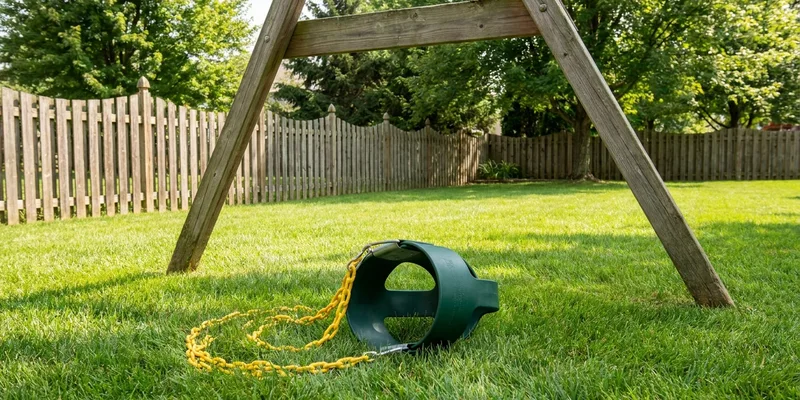
| Full bucket seat | The youngest riders | The CPSC handbook describes full bucket seats as recommended for children under 4 years of age, with a use zone measured differently from a belt seat |
| Half bucket or high back | Children between the two stages | Lower back with a front bar or removable T bar. Check that the bar fastens where a child cannot release it |
| Saucer or disc seat | Older children, often two at a time | Wider and heavier. Needs its own bay with clear space and a beam and hangers rated for the load |
The handbook also recommends that no more than two swing seats hang in each bay of the supporting structure, which is worth remembering if a repair is tempting you to add a position rather than replace one.
Measuring for the Right Chain Length
Chain length is the measurement people get wrong, and it is easy to get right. Measure from the bottom of the hanger, where the chain actually attaches, down to the top surface of the old seat. That distance, not the height of the beam, is the number a replacement assembly has to match.
Seat height off the ground is the second number. A seat that sits too high leaves a child unable to start themselves, and one that sits too low drags in the surfacing and wears through. If the old seat sat at a height that worked, copy it.
When you are replacing seat and chain together
Buying seat and chain as one assembly avoids the mismatch that comes from splicing new links onto old ones. Plastic coated chain is the usual choice at hand height, because bare links pinch fingers, but check the coating for splits: water gets in through a crack and corrodes the steel out of sight. If the coating is gone, the chain is the part to replace, not just the seat.

Connectors, Hangers and the Parts You Cannot See
While the seat is off, the hardware above it deserves ten minutes. Look at the swing hangers for elongated bolt holes, rust or a bushing that has worn through, and at the beam around the bolts for splits running along the grain. Those are the parts that fail quietly, and a new seat hides nothing.
Then deal with the connectors. Open S hooks are still shipped with plenty of seats, and repeated load slowly opens them until a link slips out. Closed connectors, whether quick links tightened properly or purpose made spring clips, remove that failure mode for the cost of a few minutes.
What to do if the hangers are worn
A worn hanger is not a seat problem, and a new seat on a hanger with an elongated hole will feel exactly as loose as the old one did. Replace the hanger pair with rated hardware and through bolts rather than lag screws where the beam allows it. Our guide to swing set bracket kits covers the frame connections that carry the same loads.
Our Top Picks at a Glance
How we chose: we compared widely available replacement seats on seat material and flexibility, whether chain is included and coated, how the seat attaches, and how clearly the manufacturer states a weight capacity. Selections rely on manufacturer specifications and recurring themes in customer reviews rather than any hands-on trial of our own.
🏆 Best Overall
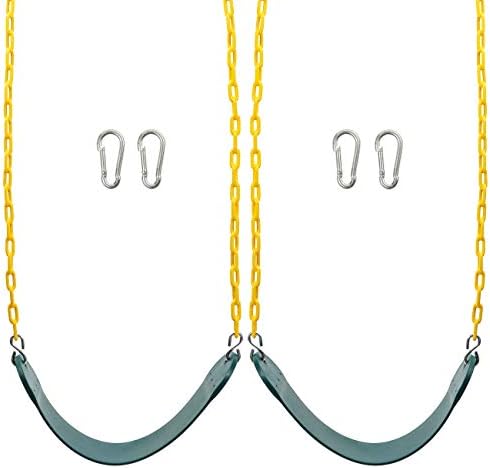
A flexible belt seat supplied with coated chains and connectors, so the whole position goes back together as one assembly rather than a mix of old and new parts.
🧒 Best for the Youngest Riders
A full bucket replacement seat with a fastening a toddler cannot open, for the bay that is going back a stage rather than forward one.

👧 Best for Older Kids
A wider saucer seat with rated straps or chains, for a bay with the clear space and the beam strength to take it.

Picks by Situation: Rebuilding the Whole Position
Sometimes the seat is the least of it. A set that has stood through several winters often needs the seat, the chain and the connectors at once, and doing them together costs less time than three separate afternoons up a ladder.
🔧 Best for a Full Rebuild
A swing hardware kit with hangers, connectors and fasteners, so the position is rebuilt from the beam down instead of hanging a new seat on old steel.
Common Mistakes to Avoid
- Measuring from the beam instead of the hanger. The chain attaches below the beam, and the difference is enough to leave a seat hanging wrong.
- Hanging a new seat on old chain. Coated chain corrodes under a split coating, so the part that looks fine is often the part that is not.
- Leaving open S hooks in the assembly. They open gradually under cyclic load. Close them properly or replace them.
- Fitting a heavy rigid seat. The CPSC handbook recommends lightweight seat materials such as rubber, plastic or canvas, and a hard seat swinging back is what it hits that matters.
- Adding a third seat to a bay while you are at it. The handbook recommends no more than two seats per bay, and spacing is the reason.
Frequently Asked Questions
Are swing set seats universal? Mostly, in that seats hang from chain and chain hangs from standard hangers. What varies is chain length, hanger spacing and the width of the seat, so measure your existing setup before ordering rather than assuming a straight swap.
How do I measure for a replacement swing chain? Measure from the bottom of the hanger, where the chain attaches, to the top surface of the existing seat. Note the seat height off the ground as well, so the new assembly puts the seat back where it worked.
How often should swing seats be replaced? When the seat cracks, the material goes chalky or stiff, or the chain slots start to elongate. Sunlight rather than use is what ages most seats, so a set in full sun works through them faster than one in shade.
Can I use rope instead of chain? Rope is used on tree swings and on some manufactured seats, but it abrades where it passes over a hanger or a limb and it is harder to inspect than chain. If you use rope, use a purpose made hanging kit rather than tying your own.
What connectors should hold the chain to the hanger? Closed connectors: quick links tightened fully, or spring clips made for the job. Open S hooks work themselves apart under repeated load, which is the point at which a seat drops.
Can I replace a belt seat with a bucket seat? Yes, and it is a normal move when a younger sibling arrives. Note that the CPSC handbook recommends full bucket seats hang from a separate structure or at least a separate bay, so give the toddler seat the end position and keep the neighboring bay clear.
What should I check while the seat is off? The hangers for elongated holes, rust or worn bushings, and the beam around the bolts for splits. Those are the parts a new seat cannot compensate for.
The Bottom Line
Measure from the hanger to the seat, match the seat type to who is riding now, and buy seat and chain together where you can. Replace open S hooks with closed connectors, check the hangers and the beam while everything is apart, and keep the seat itself light and flexible, which is what the CPSC handbook recommends for exactly the reason you would guess.