Last updated: August 18, 2026
A basketball hoop for kids comes down to two questions that most listings answer badly: how low the rim goes, and how well the whole thing stays upright when a child hangs off it. Height adjustment is what keeps a hoop useful for more than one season, and base stability is what keeps a portable system from becoming a hazard the first time someone tries to dunk.
This guide covers the four ways a hoop gets mounted in a yard, the rim heights the NBA and USA Basketball recommend by age, and what to look at on a portable base before you order.
This article contains affiliate links. If you buy through them, we may earn a commission at no extra cost to you. Learn more.
Quick Answer
Which basketball hoop should you buy for kids?
- For most families, an adjustable portable system is the practical pick, because the rim can drop to a height a young child can reach and rise to 10 feet as they grow.
- Check the range, not just the top height. A hoop that only adjusts between 8 and 10 feet is no use to a five year old.
- Base capacity is the stability spec. Look for the manufacturer’s stated fill weight and fill it completely, with sand rather than water where the base can freeze.
- In-ground systems are steadier and last longer, but they fix the location permanently and need a concrete footing, so they suit a settled driveway rather than a rental.
The Four Ways to Put a Hoop in a Yard
Mounting style decides almost everything else: how stable the hoop is, whether it can move, and how much of the driveway it occupies when nobody is playing. These four categories cover essentially everything sold for home use, from a toddler’s first hoop to a permanent system.
| Hoop type | Who it suits | What to know |
|---|---|---|
| Portable with filled base | Most families, and anyone who may move | Rolls out of the way; stability depends entirely on the base being filled to the stated capacity |
| In-ground | Settled homes with a permanent play area | The steadiest option, but needs a concrete footing and cannot be relocated |
| Wall or roof mounted | Yards with a garage wall and no floor space to spare | No base to fill, but the mounting surface has to take the load and adjustment is limited |
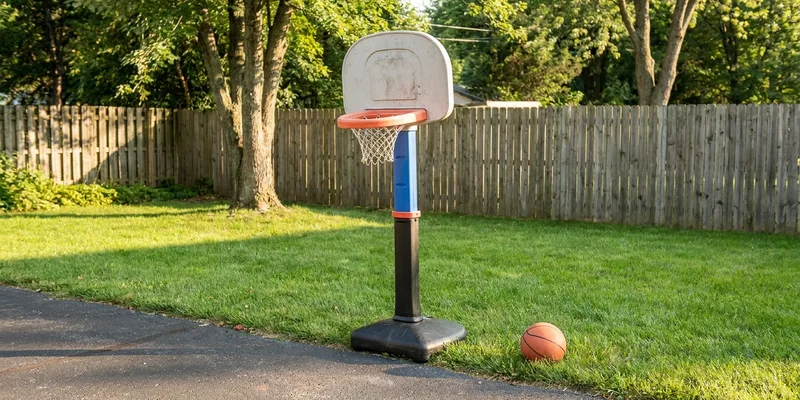
| Freestanding toddler hoop | Preschool age, often indoors and outdoors | Very low minimum height, light plastic construction, outgrown within a couple of years |
If the hoop is joining a yard that already has other equipment, plan the layout as a whole rather than adding items one at a time. Our other backyard games guides cover the setups that compete for the same flat surface.
Rim Height by Age, and Why Adjustable Wins
Rim height is where a hoop either builds a shooting motion or ruins one. The NBA and USA Basketball publish youth basketball guidelines that recommend an 8 foot basket for ages 7 and 8, a 9 foot basket for ages 9 to 11, and the full 10 foot rim from ages 12 to 14 upward. The reasoning they give is that a lower rim lets younger players shoot with proper form instead of heaving the ball.
That is the argument for adjustability in a single sentence. A fixed 10 foot hoop is unusable for a seven year old in any way that helps them, and a fixed low hoop is boring by middle school. What you want is a system whose stated range brackets the ages in your house right now and for the next several years.
Ball Size Belongs in the Same Decision
The same guidelines pair each age band with a ball size, recommending a size 5 ball with a 27.5 inch circumference for ages 7 and 8, and larger balls as players move up. Sizes for the older bands are set out in the guidelines themselves, so check the current table rather than assuming, and buy the ball that matches the rim height you plan to play at.
Base Weight Is the Whole Stability Question
On a portable system, the base is the product. Manufacturers state a fill capacity, and a partially filled base is the most common reason a hoop wobbles, creeps across the driveway, or tips when a child pulls on the rim. Fill it to the stated capacity, not to whatever felt like enough.
Sand is denser than water, so the same base filled with sand is heavier, and manufacturers commonly recommend sand where the base could freeze, since freezing water expands and cracks the tank. Sand is also permanent in practice, which matters if you expect to move the hoop.
What to Look at Beyond the Base
Pole construction tells you a great deal. A one-piece or two-piece pole flexes less than a three-piece pole of the same height, and less flex means the backboard stops shaking a second after the ball hits it rather than five. Backboard material follows the same logic: polycarbonate and acrylic rebound better than thin plastic, and tempered glass is stiffest and heaviest.
Our Top Picks at a Glance
How we chose: we compared widely available home systems on adjustment range, stated base capacity, pole construction, and backboard material. Selections lean on manufacturer specifications and recurring themes in customer reviews rather than any trial of our own.
🏆 Best Overall
An adjustable portable system with a wide height range and a large fill base, which covers a child moving from a low rim toward the full 10 foot height without a second purchase.

🧒 Best for Toddlers
A lightweight freestanding hoop that adjusts down to preschool height, sized so a small child can score without help and light enough to carry indoors.

🏀 Best Permanent Setup
An in-ground system with a rigid pole and a full-size backboard, for a driveway that is staying put and players who will grow into real half-court games.

Picks by Situation: Wall Mounting and the Right Ball
Two situations call for something other than a standard portable system: a driveway with no room to give up to a base, and the ball itself, which is the cheapest thing on this page and the one that most changes whether a young player enjoys shooting.
🧱 Best Space Saver
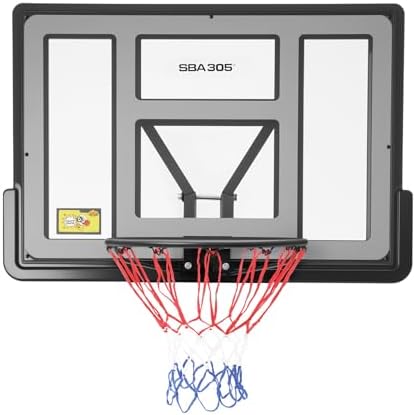
A wall or garage mounted backboard that keeps the driveway clear, suitable where there is a solid mounting surface and no need to move the hoop.
⚪ Best Ball for Younger Players
A youth size 5 ball with a 27.5 inch circumference, the size the NBA and USA Basketball guidelines pair with the youngest playing ages.

Where to Put It and What the Surface Does
Position matters more than most people expect. A hoop on a sloped driveway leans, and a portable base creeps downhill a little further every session. Use the flattest surface you have, and if that is grass, accept that the base will sink and tilt unless it sits on pavers or a slab.
Think about what is behind and beside the hoop as well. Rebounds travel, and a hoop set so missed shots roll toward the street is a weekly problem, while one angled so the natural miss goes toward a fence or a hedge solves it with no extra equipment. Move parked cars before play rather than trusting the aim of an eight year old.
Common Mistakes to Avoid
- Buying on maximum height alone. Almost every system reaches 10 feet. What varies is how low it goes, and that is the number that matters for a young child.
- Half filling the base. It is the main reason portable hoops wobble and tip, and the fix costs nothing but effort.
- Using water in a base that will freeze. Manufacturers recommend sand in cold climates for exactly this reason.
- Letting kids hang on the rim. Portable systems are not built for it, and it is the classic way a hoop comes over.
Frequently Asked Questions
What height should a basketball hoop be for kids? The NBA and USA Basketball youth basketball guidelines recommend an 8 foot rim for ages 7 and 8, a 9 foot rim for ages 9 to 11, and the standard 10 foot rim from ages 12 to 14 upward. An adjustable system lets one hoop cover all of those.
Is a portable or in-ground hoop better for a family? Portable suits most families because it adjusts easily and can be moved or taken along. In-ground is steadier and lasts longer, but it needs a concrete footing and fixes the hoop in one spot permanently.
Should I fill a portable base with sand or water? Sand is heavier for the same volume and cannot freeze, which is why manufacturers commonly recommend it in cold climates. Water is easier to remove if you expect to move the hoop.
What size basketball do young kids need? The NBA and USA Basketball guidelines recommend a size 5 ball with a 27.5 inch circumference for ages 7 and 8, with larger sizes for older age bands set out in the same guidelines.
Can a basketball hoop sit on grass? A portable base can, but it will sink unevenly and start to lean. Setting it on a slab, pavers, or a levelled compacted area is what keeps it upright over a season.
How do you stop a portable hoop from tipping? Fill the base completely to the stated capacity, keep it on level ground, and do not let anyone hang from the rim. Some models also accept anchor kits or weight bags on the base frame.
The Bottom Line
For most households the right kids basketball hoop is an adjustable portable system whose range starts low enough for the youngest player and reaches 10 feet for later. Fill the base to capacity with sand if freezing is a risk, set it on level pavement, and match the ball size to the rim height you actually play at.