Last updated: August 18, 2026
A swing set for older kids is a different purchase from a swing set for preschoolers, and the reason is load. A ten year old swings higher, lands harder, hangs from things and brings friends, so the specifications that matter shift from cute features to frame gauge, stated weight ratings and how the structure is held down.
This guide covers what changes when the users are roughly eight to twelve, which configurations keep their interest, the numbers to read on a listing, and the accessories that turn an existing set into something an older child still wants to use. Selections lean on manufacturer specifications and recurring themes in owner reviews rather than any hands-on trial of our own.
This article contains affiliate links. If you buy through them, we may earn a commission at no extra cost to you. Learn more.
Quick Answer
What makes a swing set right for older kids?
- Read the stated weight rating per swing position and the manufacturer’s age range first. Those two numbers, not the styling, tell you whether a frame is built for a ten year old or a four year old.
- Heavy gauge steel A-frames and full timber towers are the two configurations that survive older children. Lightweight starter frames flex, walk and wear their hardware out fast.
- Older kids want challenge, not features. Overhead climbing, a trapeze, rings and a ninja style line hold attention far longer than a plastic steering wheel.
- Anchoring stops being optional. CPSC guidance advises anchoring equipment securely with anchoring devices installed below ground level, and a heavier user is exactly the load that walks an unanchored frame.
- The use zone grows with the swing. CPSC guidance puts the zone in front of and behind a swing at twice the height of the top bar it hangs from.
What Changes When the Users Get Older
Four things change at once: the load per swing position, the height a child reaches before letting go, the attraction of hanging and climbing over sitting, and the likelihood that two children use the frame at the same time. The table maps each of those onto what to look for.
| What changes | Why it matters | What to look for on the listing |
|---|---|---|
| Weight per position | An older child plus momentum is the load that bends light tube | A stated per swing weight rating, not just a total set capacity |
| Swing height reached | Falls happen from the top of the arc, not from the seat height | Top bar height, and a plan for surfacing under the whole corridor |
| Play preference | Hanging, climbing and racing beat sitting by age eight or so | Overhead bars, rings, trapeze, ninja attachments, a climbing wall |
| Two users at once | Siblings and friends double the frame load and the swing traffic | Three swing positions, wider beam spacing, heavier gauge legs |
| Frame movement | Harder use walks or lifts a light frame out of position | Anchor points designed into the legs, or an anchor kit that fits |
Age bands are a useful cross check here. The CPSC Public Playground Safety Handbook groups playground equipment by age, with separate recommendations for children aged 6 to 23 months, 2 to 5 years, and 5 to 12 years, and overhead climbing events sit at the older end of that scale.
The Numbers That Actually Matter
Three specifications decide whether a set suits an older child: the weight rating per swing position, the frame material and gauge, and the manufacturer’s stated age range. Everything else on the listing is either styling or an accessory you could add later, and none of it compensates for a frame rated below the user.
Weight ratings are published inconsistently, which is the trap. Some brands state a per swing figure, others a total set capacity that assumes an even spread, and a few state nothing at all. A set with no published rating is not automatically weak, but it gives you nothing to check the intended user against.
The Standard to Look For
Residential swing sets are designed to ASTM F1148, the consumer safety performance specification for home playground equipment, and manufacturers commonly reference it in their manuals and listings. It is not a substitute for reading the weight rating, but a set that names the standard is telling you the frame was built against a defined test rather than a marketing target.
Our Top Picks for Older Kids
How we chose: we compared widely available sets and add on kits on published weight ratings, frame gauge, the presence of overhead climbing, and how consistently owners report a frame that stays put once anchored. Large timber towers are included in the discussion but not in the picks below, because those are bought at home improvement retailers and warehouse clubs rather than online.
🏆 Best Overall
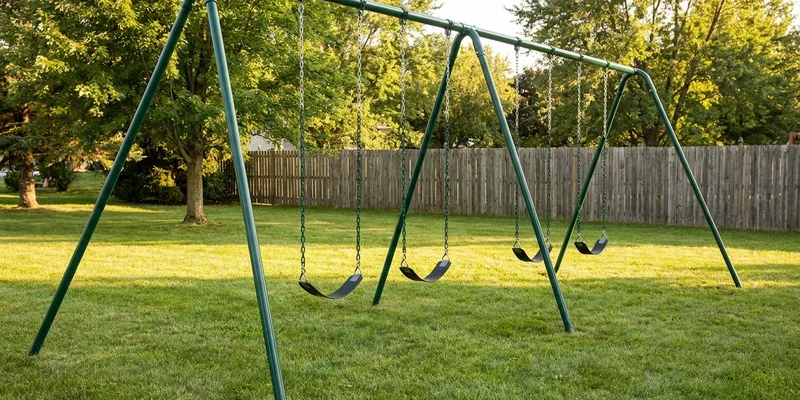
A heavy gauge powder coated steel A-frame with three swing positions and a published weight rating per position, the configuration that takes the hardest use for the least upkeep.

🧗 Best for Climbers
A monkey bar add on section that bolts to an existing beam or tower, which is the single upgrade that most reliably brings an older child back to a set they had outgrown.

🤸 Best for Challenge
A ninja style slackline with hanging obstacles, strung between two solid anchor points, giving an older child something that gets harder as they improve.

If overhead climbing is the main draw, our backyard monkey bars guide compares the freestanding and add on routes in more detail.
Picks by Situation: Upgrading and Heavy Traffic
Two situations come up constantly with older children. The first is a family whose existing set is structurally fine but has become boring. The second is a set that gets used hard enough by several children that the consumable parts are the limiting factor rather than the frame.
🔁 Best Upgrade for an Existing Set
A trapeze bar with gym rings replaces one swing position and adds hanging, flipping and grip work to a frame the child already has.
🔗 Best for Heavy Traffic
Replacement seats with coated chains and a stated weight limit, which is what wears out first when older children use a set daily.

Space and Surfacing for Bigger Users
Older children swing higher, which extends the corridor that has to stay clear and raises the fall height the ground underneath has to handle. The CPSC Outdoor Home Playground Safety Handbook advises extending surfacing at least 6 feet (1.8 m) from equipment in all directions, and further to the front and rear of swings: a distance equal to twice the height of the top bar from which the swing is suspended.
Surfacing depth is keyed to fall height rather than to the type of equipment, and an overhead climbing section raises that height to the bars themselves rather than the deck. CPSC guidance is direct that home playground equipment should not be installed over concrete, asphalt or packed earth, and that grass by itself does not count as protective surfacing. Our swing set safety zone guide works through the measurement on a real yard.
Anchoring Under Harder Use
An unanchored frame under an older child does not tip dramatically, it walks. Legs creep a few inches per session, the frame goes out of square, and the hardware wears unevenly. CPSC guidance advises anchoring equipment securely with anchoring devices installed below ground level, which also keeps the anchor itself out of the landing area.
What Keeps an Older Child Interested
The honest answer is challenge that scales. A swing seat is a fixed experience; rings, a trapeze, a climbing rope or a ninja line get harder as the child gets stronger, which is why those attachments outlast a themed clubhouse by years.
Height is the other draw, and the one to be careful with. Raising a beam or an attachment point increases the fall height and the surfacing your yard needs underneath. Add challenge horizontally instead, with more obstacles along a line rather than more height above the ground.
Common Mistakes to Avoid
- Buying on features rather than the weight rating. For an older child, the published per position rating is the specification that matters.
- Reusing a set the child has outgrown without checking the hardware. S-hooks, chains and seat straps wear where the load has been highest.
- Adding height to add challenge. Extra height raises the fall height and the surfacing requirement with it.
- Leaving a lighter frame unanchored because it survived the preschool years. The load that walks a frame arrives with the older user.
- Treating grass as surfacing. A landing zone under regular use packs to bare earth within a season.
Frequently Asked Questions
What age is too old for a swing set? There is no fixed cutoff, but interest usually depends on challenge rather than age. Sets that include overhead climbing, rings or a ninja line hold older children far longer than sets built around a seat and a slide.
How much weight can a swing set hold? It varies by model and there is no industry standard figure, which is why the published rating on the specific set is the only reliable answer. Look for a per swing position figure rather than a total set capacity.
Are monkey bars suitable for older kids? Overhead climbing sits at the older end of the CPSC age bands, which group playground equipment for children aged 6 to 23 months, 2 to 5 years, and 5 to 12 years. Check the manufacturer’s stated age range for the specific model as well.
Can you add monkey bars to an existing swing set? Add on sections are sold for that purpose, but they only fit beams and posts of matching dimensions, and they add load to a frame that was specified without them. Check the beam size, the fixing method and the manufacturer’s own guidance before buying.
Do older kids need a bigger safety zone? The published rule does not change with the user, but the height they reach does. CPSC guidance sets the zone in front of and behind a swing at twice the height of the top bar, and a higher arc means the landing happens further out within that corridor.
The Bottom Line
For older children, buy on the published weight rating and the frame gauge, then spend the rest of the budget on challenge that scales: overhead bars, rings, a trapeze or a ninja line. Anchor the frame below ground level, keep the swing corridor clear to the distance CPSC guidance describes, and put real surfacing under the whole arc rather than trusting the lawn.